De Chirico’s Self-Portrait (1954)
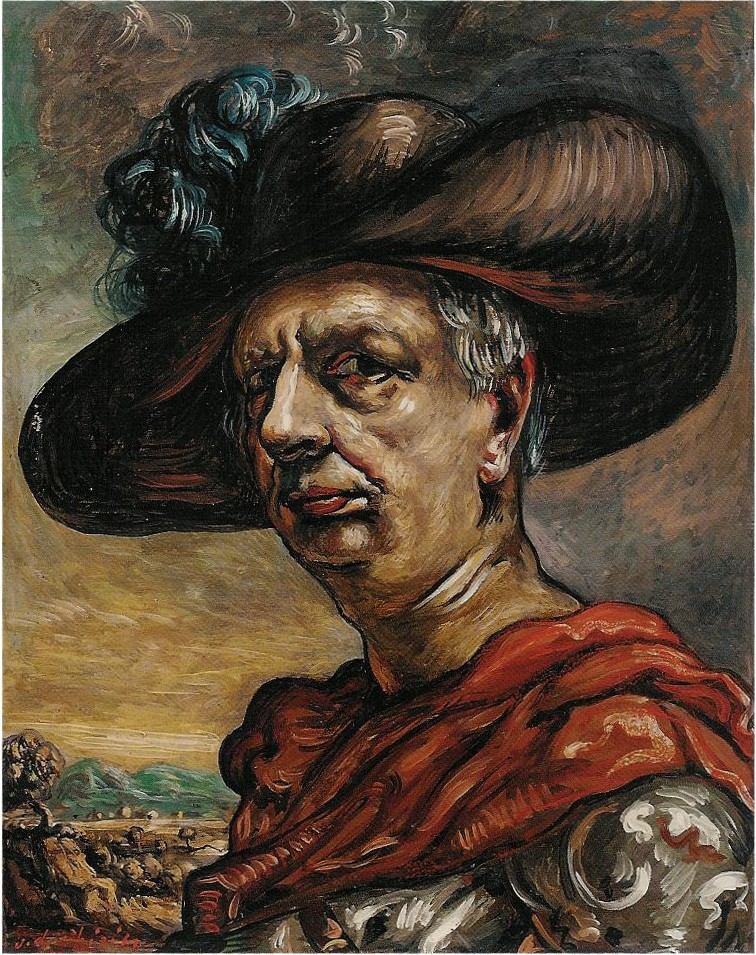
De Chirico, Self-Portrait (1954)
Click image to enlarge.
The androgynous theme of this late self-portrait by De Chirico is so obvious that it hardly needs explanation. However, unless one knows that art is a depiction of the poet's mind, it is possible to mistake this image as depicting the artist’s life rather than his creative soul. Nevertheless, De Chirico did not necessarily base it on a woman. That would have been too obvious….
Click next thumbnail to continue
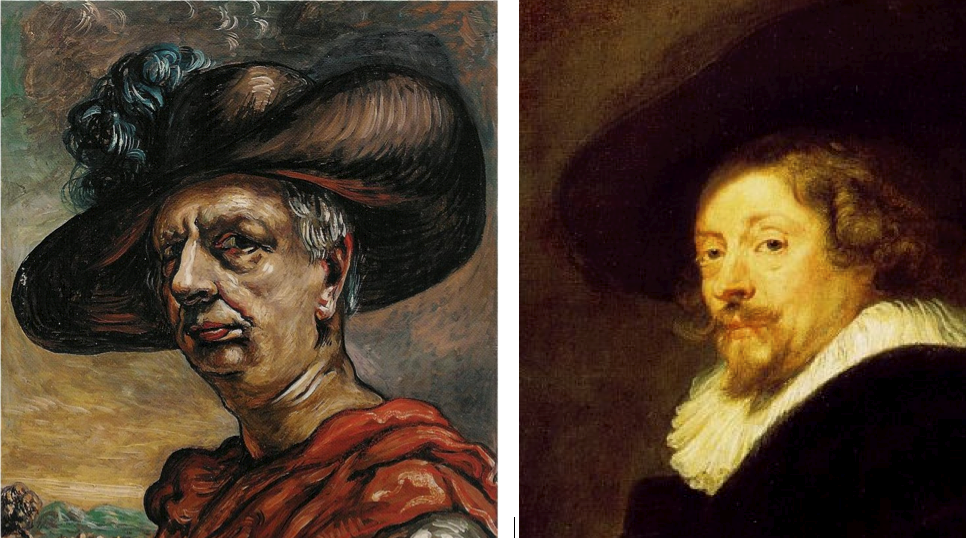
Left: Detail of De Chirico's Self-Portrait
Right: Detail of Rubens, Self-Portrait (c. 1638-40)
Click image to enlarge.
As you can see from this Rubens self-portrait, some of De Chirico’s female elements, such as the large bonnet, are actually references to a male master. Although Rubens’ self-portrait may not be the actual one De Chirico used - there are others in which Rubens wears a wide-brimmed hat - it does explain the Rubenesque style of De Chirico's portrait. So, despite appearances, the message is traditional: that De Chirico feels at one with an earlier master and has assumed his "identity."
More Works by De Chirico
Notes:
Publication Date: 05 Oct 2010
© Simon Abrahams. All articles on this site are the copyright of Simon Abrahams. If you wish to use copyrighted material from this site in print or other media for purposes that go beyond 'fair use', you must obtain permission from the copyright owner. Other websites may link to this page without permission (in fact, please do) but may not reproduce the material on their own site.