Lucian Freud’s Annabel (1975)
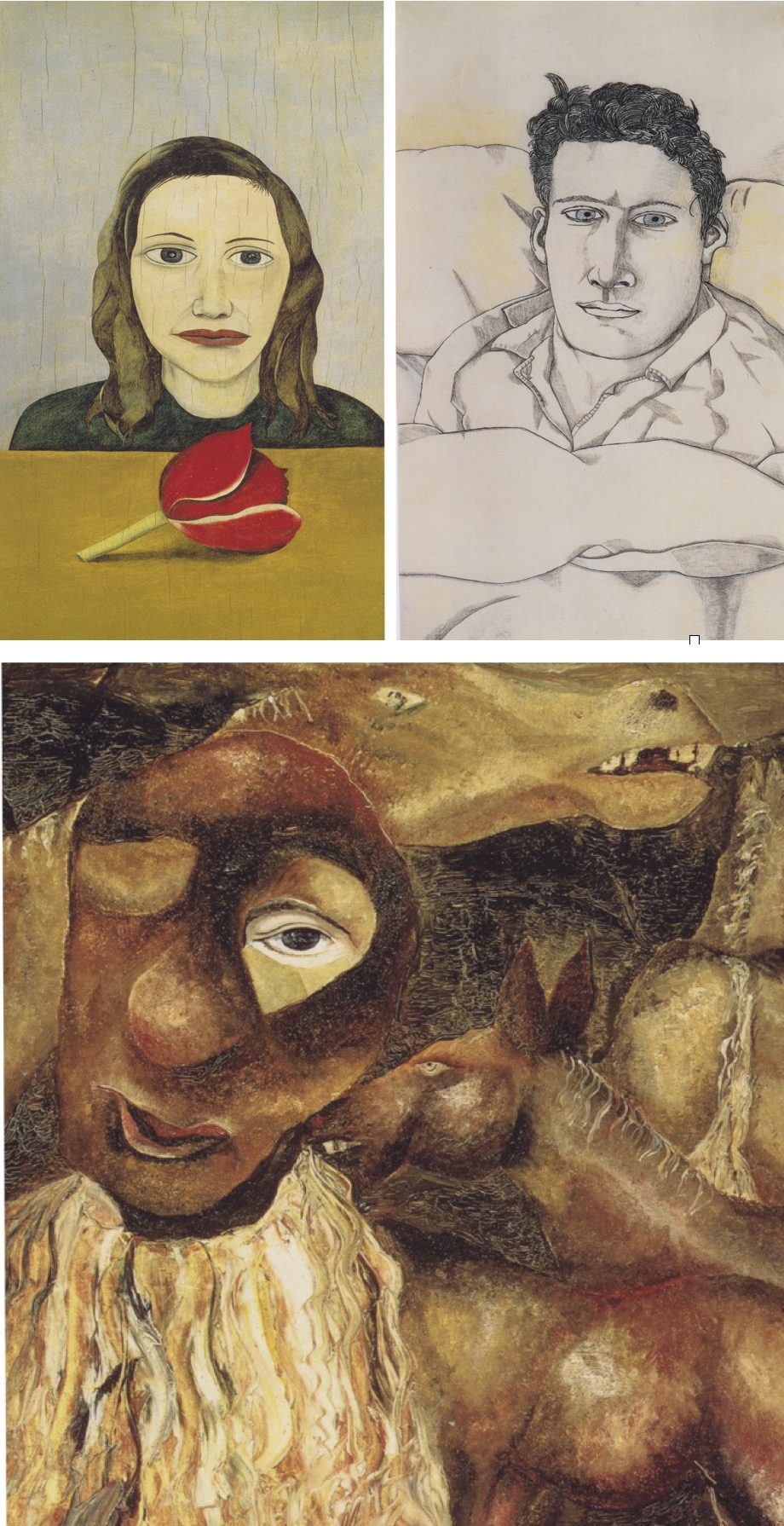
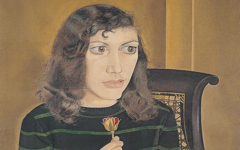
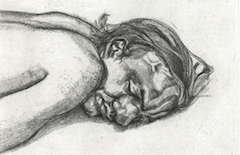
L: Girl with a Tulip (1943) R: Self-portrait (1941) Bottom: Horses and Figure (1939)
*All images in this post are by Freud.
Click image to enlarge.
Lucian Freud (1922-2011), whose first name is derived from the Latin for light, was fascinated by eyes, even as an adolescent. Mostly large, wide and open, they are the central motif of his early work, and glare directly out of his images. And, although later in life he became known for an intense focus on painting human flesh, vision remained his key interest, naturally.
Click next thumbnail to continue
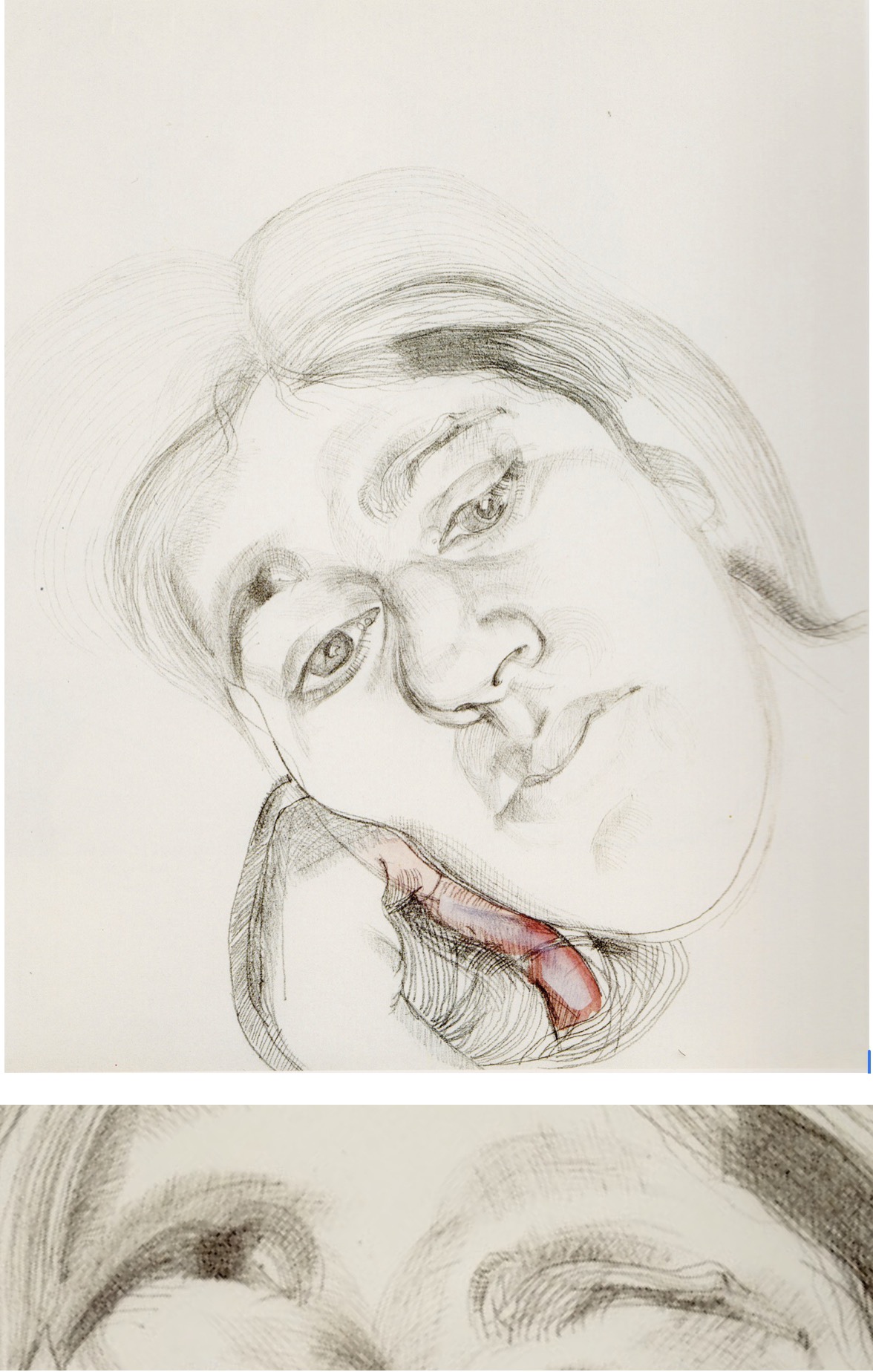
Top: Annabel (1975) Pencil and watercolor. Private Collection.
Bottom: Detail of Annabel, rotated
Click image to enlarge.
That is why I was struck by this mid-career drawing of his daughter, Annabel. You may not see them immediately but she has three sets of eyes. She can have three pairs because this is not a depiction of the physical Annabel. It is, as so often in important art, a mental image in the artist’s mind of the drawing's own conception.
The first pair of eyes are obvious, with the second above. Annabel’s eyebrows also resemble eyes, one open on the left, that on the right closed (see detail rotated at bottom). As EPPH explains elsewhere, an open orb paired with a closed one is age-old symbolism for the duality of artistic vision: insight for imagination, out-sight to sense the exterior world. In the Renaissance, they even thought each eye operated independently: the right for spiritual vision, the left for conventional perception.1 Freud also added tell-tale shading above Annabel’s illusory eyes to indicate the “eyebrows” of the inner eyes. We know that because the curved shadows make no sense on a normal forehead.
Click next thumbnail to continue
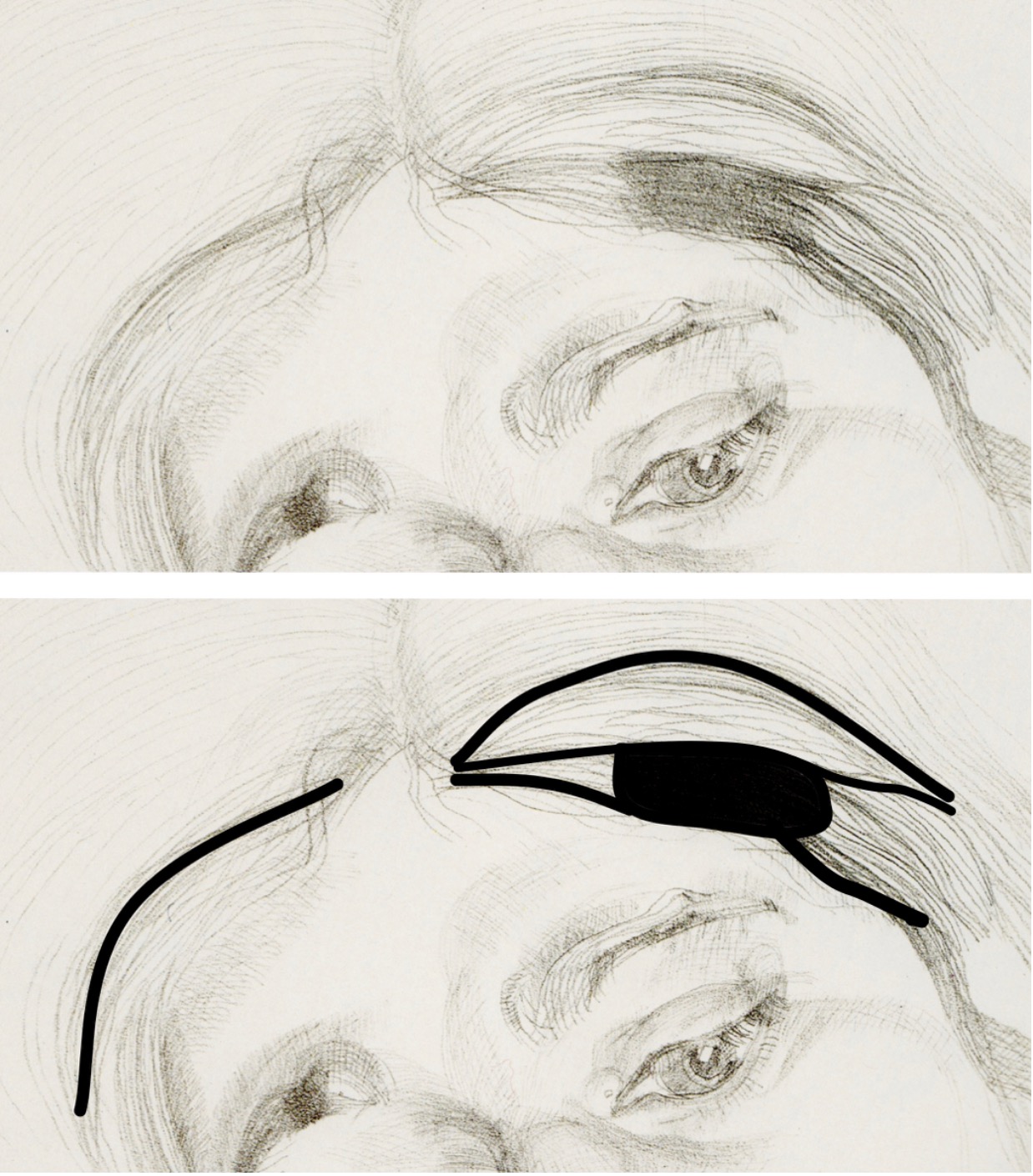
Annabel, detail, and diagram below
Click image to enlarge.
Freud, who obviously resembled his natural daughter, adopts her persona. And she, symbolizing the fertile function of her father's mind, rests her head on a hand to suggest that intellect (the head) is supported by craft (the hand), a very common combination in such art. Lucian-as-Annabel is deep in mental contemplation which, when combined with love and wisdom, produces art of universal significance.
The third pair of eyes are above the second, composed in her hair. The dark rectangular patch on the right is another black pupil with the curve of an eyelid above it. Inverting the open/closed combination on her forehead, the open eye is on the right; the closed one is just a curve of dark lines, on the left.
Click next thumbnail to continue
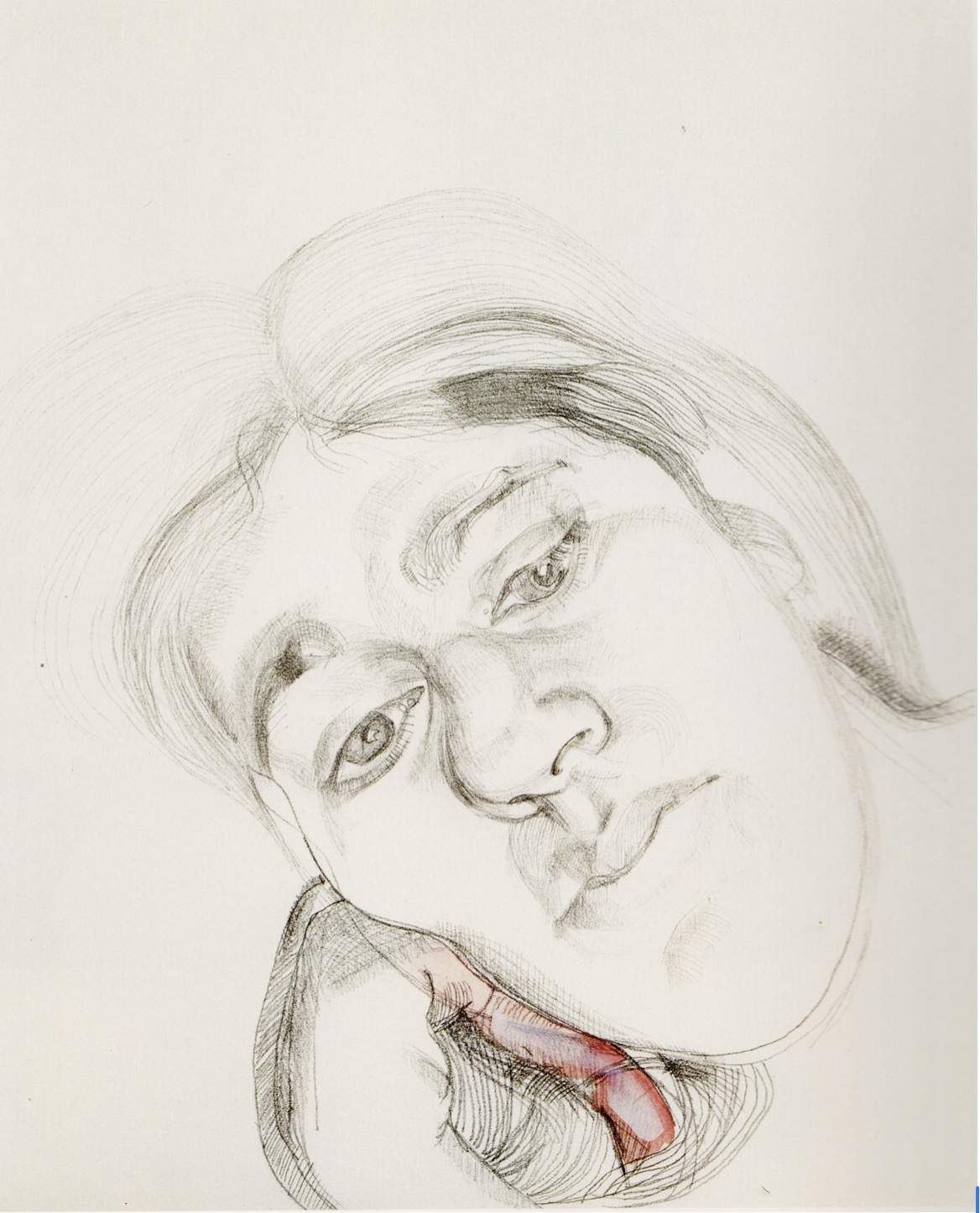
Annabel (1975)
Click image to enlarge.
So here’s how six eyes make sense. For the artist, the original conception emerges through the most diffuse and abstract pair of eyes at the deepest level of mind, in her hair. Hair is often associated with drawn lines. That perception is then transformed by the eyes of imagination on the forehead into a finished, seemingly mimetic drawing of his daughter whose conventional set of eyes are seen below. The image also plays on the long-running idea that an artist's creations are his "children".
So, contrary to majority belief, the methods of true art are repetitive. Freud knew this even when young. Later, he hinted at this: “[The] process of creation becomes necessary to the painter perhaps more than the picture itself. The process in fact is habit-forming.”2
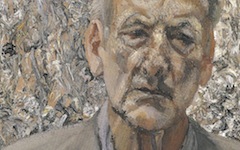
More Works by Freud
Notes:
1. James Hall, “Spiritual or Sinister?”, Art Quarterly, Autumn 2008, pp. 32-5.
2. Semir Zeki, Splendors and Miseries of the Brain: Love, Creativity, and the Quest for Human Happiness (Chichester, UK: Wiley-Blackwell) 2009, p. 57.
Publication Date: 09 Jun 2024
© Simon Abrahams. All articles on this site are the copyright of Simon Abrahams. If you wish to use copyrighted material from this site in print or other media for purposes that go beyond 'fair use', you must obtain permission from the copyright owner. Other websites may link to this page without permission (in fact, please do) but may not reproduce the material on their own site.