Art and the Human Mind
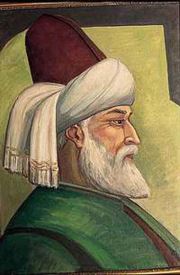
Rumi was a mystical poet born in what is now Afghanistan in 1207 and died in 1273. The world has learnt little since about being human that Rumi did not already know and his ancestors long before him. Technology and science may be new and have transformed our physical lives in fundamental ways. We live longer and healthier but, certainly, no happier. The scientific revolution has been so breath-taking that we forget the age and experience of the human mind. Many believe it is a product of the brain, others of the body and brain together. Some believe it dies at death; others that it lives on. Regardless, its age is undeniable developing tens of thousands of years before writing was developed or Christ appeared. We, humans, have had such long experience of being human that some minds among the millions born and possibly reborn every year have had access to its deepest wisdom. Such a man was Rumi and what he says has resonated in the mind of every great poet since whether or not they ever heard of Rumi. Regardless of race, culture or creed, all true artists know that finding that wisdom within ourselves is the secret to a happy, well-spent life. Artists, it seems increasingly clear to me, have always been united in their desire to tell the truth about the human mind and how we can help ourselves. Self-knowledge, art proclaims, is true knowledge.
Now a poem titled Only Breath by Rumi as translated by Coleman Barks:
Not Christian or Jew or Muslim,
not Hindu, Buddhist, sufi, or zen.
Not any religion, or cultural system.
I am not from the East or the West,
not out of the ocean,
or up from the ground,
not natural or ethereal,
not composed of elements at all.
I do not exist,
am not an entity
in this world or in the next,
did not descend from Adam and Eve
or any origin story.
My place is the placeless,
a trace of the traceless.
Neither body or soul.
I belong to the beloved,
have seen the two worlds as one
and that one call to and know,
first, last, outer, inner, only that
breath breathing human being.
I'll publish some more of Rumi's poetry in the near future.
Posted 04 Nov 2012: Artist as PoetInner TraditionReligionTheoryWriters
The EPPH Blog features issues and commentary.



Reader Comments