Dreaming in Art vs. Illustration
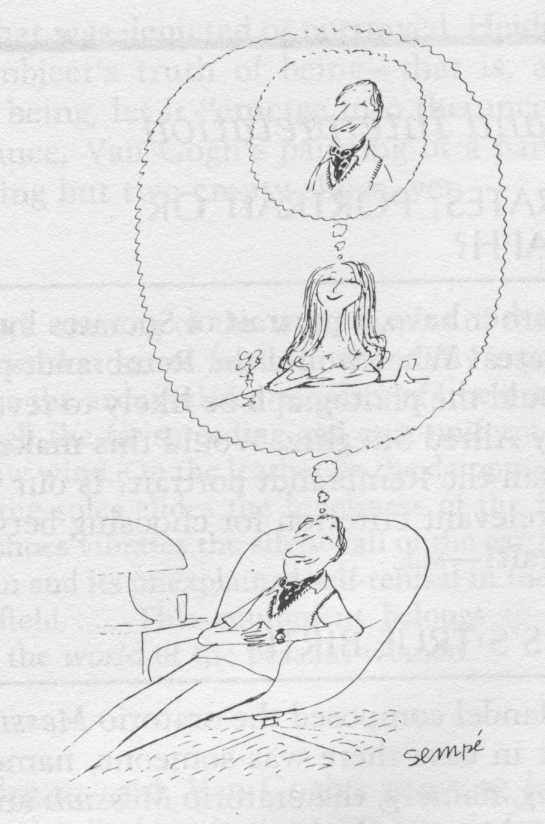
Drawing by Sempé in The New Yorker (1985)
“How do you know that this is a picture of him dreaming of her dreaming of him?” That is the question four art historians ask in a 1989 book titled Puzzles about Art. They don’t try to resolve their question about The New Yorker cartoon above but do ask an additional one: “If this is a conventional way of representing dreams in pictures, why this convention rather than some other one?”1 Both seem a strange question for art historians: bubble thoughts were probably never used in art before the 1960’s and, probably, hardly ever since. They are a quite modern convention in illustration, not art. They should really be asking, what is the difference between art and illustration? And why are bubble thoughts so rarely used in art?
This site (EPPH) is based on the principle that illustration is visual composition for the masses, a design method for everyone. Cartoons like this one, for instance, are a genre of illustration, not art. Art is intended for a creative elite, other visual poets and people who think like them. It may, and often did, provide the masses with superficial entertainment but its real meaning is always veiled and difficult for those on the wrong wavelength to understand. It is why a great master might only paint the middle figure in this cartoon, the girl dreaming, for other artists to sense intuitively the same meaning: the artist (either gender) imagining himself as a girl dreaming of himself. Art need not spell everything out, word for word, for other poets to understand it. Art trades on the unspoken conventions of the tradition.
Indeed EPPH believes the reason why this cartoon seems somewhat interesting to art lovers like you and me is because, deep down, we know it says something quite profound about both life and art.
1. Margaret Battin, John Fisher, Ronald Moore and Anita Silvers, Puzzles anout Art: An Aesthetics Casebook (New York: St. Martin's Press) 1989, pp. 77-8
Posted 23 Aug 2011: Visual Perception
The EPPH Blog features issues and commentary.



Reader Comments