Reality, History and Minor Masters
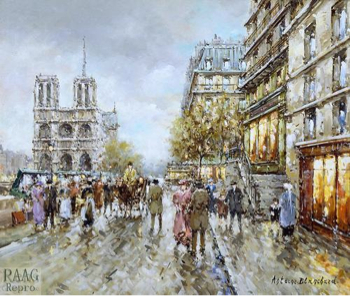
Antoine Blanchard, Paris Notre Dame 1900
If you want to learn about the history and culture of a period, you’d be better off studying minor painters like the one above. They generally copy reality faithfully like an art student painting a landscape. Great masters, however, design their work for everyone in all centuries and are much less likely to provide an accurate account of their own society. Years ago, a professor of English Literature made the point more articulately:
‘The tendencies of an age appear more distinctly in its writers of inferior rank than in those of commanding genius. These latter tell of past and future as well as of the age in which we live. They are for all time. But on the sensitive responsive souls, of less creative power, current ideals record themselves with clearness.’1
It may seem counter-intuitive but it's true....and worth remembering.
1. Professor Palmer in Preface to The English Works of George Herbert (1905), p. xii, cited in Arthur Lovejoy, The Great Chain of Being: A Study of the History of an Idea (Harvard University Press) 1936, p.20
Posted 28 Jan 2011: Theory
The EPPH Blog features issues and commentary.



Reader Comments