The Male Artist and His Female Muse
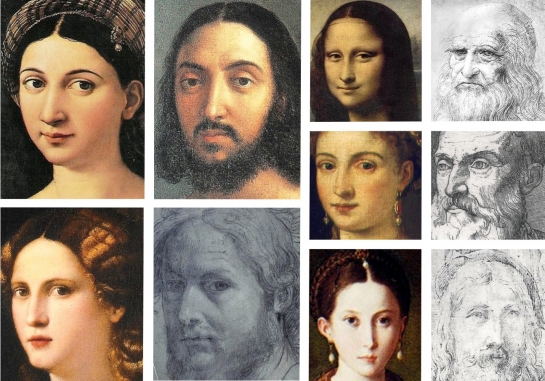
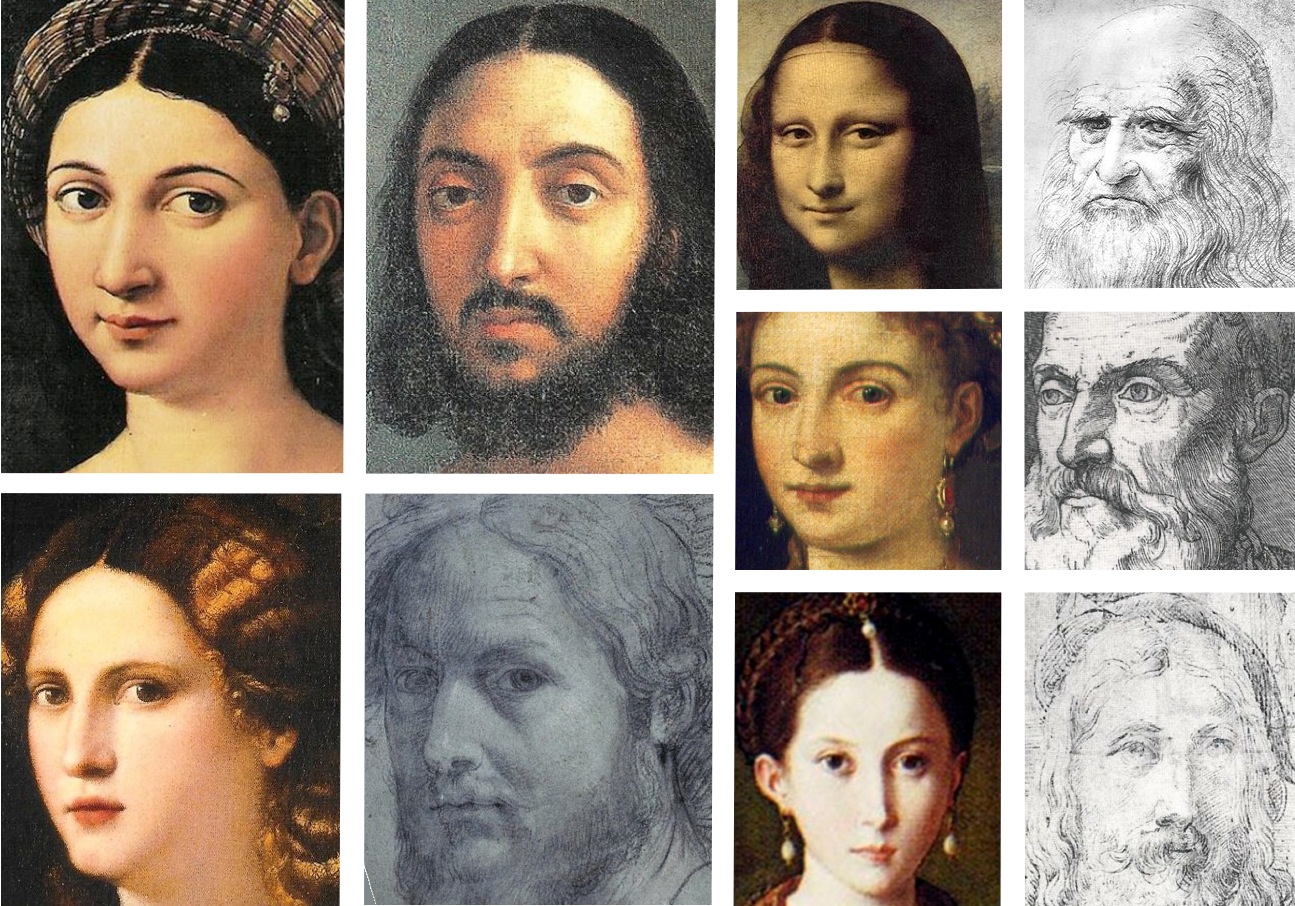
Mona Lisa was Leonardo’s muse and he kept the portrait with him until his death. The beautiful, semi-nude La Fornarina was Raphael’s. Titian’s muse and Palma Vecchio’s are both called Beautiful or La Bella in Italian. Parmigianino’s is known as Anthea. Today not one of these women has a real name - we have no idea who they were or even if they ever existed. But they do share characteristics. They all have a parting down the middle and they each resemble the artist’s own self-portrait (above).
The world has known about the proportional similarity between Leonardo da Vinci’s face and the Mona Lisa’s for 30 years now.1 EPPH has revealed the others more recently.2 Not long ago Paulo Coehlo, the wise Brazilian novelist, was asked a question directly related to this issue. His answer was quite revealing.
Question: "Many of your books are narrated from a feminine perspective. How does a male author like you manage to portray women so faithfully?"
Paulo Coehlo: "When I write I am first and foremost interested in trying to solve something with myself. I need to understand myself and through literature I found the best way to do that. I am my characters and they are manifestations of my soul. If I manage then to write from a feminine perspective that’s because I let my feminine side express itself."3
These male artists and many others, however macho in life, did have a feminine side they shared in paint with a lot of associated symbolism: fertility, creativity, conceiving images, giving birth to ideas, beauty, wisdom and so on. Look closer into these images and more will reveal itself.
1. Lillian Schwartz,“The Art Historian’s Computer”, Scientific American 272, April 1995, pp. 106-11. Schwartz initially published her findings in the 1980's. See S. J. Freedberg in “La Chronique des Arts”, supplement to Gazette des Beaux-Arts 109, May-June 1987, p. 15
2. Simon Abrahams, Raphael's La Fornarina (1518-20), 18th April 2011; For the others see EPPH Gallery: Portraits of Italian Sitters as the Artist (2010).
3. Paulo Coehlo Website: http://web.archive.org/web/20090525091700/http://paulocoelho.com/engl/faq.shtml#liv Retrieved on Oct. 22nd 2014.
The EPPH Blog features issues and commentary.



Reader Comments