Trees as Paintbrushes
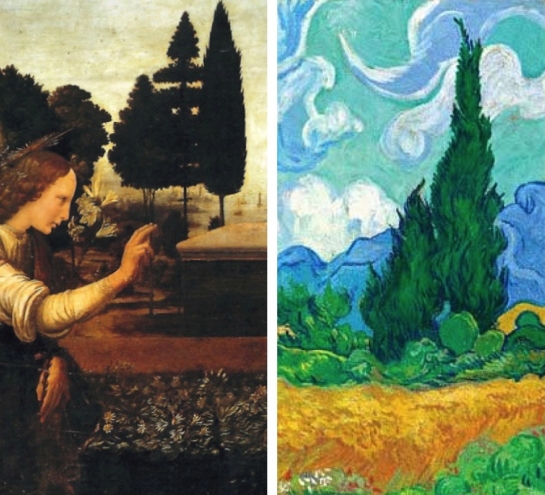
Leonardo da Vinci, Annunciation, detail (c.1472-5) Van Gogh, Wheatfield with Cypresses, detail (c.1889)
Looking out my study window in Italy something struck me that you might only notice in life not paint. Not far from the house, lower down, is a row of cypresses. When the wind blows, the pointed tops move back and forth over the distant landscape which, of course, remains quite still, unmoved. You can see what happens in this short video clip. It is that movement over a stable scene that makes them resemble long, thin paintbrushes moving back and forth over a landscape in the process of being painted. Such an image, once seen that way, sticks. More likely, perhaps, in a painter's mind than ours.
Trees are visual metaphors for an artist's brushes are explained as such in entries on Piero della Francesca’s Resurrection (c.1458), Rembrandt's Three Trees (1643) and his Landscape with a Stone Bridge (1638), Monet's Camille Monet in the Garden at Argenteuil (1876) and Van Gogh's Cypresses with Two Female Figures (1889). However, there are hundreds more including Leonardo's Annunciation (c. 1472-5) in the Uffizi and Van Gogh's Wheatfield with Cypresses (c.1889), both illustrated above.
Posted 26 Jan 2014: Brushes / PaletteLeonardo da VinciMonetRembrandtVan Gogh
The EPPH Blog features issues and commentary.



Reader Comments
Great insight. Not a new tack, but one laden with possibilities and opportunities for more insights. The painters connection with mind truly is a source of energy for everyone.
Sven Theunissen
27 Jan 2014