Two Medieval Churches
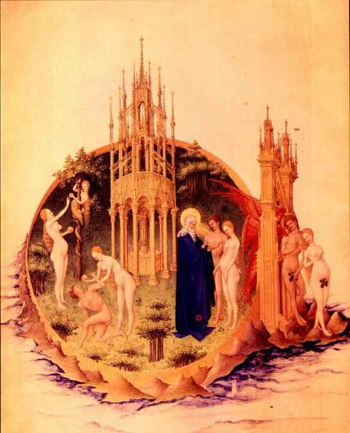
Adam and Eve from the Très Riches Heures du Duc de Berry
Ever since I became aware that masterpieces of Western art tend to make more sense viewed through the ideas of esoteric Christianity than through the Secular Church’s religious dogma, I have been curious why art historians write as though there was only one Church in the Renaissance when, properly speaking, there were two. Once the papacy by the late Middle Ages had become the most important administrative force within the Church, it split into two, the difference between them now crucial to our understanding of Christian art: the Secular Church and the Regular Church.
The Secular Church, serving the masses, was by far the most important and it is the beliefs and doctrines expounded by the Secular Church which today dominate art history even though the Regular Church, caring for those who had taken vows to live apart from the community, appealed to those who were often more spiritually advanced. Because individuals often inspired monastic movements, the Regular Church was complex and disjointed with a bewildering variety of orders. Nevertheless the Regular Church ultimately provided an alternative to the Secular Church for groups like religious women unable to acquire clerical status and mystics who felt a calling. There was thus a greater variety of religious expression in the Regular Church, some of which might have been deemed heresy by the other Church. Indeed the line between heresy and piety was always extremely thin, some heretics condemned for beliefs that were less extreme than those of others who had been raised to sainthood.
At the same time as the Secular Church was losing moral authority, saintly individuals were writing books of private devotion that had become increasingly popular with the arrival of the printing press. Many paintings intended for private devotions must have been based on these works and their non-doctrinal ideas. Indeed, once printing began, the Church lost its control over the Scriptures entirely. Individuals could read them for themselves. Next week I will discuss some of the esoteric ideas which help explain well-known mysteries in art, mysteries that the Christian dogma of the Secular Church has often been unable to solve.
The EPPH Blog features issues and commentary.



Reader Comments