What is Art?
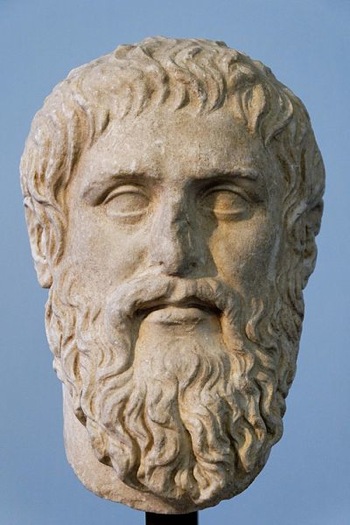
Edward de Bono, the polymath and creative thinker, has argued that argument as a way of thinking began with the Gang of Three: Socrates, Plato and Aristotle. Argument then became the default mode for human thought and while the method has served us well over the centuries it is unsophisticated. Each side states its case in turn, each trying to prove the other wrong. It motivates the parties but does little to explore a subject. He suggests an appealing alternative called parallel thinking but what interests me is why we still use “argument” if it is so inefficient. This is De Bono’s explanation: “We use argument not because we think it is such a wonderful method – but because we do not know any other method.”1 It is the same in art. We use normal, everyday perception to look at poetic paintings and poetic sculpture not because it is a fruitful method or because it unlocks meaning but because we know no other. That’s why those who use normal perception on art have to rely on methods borrowed from other disciplines to extract meaning (sociology, psychology, history etc.) Nor can the art world agree on two fundamental questions, the sort of questions that in any other discipline would be answered on Day One of an introductory course:
“How do we define our subject?” or “what is art?”
"What is the difference between art and craft?”
From our point-of-view, imagining all the varied settings as all taking place in the artist’s mind, art is visual poetry. As for the difference between art and craft, art contains meaning beyond its apparent content; craft is what it is.
1. Edward De Bono, How to have a Beautiful Mind (London: Vermilion) 2004, p. 89
Posted 05 Feb 2012: TheoryVisual Perception
The EPPH Blog features issues and commentary.



Reader Comments