Androgyny
While the Renaissance phrase Every painter paints himself uses the masculine to denote both genders, as the English of my youth did too, the artists themselves were under no delusion that their male minds would be sufficient to become like God (see The Divine Artist). They needed a feminine side too (or a masculine one in the case of female artists) because a mind reflecting the cosmos – whether God’s or a visual poet’s – contains both genders as any reasonable thinker since Plato would have known. This is important to grasp because the patriarchal norms of everyday life in the Renaissance, of particular interest to feminist art historians, were markedly different from the intellectual concepts so important to mystical thought.
All Articles (Alphabetical by Artist, then Title)
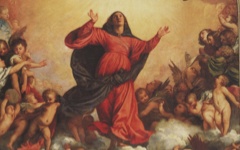
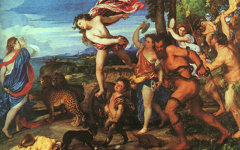
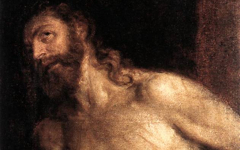
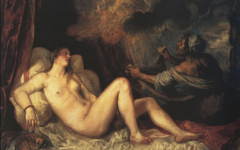
Baudelaire's linking of Painting with cosmetics in the nineteenth century was not a novel idea, as long believed, but one with a very long history indeed
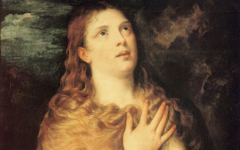
Titian’s Mary Magdalene(s) (c.1530-60)
Train your visual memory to recall similar poses in quite different situations; they usually have some meaning in common
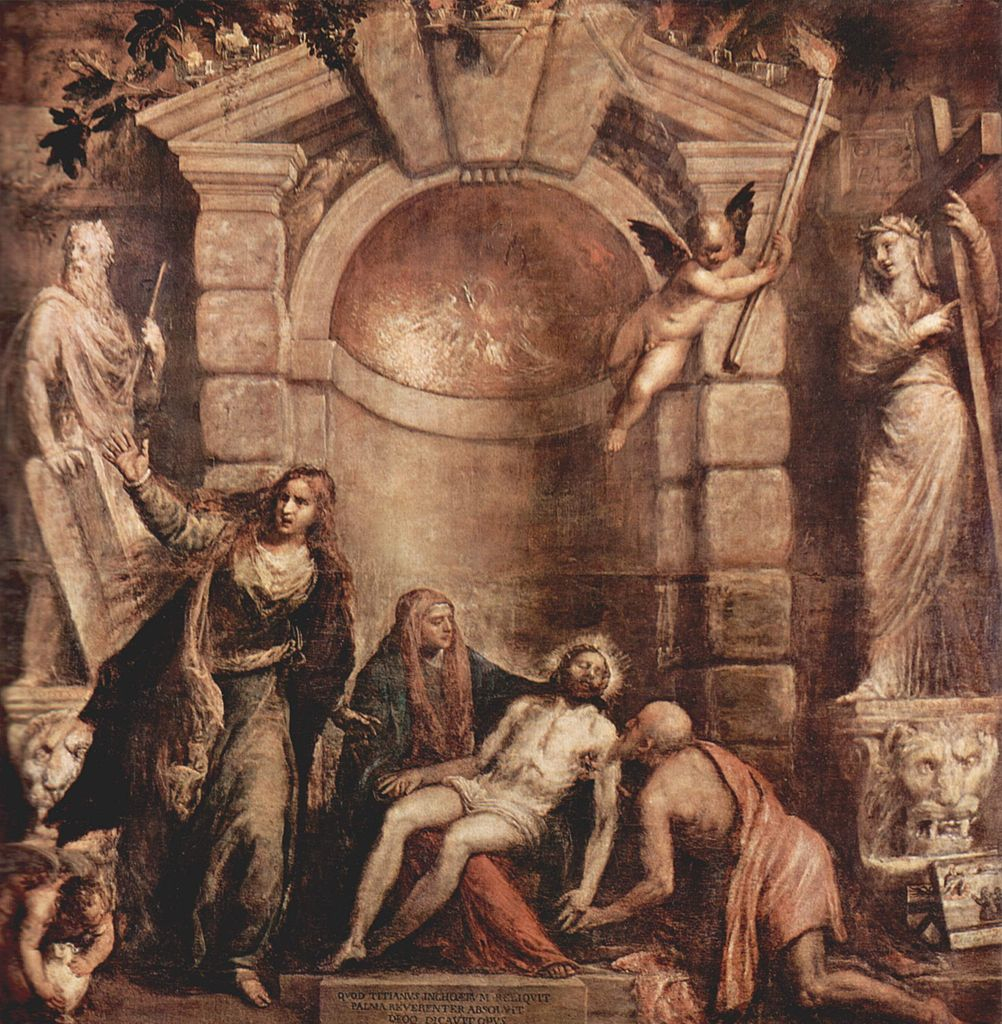
Titian’s Pieta (c.1575)
A much-loved painting contains a marvelous self-portrait in the clouds
Titian’s Presentation of the Virgin in the Temple (1534-38)
Get to know what painters and sculptors look like at work - and their various processes - and your brain will penetrate the surface of a painting in no time. A painting like this one...
Titian’s Shepherd and Nymph (c.1575-6)
Find out what touching, hands and pointing fingers mean for Titian
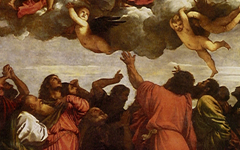
Titian’s Touch: Noli Me Tangere (1511-12), Assunta (1520) and Self-portrait (c1560-62)
See how Titian tricks us into thinking there is one reality in art when there are, at least, two
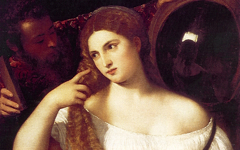
Titian’s Woman with a Mirror (1512-15)
A Van Dyck portrait at the Frick reveals some of its secrets easily
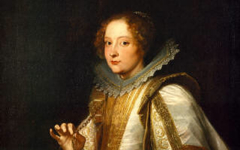
Van Dyck’s Marchesa Cattaneo (c.1622-7) at The Frick
See why knowledge of a painter's practice can lead to a different, and more accurate, interpretation of a scene.
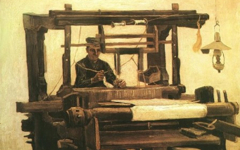
Van Gogh’s Weavers (1884)
The Velazquez that the Louvre doesn't show anymore is not what curators think. Ask Millet, Manet, Degas, Matisse or Picasso....
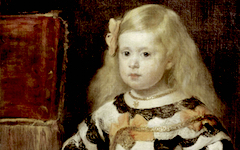
Velazquez’s Infanta Margarita (1653)
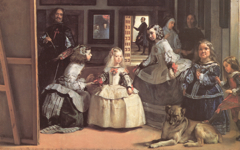
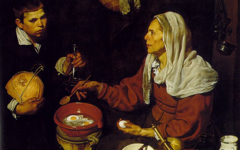
The magic of visual illusion was not an invention of the Surrealists; it has been an integral part of art for centuries.
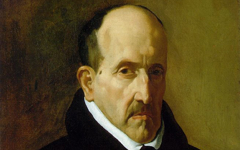
Velazquez’s Portrait of Luis de Góngora (1622)...and Picasso’s.
See how Velazquez portrays the artist and his art and then apply the lesson learned elsewhere
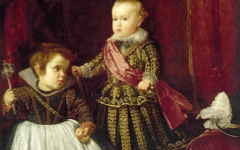
Velazquez’s Prince Baltasar Carlos with a Dwarf (1632)
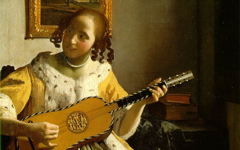
This picture uses so many of the themes and methods explained on EPPH that I can note only a few. Try exercising your own perception on the rest.
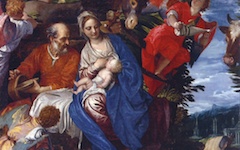
Veronese’s Rest on the Flight into Egypt (c.1572)
Artists often identify with other artists, using them as an alter ego. Here is an exceptionally clever one.
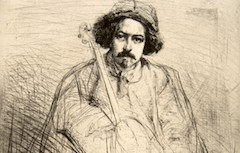
Whistler’s J. Becquet, Sculptor (1859)
Page 4 of 4 pages ‹ First < 2 3 4
© Simon Abrahams. Articles on this site are the copyright of Simon Abrahams. To use copyrighted material in print or other media for purposes beyond 'fair use', you must obtain permission from the copyright owner. Websites may link to this page without permission (please do) but may not reproduce the material on their own site without crediting Simon Abrahams and EPPH.