Conception (Sexual and Mental)
The poet’s pen is in some sense a penis, wrote a literary critic. “[T]he patriarchal notion that the writer fathers his text just as God fathered the world is and has been pervasive in Western literary civilization.” That is how she expressed the common link between male writers and the female body in early modern Europe. The English poet Philip Sydney (1554-86) wrote in a sonnet that he was “great with child to speak, and helpless in my throes (child labour).” John Milton (1608-74), described as a “phallic poet extraordinaire”, also made analogies between the “issue of the brain” and “the issue of the womb.”1
All Articles (Alphabetical by Artist, then Title)
Just like Michelangelo's, Picasso's women are masculine too....here's how and why.
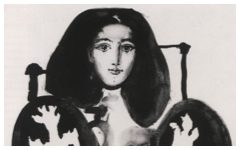
Picasso’s Woman in an Armchair (1948)
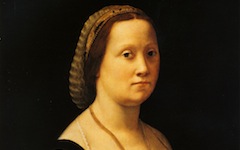
New revelations, as always, about one of the world's most famous portraits

Raphael’s La Donna Velata (c.1516)
Beware of biographical stories trying to explain a great portrait; they are rarely, if ever, true.

Raphael’s La Fornarina (1518-20)
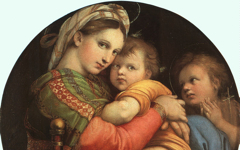
Still-lifes by great artists may seem simple or devoid of meaning, especially when compared to figure paintings, but they rarely are either simple or meaningless.
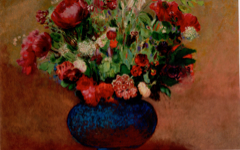
Redon’s Pavots et Oeillets de Poète… (c.1906)
How the setting is so rarely what you think....you must think differently
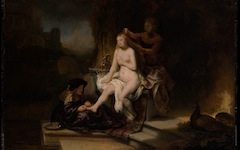
Rembrandt’s Bathsheba at Her Bath (1643)
Find out why people pee on etchings
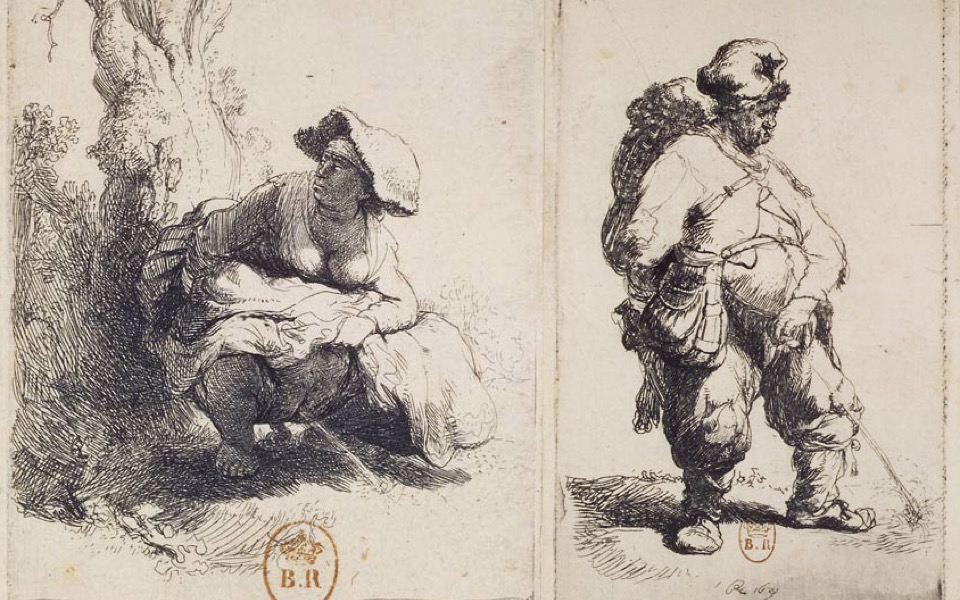
Rembrandt’s Man Making Water (1631) and Woman Making Water and Defecating (1631)
The presence of a mystery in an artwork, intentionally made mysterious by the artist, does not mean that the mystery cannot be solved. Mysteries are made to be resolved.
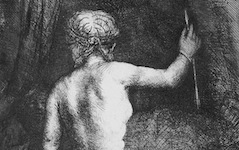
Rembrandt’s Woman with the Arrow (1661)
In photographs taken with a macro lens, showing an object in extreme close-up, it can be difficult to recognize the subject. It is the same in painting. However, if you know it's a close-up, it's easier.
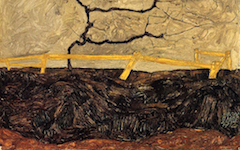
Schiele’s Bare Tree Behind a Fence (1912)
In the epistle of an apostle, the letters matter; as they also do in the self-portrait of a prophet, even if self-proclaimed.
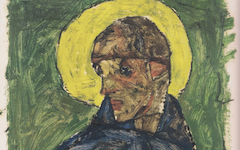
Schiele’s Self-portrait as a Saint (1913)
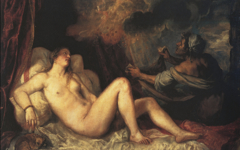
Landscapes, if art, are never just landscapes. Are they even landscapes? The Chinese call them "Mindscapes"
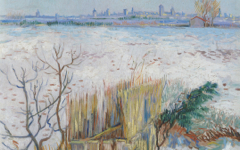
Van Gogh’s Snowy Landscape with Arles in the Background (1888)
The magic of visual illusion was not an invention of the Surrealists; it has been an integral part of art for centuries.
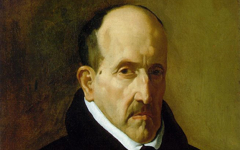
Velazquez’s Portrait of Luis de Góngora (1622)...and Picasso’s.
Artists often identify with other artists, using them as an alter ego. Here is an exceptionally clever one.
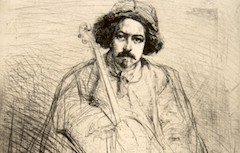
Whistler’s J. Becquet, Sculptor (1859)
© Simon Abrahams. Articles on this site are the copyright of Simon Abrahams. To use copyrighted material in print or other media for purposes beyond 'fair use', you must obtain permission from the copyright owner. Websites may link to this page without permission (please do) but may not reproduce the material on their own site without crediting Simon Abrahams and EPPH.