Rembrandt’s Self-portrait in Sixteenth-Century Costume (1638)
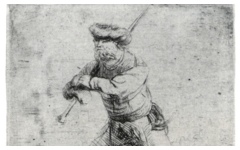
Scholars have long wondered why Rembrandt would represent himself in expensive and extravagant clothing from a century earlier even though they know that the etched self-portrait is based on an engraving of the fifteenth-century painter Jan Gossaert, known as Mabuse (see next image). Unaware of the long tradition in which great masters have imagined themselves as earlier great masters, today’s scholars assume Rembrandt borrowed Mabuse's pose without meaning. Yet, in borrowing the pose of a great master and in dressing himself in the clothes of success, Rembrandt symbolically represents himself as a member of the canon even though, at around thirty-four years of age, he was not yet certain of his immortality.
See also Rembrandt’s Self-portrait at a Window
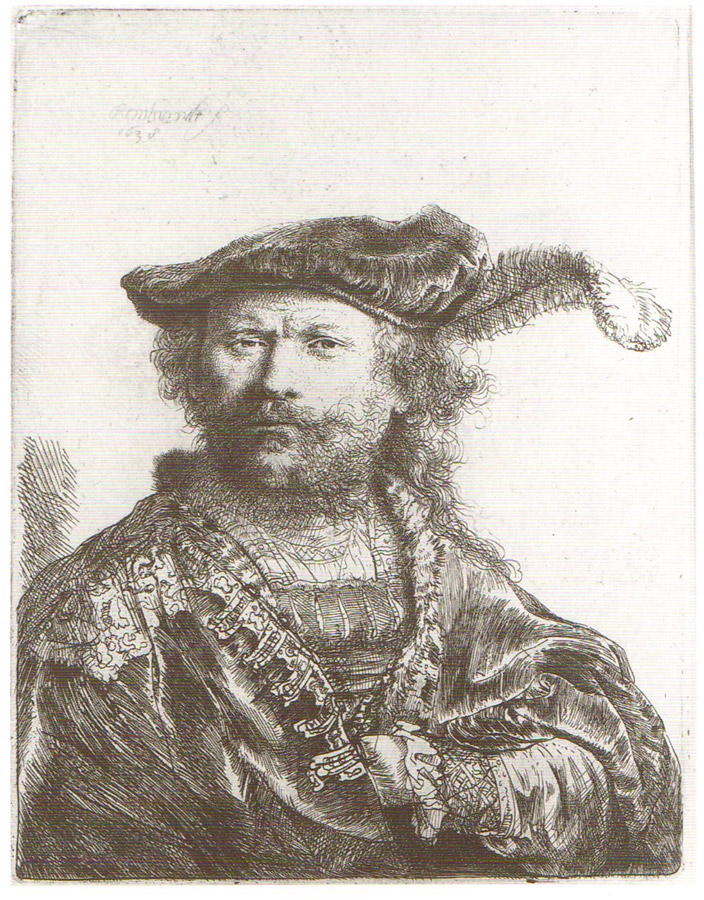
Rembrandt, Self-portrait in Sixteenth-Century Costume (1638)
Click image to enlarge.
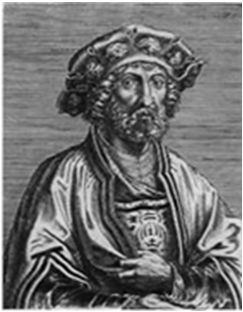
Anon., Portrait of Jan Gossaert, known as Mabuse
Click image to enlarge.
More Works by Rembrandt
See how Joseph is an artist staring at his work of art inside the artist's head
Rembrandt’s Holy Family with a Cat (1654)
Notes:
Publication Date: 20 Apr 2010
© Simon Abrahams. All articles on this site are the copyright of Simon Abrahams. If you wish to use copyrighted material from this site in print or other media for purposes that go beyond 'fair use', you must obtain permission from the copyright owner. Other websites may link to this page without permission (in fact, please do) but may not reproduce the material on their own site.