28 Aug 2010
Meaning in Architecture
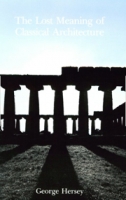
The theory presented on this website, that there is meaning in visual art hidden from view but plainly apparent to a creative mind, is paralleled in architecture by the little-known idea that buildings can have meaning too. Today we are so convi
10 Aug 2010
Train Stations or Museums?
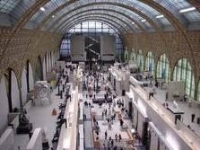
It’s somewhat fitting that twenty years ago the French transformed an unused train station into a major museum because, ever since, major museums have been turned into train stations. The Musee D’Orsay is no less crowded now than it
10 Aug 2010
Ambiguities in Art
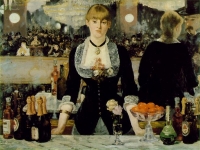
Everyone who has ever studied art knows that one of the common characteristics of great masterpieces is that they do not make sense. For instance, just as Velazquez in Las Meninas paints a picture from an impossible viewpoint so the mirror in Ma
07 Aug 2010
Artists and Creation-Centred Spirituality
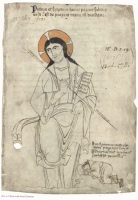
Conventional art scholarship is far too eager to believe that artists illustrated the orthodox, didactic beliefs of their patrons. The idea that Michelangelo was told what to paint in the Sistine Chapel is both common in art scholarship and mad.
27 Jul 2010
The Traditionalism of Contemporary Art
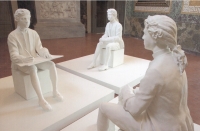
Giulio Paolini (b. 1940) is an Italian artist living in Turin. His sculpture, Three by Three, is currently being exhibited at the new MAXXI museum in Rome and it demonstrates, with startling clarity that good contemporary artists today are just

26 Jul 2010
Why do Serious Art Books Fail to Sell?
The major museums nowadays are like zoos, each year becoming more and more crowded. The trend is so strong that, despite a rise in entry fees and a deep recession, there was a significant increase in museum visitors last year. Yet though art its
23 Jul 2010
Re-thinking support
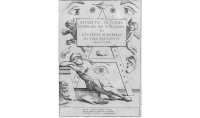
Think about this......In the San culture of Southern Africa the rock on which their images are created is thought of as a threshold to the spirit world. It is more than likely that the Neolithic painters of Europe thought so too, as David Lewis-
22 Jul 2010
Don’t you find it odd that….?
Don’t you find it odd that, according to the conventional paradigm, a visual artist active between the Renaissance and 1900 had only two choices? He or she could either illustrate a story (biblical, historical, literary etc.) or copy natur
02 May 2010
Letters in the Art of All Periods
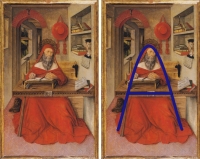
There are certain long-lived traditions within the history of art-making that, if known, add immeasurably to the viewer's interest and understanding. Among them is the subtle metamorphic inclusion of the artist's initials, one of the many lit
The EPPH Blog features issues and commentary.