Degas on Reflection and the Great Masters
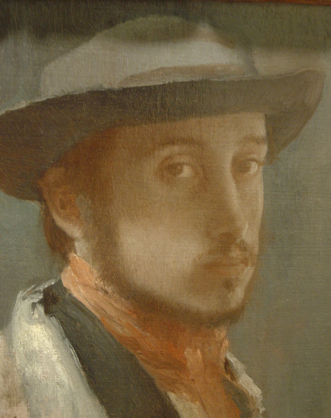
Degas, Self-portrait. Oil on canvas. Clark Institute, Williamsburg
At the entry to a small, mildly interesting exhibition of Rembrandt’s engravings and their influence on Degas, the Metropolitan Museum has highlighted the following quote:
“What I do is the result of reflection and the study of great masters.” Edgar Degas
That will not surprise anyone – and is hardly worth citing - unless you think about what he did not say. His work, presumably, had little to do with the study of contemporary art, an unspoken claim at odds with the common idea that the Impressionists influenced one another and even with the presumed link between contemporary culture and art. Nor does he say anything about reading and the study of literature and philosophy. He simply reflects, an activity that over-worked art historians today must find a luxury. There is a world of knowledge in the visual study of great masters that cannot rise to consciousness without long periods of refelection. Word-smiths like poets and even many critics use book-knowledge to squeeze meaning from a visual masterpiece while artists like Degas used mainly, and more successfully, reflection and the study of past art. Indeed a sociological study several years ago concluded that great artists when they were students focused on artists from at least a century before they were born while less successful painters turned to the leading artists of the immediately prior generation.1 Degas' comment seems to support that.
1. Dean Keith Simonton, “Artistic Creativity and Interpersonal Relationships Across and Within Generations”, Journal of Personality and Social Psychology 46, 1984, pp. 1273-86
Posted 27 Feb 2012: DegasBooksContemporary ArtExhibitionsMuseumsTheory
The EPPH Blog features issues and commentary.



Reader Comments