God is Welles
The theme on the site named 'Divine Artist' has recently revealed how frequently great masters depict themselves as God, Christ or the Holy Spirit. A paper on the Sistine Chapel explains how Michelangelo depicted himself as God and shorter entries show how other artists have given Christ their own features, including Titian and Dürer. Entries on Van Gogh, Gauguin and others will follow. Though we have long been led to believe that Renaissance artists would not have painted anything so sacrilegious for a sacred site, it is not true. Artists repetitively depicted themselves as God because, on the esoteric level understood by prominent figures both inside and outside the Church, we are all made in the image of God. Our task, having fallen from Eden, is to find that divine essence inside us which, when unmasked, will reveal ourselves to be God, each of us one and the same. However surprising, it is not such a novel suggestion.
Yesterday I happened upon an excerpt from Peter Conrad's book, Creation: Artists, Gods & Origins (2007). Conrad, a Professor of English Literature at Oxford University, writes:
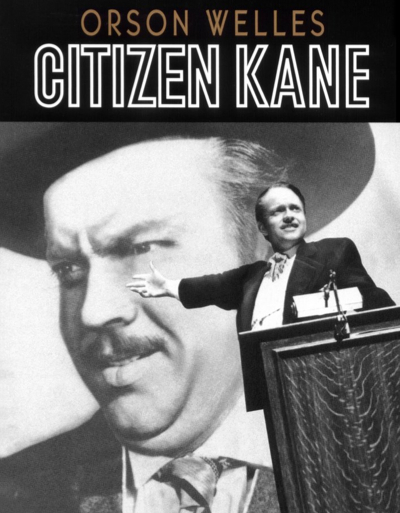
"With precocious cheek, Orson Welles followed the prescriptions of Genesis in a trailer he made in 1941 for Citizen Kane. On a dark screen, a voice calls for light. God named light, and automatically irradiated the chaotic gloom; film is a conjuration of electric light, and - as still frames flicker into animation in passing through a projector - it is also the means by which Welles creates life. At his command, a spotlight swings down from the studio's obscure firmament. Still invisible, Welles requests a microphone, which also hovers into place. Narrating the trailer he remains an authoritative voice declaiming from out of a bright, aerial light, like God talking to Moses. One man divides himself into a trinity. Acting in the film, Welles is the son, the child of his own brain; writing the script, he is the holy ghost, who prompts human beings into action by whispering in their ears; but as its director, he is God the father, an all-seeing autocrat who prefers to remain unseen, a creator who pervades his creation and yet is teasingly absent from it."1
1. Peter Conrad, Creation: Artists, Gods & Origins (Thames & Hudson) 2007, p. 14
Posted 28 Jun 2011: Religion
The EPPH Blog features issues and commentary.



Reader Comments