Pamela H. Smith’s Body of the Artisan
Much of the new information on this website, the revelations that surprise, come not from literature, art historical writing or aesthetic theory, but from visual images themselves. It may seem odd but I learnt much of what I know by studying Edouard Manet's paintings. These findings were then confirmed and indeed partially revised by my study of earlier art. Unfortunately, generalist study is so out of fashion that many experts think they lack the competence to evaluate art historical observations from outside their limited area of expertise. This is sad because Manet’s knowledge is the common knowledge of all true artists. To appreciate art as the artist intended, one needs to know that. Fortunately, many of these observation can be confirmed for word-dependent art lovers by how great literary poets share a similar philosophy and there is some evidence that great composers did too. Others who have thought likewise include the founders of world religions, mystics, shamans, alchemists and anyone who understands what has become known as the Inner Tradition. Sadly, few sources that art historians use to interpret art – patrons, the contemporary public and orthodox theologians – are members of this group. Their understanding is limited, constrained by conventional visual perception.
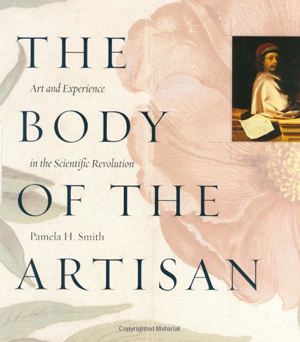
That’s why I was recently struck by the basic idea behind Pamela Smith’s excellent book, The Body of the Artisan. She proposes that while lettered men in the Middle Ages and early Renaissance committed to memory a corpus of knowledge contained in books, craftsmen including painters did not. Instead she argues that “artisans often formulated their knowledge and processes of cognition not in words but...works” and it is this knowledge contained in art that she tries to unearth. That is, she proposes, how artisans expressed and passed on their knowledge. Her other important issue is how experience and the production of things were bound up in the artisan’s own body, what she calls “bodily knowing.” Once again, her insight echoes this website’s basic philosophy: that artists use bodily metaphors, based on the artist’s own body, to express creation’s pivotal importance to their understanding of everything.
If you get the chance, read it. It’s an important book.
The EPPH Blog features issues and commentary.



Reader Comments