Six Tips on How to Look at Art
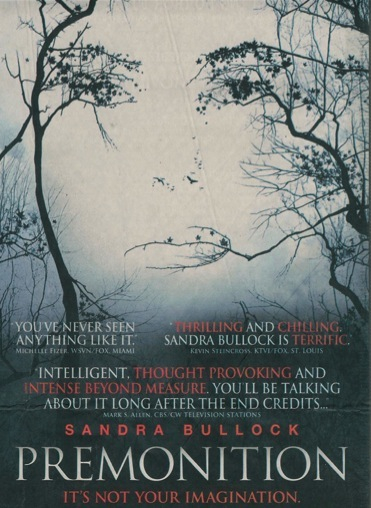
Poster for a movie, Premonition (2007)
The idea, peddled by many, that you can just stand in front of a work of art and let it speak to you is wrong. What, for instance, happens inside you when you look at the Mona Lisa? Probably not much. Indeed, as an adolescent trying to figure out why adults were going bananas over art, the Mona Lisa was my major problem. It made me feel dumb.
Forty years later my sense of art has undergone radical transformation. Interpretation and understanding are, I now believe, the true purpose and evolutionary advantage of art and of its aesthetic pleasure. Art, though, like great literature is primarily aimed at like minds, creative minds. It is not intended for all to understand and appreciate which is why, for many, the Mona Lisa really is a let-down. Unless you have the leisure to study art as widely as artists do, you won’t get to an understanding of art easily.
To help, here are 6 tips:
1. Contrary to conventional wisdom paintings by true artists are not illustrations of stories or of events nor an early form of photography. Art never depicts exterior reality; politics is never its primary purpose. If it was, it would be illustration, not art.
2.Art is visual poetry in which objects and figures are expressions of the artist’s own creative processes, like a mirror in the mind.
3. Over the last five centuries artists, from Leonardo to Lucian Freud, have argued in print or speech that “every painter paints himself.” They meant it; so we should believe them.
4. Artists have always loved visual puns and visual illusions; they still do. Art is full of them, most still unseen. Fortunately illustrators today, many of whom make obvious use of the secret tricks and visual processes of the great masters, are a worthwhile subject to study. Remember their visual tricks and you will see them in art because the mind and eye naturally search for knowledge they already know.
5. True artists have always been followers of the Inner Tradition, the collective name for esoteric spirituality of all kinds. Read as much as you can about it because artists are mystics like prophets and saints.
6. The last rule should perhaps have been the first. Look at as much art as you can and see an artist’s work in depth by poring through as many monographs on him or her as you can find and then at artists whom that one particularly admired. Later artists can help you understand earlier art too. Read about an artist you are interested in but remember that, though looking at color reproductions is useful, seeing the originals - often much larger or even smaller - is crucial. See as many as you can.
Posted 13 Nov 2012: Mirrors / ReflectionBooksInner TraditionTheoryVisual Perception
The EPPH Blog features issues and commentary.



Reader Comments