Artist’s Mind
All true art is literally a mirror of the artist’s mind, a reflection of the artist's imagination at work. If you know that, and bear it in mind when looking at artworks, your eyes will be alert for the visual details that convey it. If not, your perception will fall victim to the everyday illusion of exterior reality, whether examining an image of the Nativity, a portrait of Napoleon or a view inside Matisse’s studio.
Some scholars have identified artistic production as the true subject of a seemingly quite different scene but such occasions are rare.{ref1} Most are so convinced that past art was designed for the patron that they look at art through the eyes of a contemporary spectator: as though through a window. They are literalists. Yet to poetic painters the canvas is never “a window” but “a mirror” and nothing is as it seems. We are not looking out, but in. Remember that, and doors will open that you never even knew were there. Take a look at these examples of how artists portray their own mind.
1. Ruvoldt, The Italian Renaissance Imagery of Inspiration (Cambridge University Press) 2004, pp. 114-5, 118
All Articles (Alphabetical by Artist, then Title)
Van Gogh is one of the few artists whose hidden elements revealed on EPPH confirm the conventional view of his art.
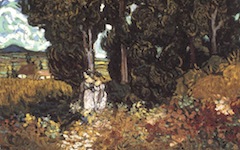
Van Gogh’s Cypresses with Two Female Figures (1889)
Landscapes, if art, are never just landscapes. Are they even landscapes? The Chinese call them "Mindscapes"
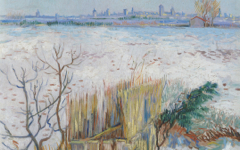
Van Gogh’s Snowy Landscape with Arles in the Background (1888)
See how a portrait viewed one way resembles a portrait; viewed another way turns the world inside out
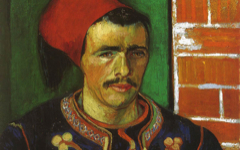
Van Gogh’s The Zouave (1888)
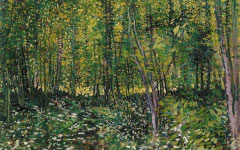
How Van Gogh turned a self-portrait into an iconic landscape
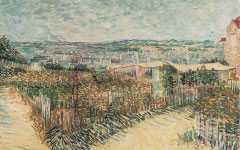
Van Gogh’s Vegetable Gardens at Montmartre (1887)
See why knowledge of a painter's practice can lead to a different, and more accurate, interpretation of a scene.
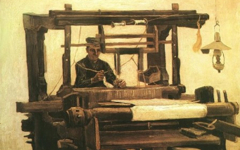
Van Gogh’s Weavers (1884)
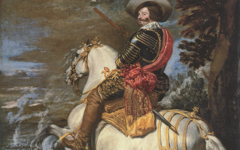
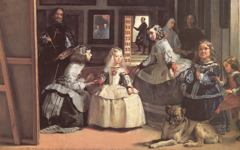
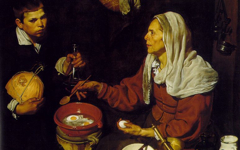
Discover how the figure of an actor by Velazquez contains far more than just the figure of an actor
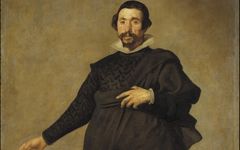
Velazquez’s Pablo de Vallodolid (1636-7)
Keep an eye on the "errors" in art and you will find the solutions
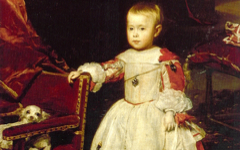
Velazquez’s Portrait of Infante Felipe Prospero (1659)
The magic of visual illusion was not an invention of the Surrealists; it has been an integral part of art for centuries.
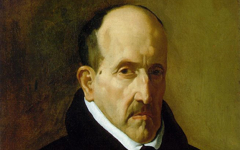
Velazquez’s Portrait of Luis de Góngora (1622)...and Picasso’s.
See how Velazquez portrays the artist and his art and then apply the lesson learned elsewhere
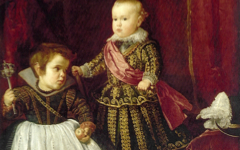
Velazquez’s Prince Baltasar Carlos with a Dwarf (1632)
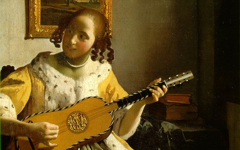
There is more to Vermeer than a pretty scene and dull symbolism
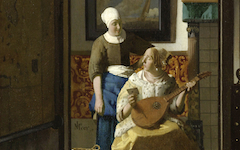
Vermeer’s The Love Letter (c.1669-70)
Sometimes one of the secrets of art is so obvious, no-one sees it
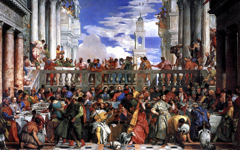
Veronese’s The Marriage at Cana (1563)
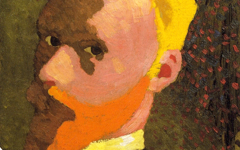
Artists often identify with other artists, using them as an alter ego. Here is an exceptionally clever one.
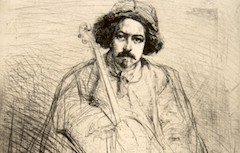
Whistler’s J. Becquet, Sculptor (1859)
How a concern for China's migrants is used as a metaphor for processes in the artist's own mind
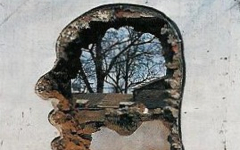
Zhang Dali’s Demolition (1999)
In this late painting Zurburan reveals what is hidden elsewhere
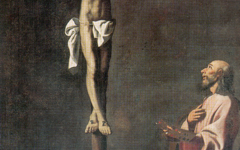
Zurburan’s St. Luke as a Painter (1660)
Page 6 of 6 pages ‹ First < 4 5 6
© Simon Abrahams. Articles on this site are the copyright of Simon Abrahams. To use copyrighted material in print or other media for purposes beyond 'fair use', you must obtain permission from the copyright owner. Websites may link to this page without permission (please do) but may not reproduce the material on their own site without crediting Simon Abrahams and EPPH.