Artist’s Mind
All true art is literally a mirror of the artist’s mind, a reflection of the artist's imagination at work. If you know that, and bear it in mind when looking at artworks, your eyes will be alert for the visual details that convey it. If not, your perception will fall victim to the everyday illusion of exterior reality, whether examining an image of the Nativity, a portrait of Napoleon or a view inside Matisse’s studio.
Some scholars have identified artistic production as the true subject of a seemingly quite different scene but such occasions are rare.{ref1} Most are so convinced that past art was designed for the patron that they look at art through the eyes of a contemporary spectator: as though through a window. They are literalists. Yet to poetic painters the canvas is never “a window” but “a mirror” and nothing is as it seems. We are not looking out, but in. Remember that, and doors will open that you never even knew were there. Take a look at these examples of how artists portray their own mind.
1. Ruvoldt, The Italian Renaissance Imagery of Inspiration (Cambridge University Press) 2004, pp. 114-5, 118
All Articles (Alphabetical by Artist, then Title)
Michelangelo's first great masterpiece is widely misunderstood. Like art in general, it is an expression of the creative moment.
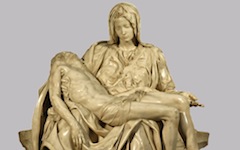
Michelangelo’s Vatican Pieta (1498-99)
Discover how you can unlock layers of meaning from a relatively simple composition
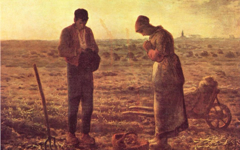
Millet’s The Angelus (1857-9) and other works
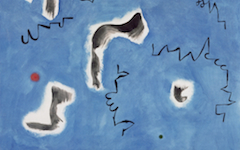
One way to make sense of Miró's abstractions is to remember, as ever, that 'every painter paints himself.'
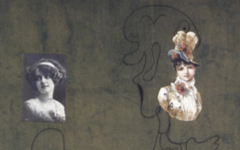
Miró‘s Drawing-Collage (1933)
Miró's inventive and individualistic style, however modern, is merely a complement to his deep traditionalism. And that's as it should be.
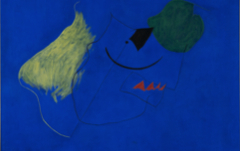
Miró‘s Painting / The Circus Horse (1927)
If a self-portrait was collected by Picasso as this one was, there must be a reason beyond remembrance. It's our job to find out what.
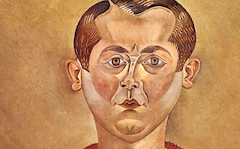
Miró‘s Self-portrait (1919)
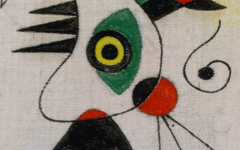
See how a seemingly abstract painting is not quite so abstract after all
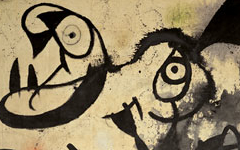
Miró‘s Women, Birds August 2 1973 (1973)
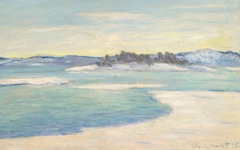
Is landscape portraiture? Monet clearly thinks so.
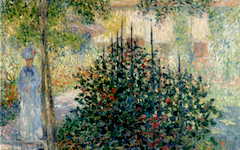
Monet’s Camille Monet in the Garden at Argenteuil (1876)
Underneath the architecture of Monet's cathedrals is a major surprise
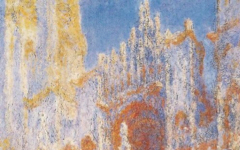
Monet’s Rouen Cathedral (1892-4)
Like scripture, there are two ways to view a landscape: externally and internally. See how...
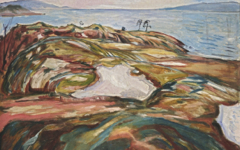
Munch’s Coastal Landscape (1918)
Did you know that....? There's so much to see for the first time, even in the most familiar images
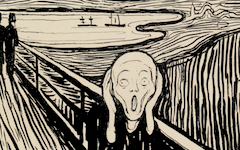
Munch’s The Scream (1895)
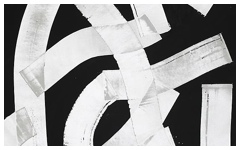
Many were scandalized by this painting in the 1990's yet still missed the "real" scandal!
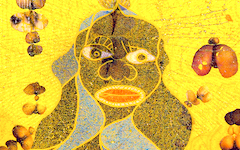
Ofili’s The Holy Virgin Mary (1996)
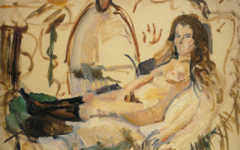
Keeping alert to differences in style within a painting can help unlock its meaning
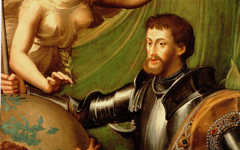
Parmigianino’s Allegorical Portrait of Emperor Charles V (1529-30)
Peale's American portraits have more in common with great European art than is generally accepted.
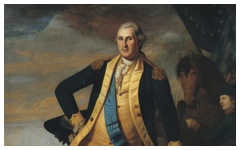
Peale’s Portrait of George Washington (c.1780)
Find out why so many of Perugino's faces look alike
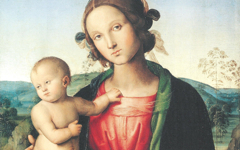
Perugino’s Madonna and Child (n.d.) and Mary Magdalene (1500)
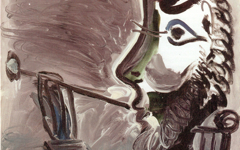
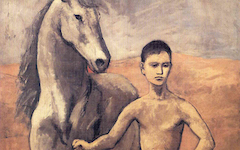
Two protagonists in one painting must both represent the artist. It's a given in art so it's your job to find out how.
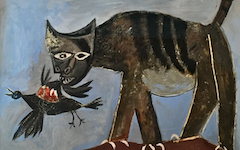
Picasso’s Cat Catching a Bird (1939)
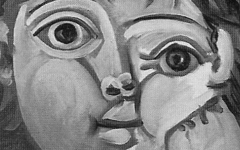
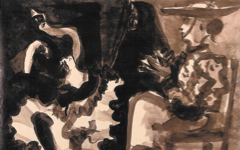
See how Picasso turns one scene into another in ways that have never been seen
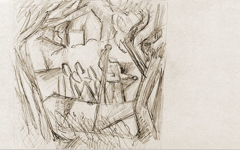
Picasso’s Five Figures in a Boat (1909)
When you discover what is underneath Picasso's early Blue Period paintings, the meaning changes...drastically.
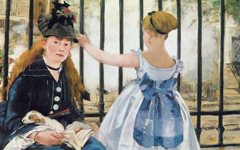
Picasso’s Harlequin (1901) and Blue Period
How we know that the young Picasso knew his destiny
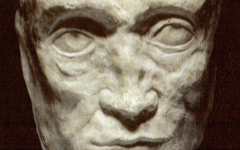
Picasso’s Head of Picador with Broken Nose (1903)
Learn how to use double-vision, a critical tool for interpretation
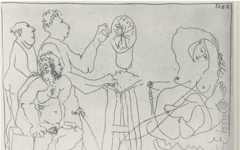
Picasso’s In the Sculptor’s Studio (1963)
Picasso turned the face of a Spanish queen into a townscape by fusing the two
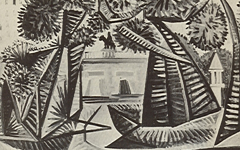
Picasso’s Le Vert-Galant (1943)
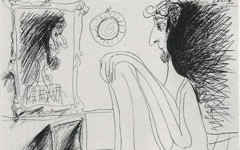

See how Picasso in "copying" a portrait changes it into an image of his own thought process
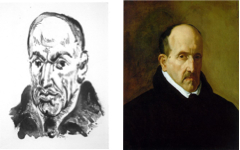
Picasso’s Portrait of Gongora (1947)
Not a particularly successful picture but an excellent learning tool
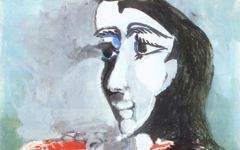
Picasso’s Portrait of Jacqueline (1965)
There is always more in Picasso than meets the eye
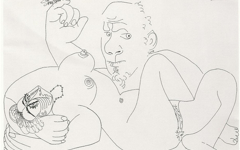
Picasso’s Reclining Nude with Man and Bird (1971)
Never forget the importance of an artist's hand. It can pop up anywhere.
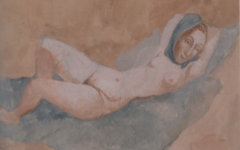
Picasso’s Reclining Nude, Fernande (1906)
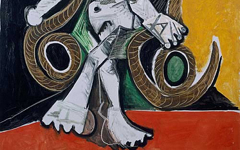
How a seated harlequin is so much more than a seated harlequin
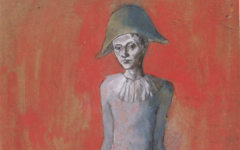
Picasso’s Seated Harlequin with Red Background (1905)
Genres are an artificial classification of little meaning. For instance, as here, still-life without life would be still-born.
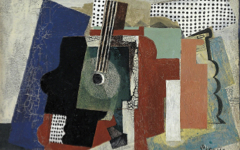
Picasso’s Still-Life with Door, Guitar and Bottles (1916)
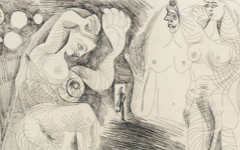
Hear how Karen Kleinfelder interprets Picasso's scene
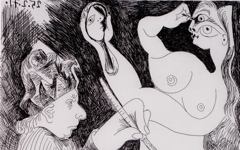
Picasso’s Untitled Plate 58 from Suite 156 (1971)
Just like Michelangelo's, Picasso's women are masculine too....here's how and why.
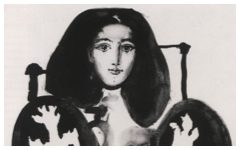
Picasso’s Woman in an Armchair (1948)
See how Picasso writes his own identity over someone else's face
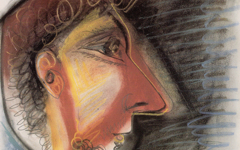
Picasso’s YO’s in Piero Crommelynck (1966-71)
A resurrection by its very name suggests two realities: the old and the new, the illusory and the real.
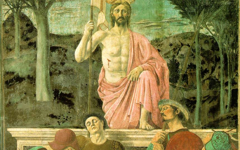
Piero della Francesca’s Resurrection (c.1458)
See how an Impressionist painting is really constructed
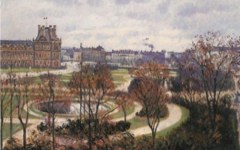
Pissarro’s View of the Tuileries. Morning (1900)
See the miraculous head of Christ in Poussin's painting that no-one but artists has ever noted. The painting is up for sale next week with an estimate of $30 million.
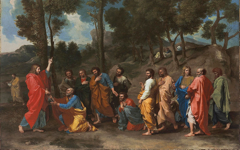
Poussin’s Ordination (1640’s)
Beware of biographical stories trying to explain a great portrait; they are rarely, if ever, true.

Raphael’s La Fornarina (1518-20)
Page 4 of 6 pages ‹ First < 2 3 4 5 6 >
© Simon Abrahams. Articles on this site are the copyright of Simon Abrahams. To use copyrighted material in print or other media for purposes beyond 'fair use', you must obtain permission from the copyright owner. Websites may link to this page without permission (please do) but may not reproduce the material on their own site without crediting Simon Abrahams and EPPH.