Artist’s Mind
All true art is literally a mirror of the artist’s mind, a reflection of the artist's imagination at work. If you know that, and bear it in mind when looking at artworks, your eyes will be alert for the visual details that convey it. If not, your perception will fall victim to the everyday illusion of exterior reality, whether examining an image of the Nativity, a portrait of Napoleon or a view inside Matisse’s studio.
Some scholars have identified artistic production as the true subject of a seemingly quite different scene but such occasions are rare.{ref1} Most are so convinced that past art was designed for the patron that they look at art through the eyes of a contemporary spectator: as though through a window. They are literalists. Yet to poetic painters the canvas is never “a window” but “a mirror” and nothing is as it seems. We are not looking out, but in. Remember that, and doors will open that you never even knew were there. Take a look at these examples of how artists portray their own mind.
1. Ruvoldt, The Italian Renaissance Imagery of Inspiration (Cambridge University Press) 2004, pp. 114-5, 118
All Articles (Alphabetical by Artist, then Title)
Even in the late Middle Ages altarpieces were depictions of the artist's own mind
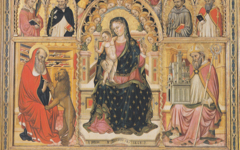
Lianori’s Bologna Polyptych (1453)
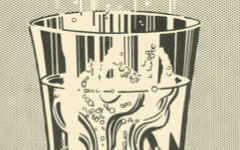
A pipe may be a pipe for René Magritte but a piano is not a piano for Roy Lichtenstein
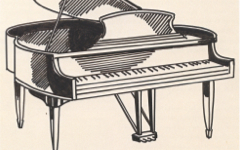
Lichtenstein’s Piano (c.1961)
Ordinary subjects produce extraordinary content
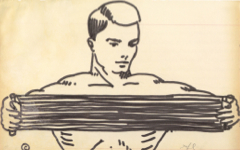
Lichtenstein’s Untitled or Man with Chest Expander (c.1961)

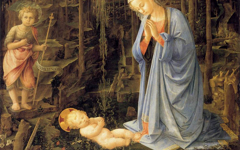
A famous but much maligned painting has more poetry in it than its critics think
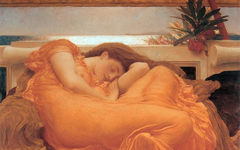
Lord Leighton’s Flaming June (1895)
Once again, see how the hilt of a sword signs the artist's name
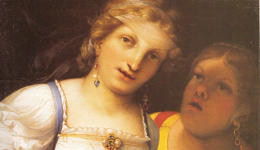
Lotto’s Judith with the Head of Holfernes (1512)
Find out how a realistic portrait is something else entirely
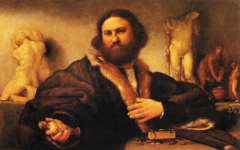
Lotto’s Portrait of Andrea Odoni (1527)
How the observations of others can lead to original insights from you
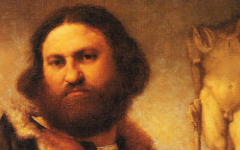
Lotto’s Portrait of Andrea Odoni (1527) Addendum
This angel is not just a charming detail but central to the whole conception of the altarpiece
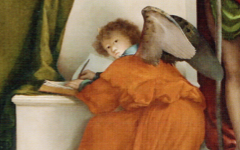
Lotto’s San Bernardino Altarpiece (1521)
Learn how "every painter paints" himself makes logical sense of even the most confused compositions
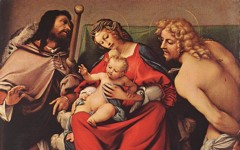
Lotto’s Virgin and Child with Saints Roch and Sebastian (c.1522)
If an artist's first and last initials are the same, or his initial matches that of his hometown, like Lucas van Leyden's, it is more than likely to appear in his work as well.
Lucas van Leyden’s Standard-Bearer (c.1510)
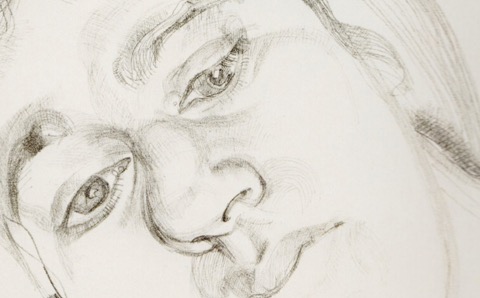
See how Le Dejeuner sur L’Herbe, Manet's first great masterpiece, which has always puzzled and fascinated its viewers makes sense after all.
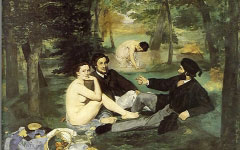
Manet’s Le Dejeuner sur l’Herbe (1863)
This early painting by Manet has always troubled interpreters because it seems to make no apparent sense. Its explanation here, though, will help you understand paintings by Manet, Velazquez and other artists too.
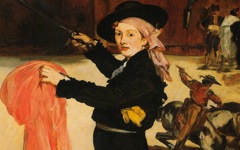
Manet’s Mlle. V in the Costume of an Espada (1862)
See how both Manet and Chardin veil their meaning in the same way
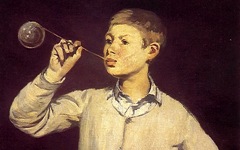
Manet’s and Chardin’s Soap Bubbles (18th/19th Cent.)
One of the many ways artists "paint themselves" is by painting others as earlier great masters.
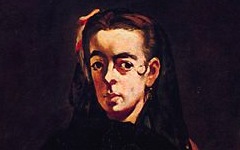
Manet’s Angelina (1865)
Everyone knows that Boating is a masterpiece. Why is it so difficult to explain?
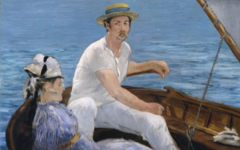
Manet’s Boating (1874)
Find out how the viewer in this garden scene is really inside Manet's mind
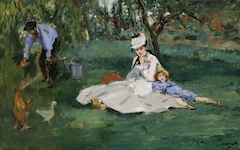
Manet’s Monet Family in the Garden (1874)
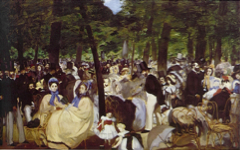
Don't forget to imagine what can't be seen: the artist's viewpoint
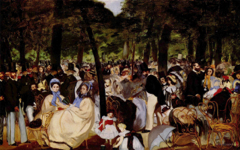
Manet’s Music in the Tuileries (1862)
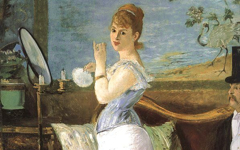
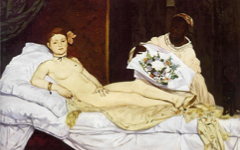
Skating on ice is like drawing lines on the mirrored surface of the artist's mind
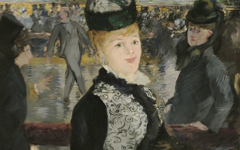
Manet’s Skating (1877)
A good example of how the "errors" in a painting are really the key to its meaning
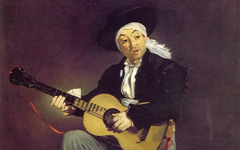
Manet’s The Spanish Singer (1860)
This magical composition hides a complex thought of seeming effortless construction: a masterpiece of the first order
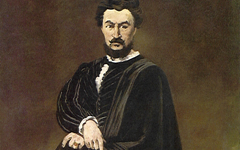
Manet’s Tragic Actor (1865-6) Part 1
Joseph, worth only a cameo appearance in the Bible, is a major star in visual art. Cast as a narcoleptic, he falls asleep in one image after another without any art historian, to my knowledge, pausing to ask: Why does he sleep so much?
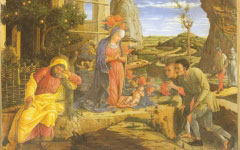
Mantegna’s Adoration of the Shepherds (c.1450-51)
How to recognize the Madonna and Child as a symbol of the artist
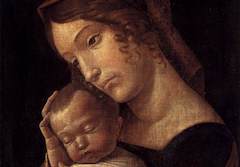
Mantegna’s Madonna with Sleeping Child (c.1465-70)
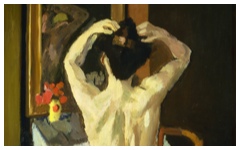
See how Matisse himself appears in even a simple drawing of an unidentified model
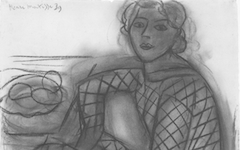
Matisse’s Seated Young Woman in a Patterned Dress (1939)
Look for the eyes. Then the face. Never forget to look for them because you can find them anywhere in art.
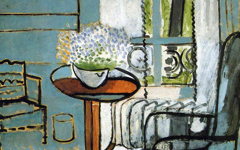
Matisse’s The Window (1916)
See how Notre-Dame, France's cathedral and symbol of the nation, becomes Matisse's
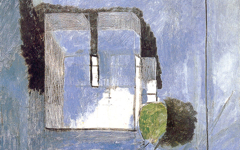
Matisse’s View of Notre-Dame (1914)
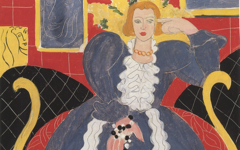
An early example of how art is a guide to what we now call "self-knowledge".
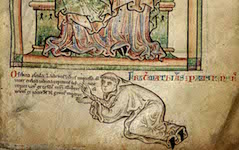
Matthew Paris’ Virgin and Child with Artist Kneeling (c.1250)
See how even in the fifteenth century the artist's craft and intellect were one and how, once again, forms matter
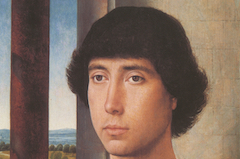
Memling’s Portrait of a Young Man (c.1475-80)
Find out what the studio and Golgotha have in common
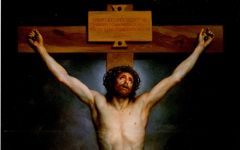
Mengs’ Christ on the Cross (1761-9), Goya’s and Francis Bacon’s too
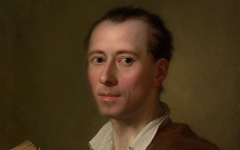
A mysterious drawing that has never made sense is now explained simply
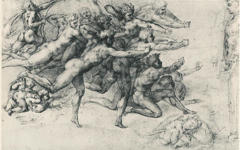
Michelangelo’s Archers Shooting at a Herm (c.1530) Part 1
There is yet more meaning in the drawing as we see in Part 2 of this analysis
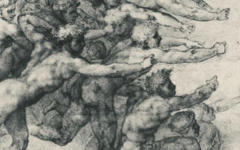
Michelangelo’s Archers Shooting at a Herm (c.1530) Part 2
Michelangelo's strange scene of a battle is not what it seems
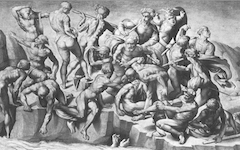
Michelangelo’s Battle of Cascina (1504)
Always look for what is odd. It's often there where you'll find a breakthrough in meaning
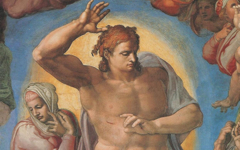
Michelangelo’s Christ in the Last Judgment (1534-41)
David is not difficult to understand as long as you use the correct perspective
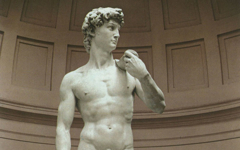
Michelangelo’s David (1501-04)
How a drowning man in the Battle of Cascina has the hands of the artist
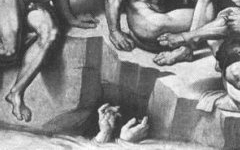
Michelangelo’s Hands in The Battle of Cascina (1504)
See why Jonah is the most important figure in the chapel
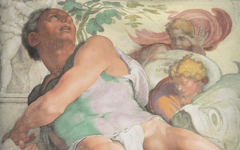
Michelangelo’s Sistine Ceiling: Jonah (1512)
See how Michelangelo continued tradition while he changed it
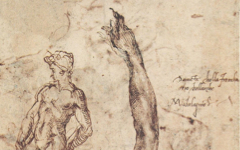
Michelangelo’s Study for a Bronze David (c.1502-03)
Learn how Michelangelo's The Dream of Human Life, traditionally interpreted as an allegory of virtue and vice, is instead a visual metamorphosis of the artist's head.
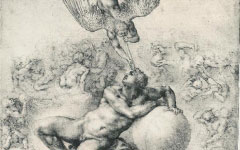
Michelangelo’s The Dream of Human Life (c.1533)
Page 3 of 6 pages < 1 2 3 4 5 > Last ›
© Simon Abrahams. Articles on this site are the copyright of Simon Abrahams. To use copyrighted material in print or other media for purposes beyond 'fair use', you must obtain permission from the copyright owner. Websites may link to this page without permission (please do) but may not reproduce the material on their own site without crediting Simon Abrahams and EPPH.