Visual Metamorphosis
Visual metamorphosis is the term we use to indicate shape-shifting in art. It allows an artist to transform a shape representing one item into a similar shape representing something else. This, in turn, allows one meaning to be hidden behind another. It is a visual technique equivalent to allegory and metaphor in literature and has, in consequence, been widely used. It was first proposed in the 1930’s in a slightly different form by the French art historian, Henri Foçillon. Although subsequent historians have recognized visual metamorphosis in a few works by major artists, Dürer being the best-known, it has been far more widely used than anyone, save artists, has ever recognized.{ref1}
All Articles (Alphabetical by Artist, then Title)
Peale's American portraits have more in common with great European art than is generally accepted.
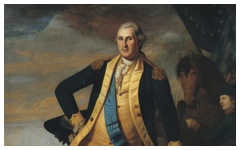
Peale’s Portrait of George Washington (c.1780)
Learn how to use double-vision, a critical tool for interpretation
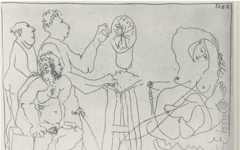
Picasso’s In the Sculptor’s Studio (1963)
Picasso turned the face of a Spanish queen into a townscape by fusing the two
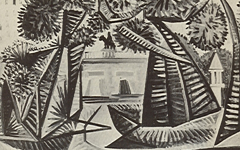
Picasso’s Le Vert-Galant (1943)

See how Picasso in "copying" a portrait changes it into an image of his own thought process
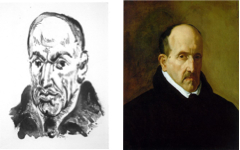
Picasso’s Portrait of Gongora (1947)
There is always more in Picasso than meets the eye
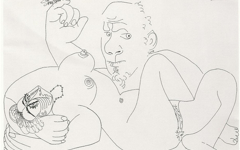
Picasso’s Reclining Nude with Man and Bird (1971)
A resurrection by its very name suggests two realities: the old and the new, the illusory and the real.
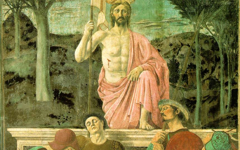
Piero della Francesca’s Resurrection (c.1458)
See how an Impressionist painting is really constructed
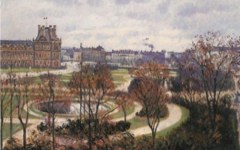
Pissarro’s View of the Tuileries. Morning (1900)
See the miraculous head of Christ in Poussin's painting that no-one but artists has ever noted. The painting is up for sale next week with an estimate of $30 million.
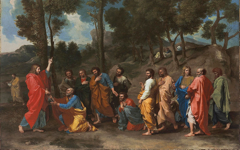
Poussin’s Ordination (1640’s)
Still-lifes by great artists may seem simple or devoid of meaning, especially when compared to figure paintings, but they rarely are either simple or meaningless.
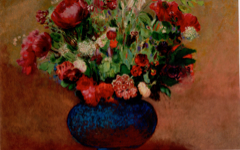
Redon’s Pavots et Oeillets de Poète… (c.1906)
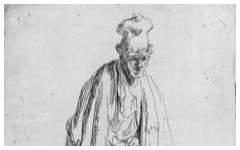
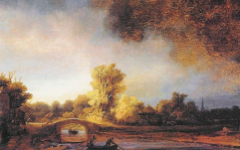
Several clues, easy to spot, reveal the true underlying meaning of two similar masterpieces
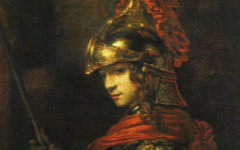
Rembrandt’s Man in Armour (1655) and Minerva (c.1655)
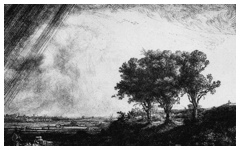
How a Renaissance artist used an optical illusion to convey meaning
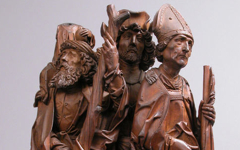
Remenschneider’s Three Helper Saints (c.1500-05)
Discover a common way how artists demonstrate their identity with their protagonist. You can use the method to interpret other paintings by other artists.
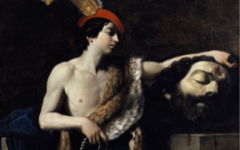
Reni’s David with the Head of Goliath (1605)
See how Rubens' own face is veiled behind a drawing of a forest path
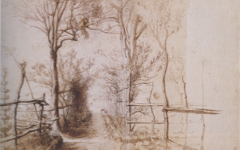
Rubens’ Forest Path (n.d.), a drawing
Look at art from every which way you can. You never know what you might see.
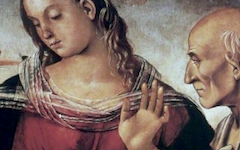
Signorelli’s Virgin & Child with John the Baptist and Donor (c.1491-4)
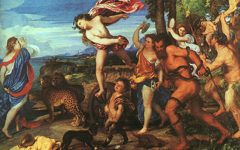
One of Titian's masterpieces, it was destroyed by fire in 1577 but recorded in this engraving. Its secret, though, lives on.
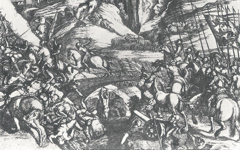
Titian’s Battle of Cadore (1538-9)
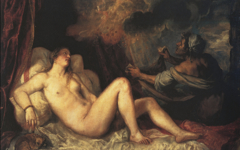
Even in the remaining fragment of a much larger canvas there is still much to see
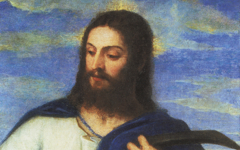
Titian’s Noli Me Tangere fragment (1553-4)
Relax. Look past the superficial forms to see what's really there.
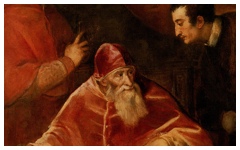
Titian’s Pope Paul III and His Grandsons (1545-6)
A much-loved painting contains a marvelous self-portrait in the clouds
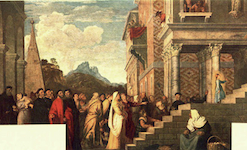
Titian’s Presentation of the Virgin in the Temple (1534-38)
If a poet uses a storm as a metaphor, who mistakes it for a real storm? Why do so in art?
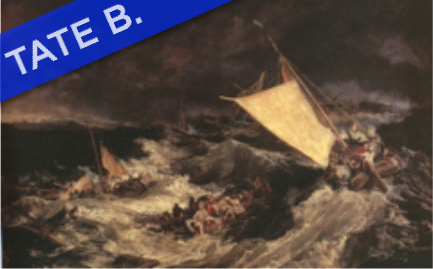
Turner’s The Shipwreck (1805)
See how a portrait viewed one way resembles a portrait; viewed another way turns the world inside out
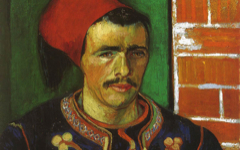
Van Gogh’s The Zouave (1888)
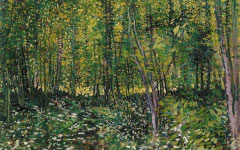
How Van Gogh turned a self-portrait into an iconic landscape
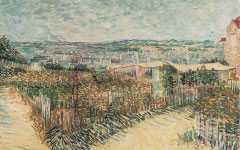
Van Gogh’s Vegetable Gardens at Montmartre (1887)
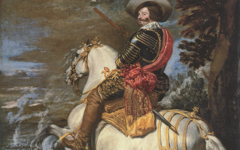
Keep an eye on the "errors" in art and you will find the solutions
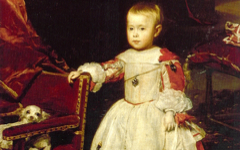
Velazquez’s Portrait of Infante Felipe Prospero (1659)
The magic of visual illusion was not an invention of the Surrealists; it has been an integral part of art for centuries.
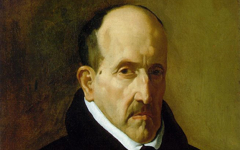
Velazquez’s Portrait of Luis de Góngora (1622)...and Picasso’s.
© Simon Abrahams. Articles on this site are the copyright of Simon Abrahams. To use copyrighted material in print or other media for purposes beyond 'fair use', you must obtain permission from the copyright owner. Websites may link to this page without permission (please do) but may not reproduce the material on their own site without crediting Simon Abrahams and EPPH.