Artist as Other Artist
Saul Bellow’s son, a writer too, once explained how over the years he had incorporated aspects of his late father’s being into himself: “ways of thinking, particular expressions, a certain way of looking at the world.” Now that he was dead, he wrote, “my father, though absent, is deeply, unpredictably, stubbornly present in me.”1 Poetic painters feel the same way about earlier masters whose work they have studied so intently that the other artist’s characteristics, brushstrokes, subject matter and ways of thinking are deeply embedded in themselves. This means that Giorgio Vasari’s account of how the soul of one Renaissance artist was kept alive in the next is not a mere literary flourish (as generally explained) but a very accurate description of how one artist feels about another. This deep sense of identification with their earlier peers can be seen in art from many periods and many countries.
All Articles (Alphabetical by Artist, then Title)
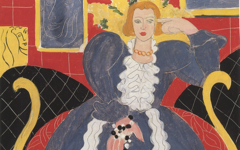
See how even in the fifteenth century the artist's craft and intellect were one and how, once again, forms matter
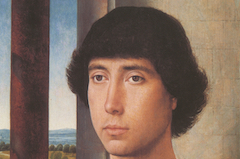
Memling’s Portrait of a Young Man (c.1475-80)
Always look for what is odd. It's often there where you'll find a breakthrough in meaning
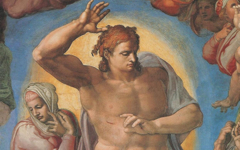
Michelangelo’s Christ in the Last Judgment (1534-41)
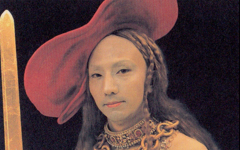
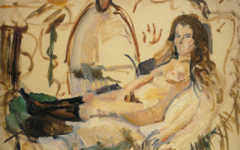
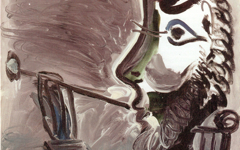
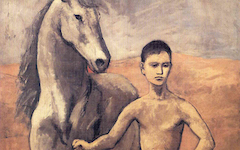
Here is a very obvious example of one artist's identification with another
Picasso’s Female Nude in Profile 〈1902〉
When you discover what is underneath Picasso's early Blue Period paintings, the meaning changes...drastically.
Picasso’s Harlequin (1901) and Blue Period
How we know that the young Picasso knew his destiny
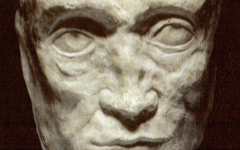
Picasso’s Head of Picador with Broken Nose (1903)
How a seated harlequin is so much more than a seated harlequin
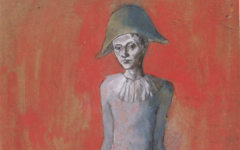
Picasso’s Seated Harlequin with Red Background (1905)
Picasso must have learnt early on that great artists often adopt the persona of earlier great artists....
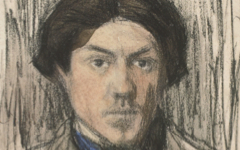
Picasso’s Self-Portrait (late1901)
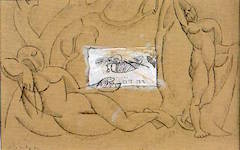
New revelations, as always, about one of the world's most famous portraits

Raphael’s La Donna Velata (c.1516)
Even simple sketches can be pregnant with meaning
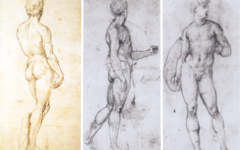
Raphael’s Studies after Michelangelo’s David (1507-8)
How realism and the use of models fools the eyes. Art, one must remember, is never 'real' and never 'photographic'.

Rembrandt’s A Bearded Man in a Cap (1657)
It can be difficult to explain why Rembrandt portrayed himself as a beggar. Here's what I think...
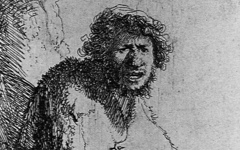
Rembrandt’s Self-portrait as A Beggar Seated on a Bank (1630)
See how one great master resides in another, or sometimes two.
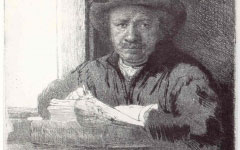
Rembrandt’s Self-portrait at a Window and Matisse’s Self-portrait as an Etcher
Scholars have long wondered why Rembrandt would represent himself in expensive and extravagant clothing from a century earlier even though they know that the etched self-portrait is based on an engraving of the fifteenth-century painter Jan Gossaert, known as Mabuse.
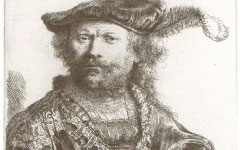
Rembrandt’s Self-portrait in Sixteenth-Century Costume (1638)
If you like Renoir but can't see Raphael, you won't see Renoir's Raphael
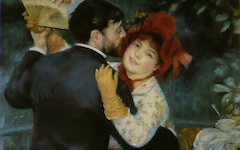
Renoir’s Dance in the Country (1883)
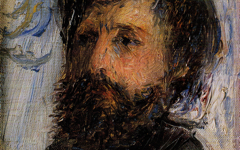
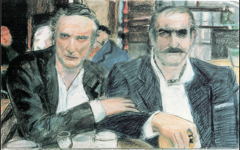
A quick insight into how artists' own sight combines insight with out-sight
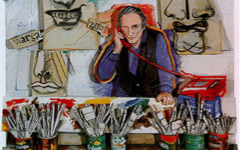
Rivers’ On the Phone (1955)
See how Rubens turned a variation on a Leonardo composition into a scene of creative struggle in his own mind
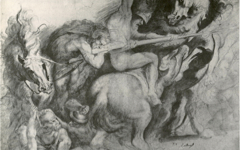
Rubens’ Battle of the Standard (c.1600) after Leonardo
Learn how one artist copies another and makes it his own
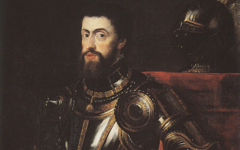
Rubens’ Copy of Titian’s Charles V in Armor with a Drawn Sword (c.1603)
In the epistle of an apostle, the letters matter; as they also do in the self-portrait of a prophet, even if self-proclaimed.
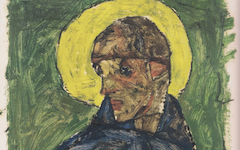
Schiele’s Self-portrait as a Saint (1913)
Even the most natural-looking portraits can be something other than they seem
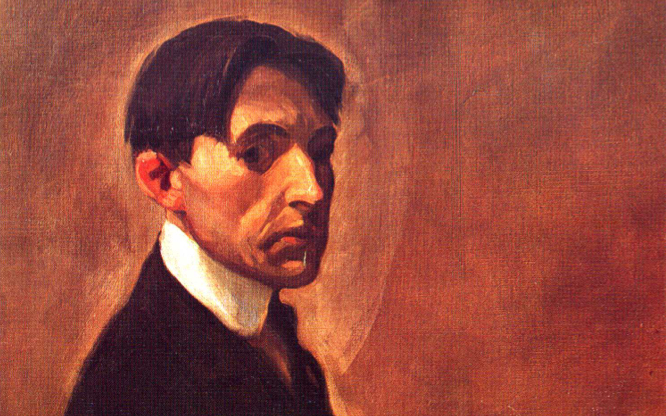
Sloan’s Portrait of George Sotter (1902)
Baudelaire's linking of Painting with cosmetics in the nineteenth century was not a novel idea, as long believed, but one with a very long history indeed
Titian’s Mary Magdalene(s) (c.1530-60)
See how one artist identifies with another even if they are rivals
Titian’s Portrait of a Gentleman (c.1520)
A simple demonstration of how one craftsman stands for another
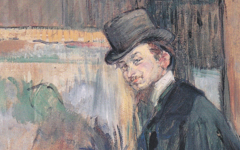
Toulouse-Lautrec’s Portrait of Henri Nocq (1897)
This painting of a sculptor sculpting has always confused viewers because he looks like he's drawing. Is he?
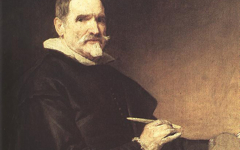
Velazquez’s Juan Martinez Montanes (1636)
Sometimes one of the secrets of art is so obvious, no-one sees it
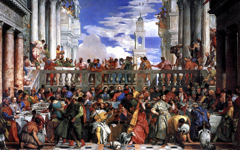
Veronese’s The Marriage at Cana (1563)
Artists often identify with other artists, using them as an alter ego. Here is an exceptionally clever one.
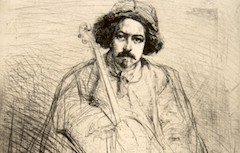
Whistler’s J. Becquet, Sculptor (1859)
EPPH's proposal, that artists identify with their sitters, is perhaps more persuasive when the sitter is another artist
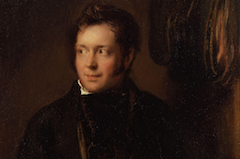
Wilkie’s Portrait of Abraham Raimbach (1818)
© Simon Abrahams. Articles on this site are the copyright of Simon Abrahams. To use copyrighted material in print or other media for purposes beyond 'fair use', you must obtain permission from the copyright owner. Websites may link to this page without permission (please do) but may not reproduce the material on their own site without crediting Simon Abrahams and EPPH.