Mirrors
Mirrors and reflections are enormously important in art, and so common a theme, that you should keep an eye out for them: they will help explain the work’s underlying meaning. Here’s why. The mind has been likened to a mirror for as long as humans have written, painted, sculpted, etched and composed poetry. The Greek root for Plato’s word idea, eidos, literally means not just image or likeness but an image reflected in water or mirror.{ref1} Even in English, minds reflect and speculate. So, since all true art depicts the artist’s mind, mirrors and reflections are bound to play a highly significant role. Mirrors suggest that the viewer should turn inwards to gain self-knowledge rather than outwards to the natural world. In paintings, the discovery that the surface itself represents a mirror contradicts the very principles on which conventional art history is based: that artists depict the world outside. Indeed it is only once you accept that artists do not depict material reality that you begin see so many mirrors in art because you cannot see what you do not believe.
All Articles (Alphabetical by Artist, then Title)
Learn how a common pose in art carries specific meaning, regardless of subject matter
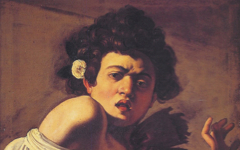
Over-the-Shoulder Poses
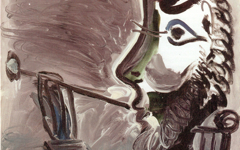
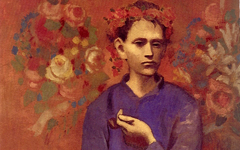
Two protagonists in one painting must both represent the artist. It's a given in art so it's your job to find out how.
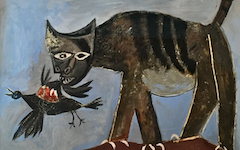
Picasso’s Cat Catching a Bird (1939)
See how Picasso understood Manet's meaning, a meaning that still escapes art historians who think and see superficially
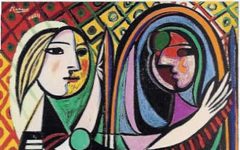
Picasso’s Girl Before a Mirror (1932)
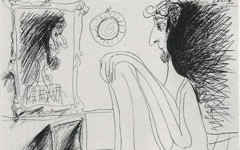
Not a particularly successful picture but an excellent learning tool
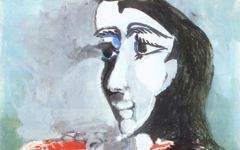
Picasso’s Portrait of Jacqueline (1965)
Hear how Karen Kleinfelder interprets Picasso's scene
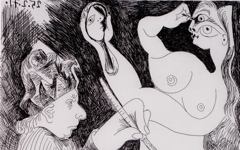
Picasso’s Untitled Plate 58 from Suite 156 (1971)
See how Picasso writes his own identity over someone else's face
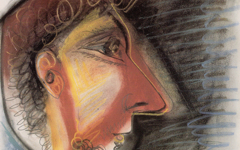
Picasso’s YO’s in Piero Crommelynck (1966-71)
See how an Impressionist painting is really constructed
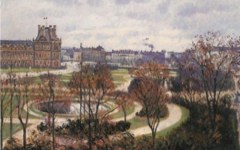
Pissarro’s View of the Tuileries. Morning (1900)
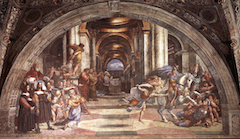
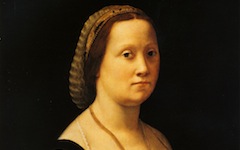
Beware of biographical stories trying to explain a great portrait; they are rarely, if ever, true.

Raphael’s La Fornarina (1518-20)
Even simple sketches can be pregnant with meaning
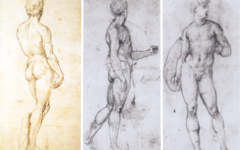
Raphael’s Studies after Michelangelo’s David (1507-8)
How the setting is so rarely what you think....you must think differently
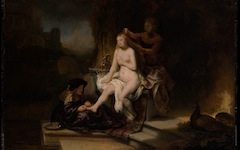
Rembrandt’s Bathsheba at Her Bath (1643)
Several clues, easy to spot, reveal the true underlying meaning of two similar masterpieces
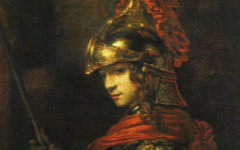
Rembrandt’s Man in Armour (1655) and Minerva (c.1655)
Learn how to look and what to look for, and how touching is painting

Rembrandt’s Self-Portrait with Saskia (c.1635)
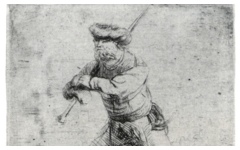
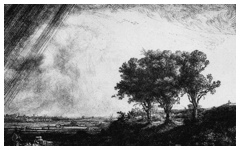
An essential question about any picture: does the figure resemble an artist at work?
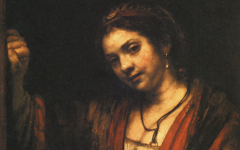
Rembrandt’s Young Woman Leaning Against a Door (1657)
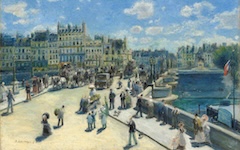
Once you see how Norman Rockwell, the so-called illustrator, turned contemporary politics into a contemplation on the creative process, you should start to appreciate how ageless the theme is.
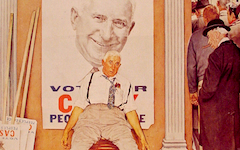
Rockwell’s Before and After (1958)
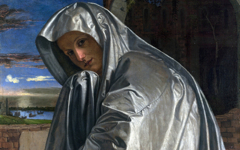
How even in the 15th century an artist thought of himself as Christ...and said so.
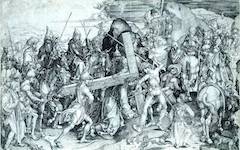
Schongauer’s Christ Carrying the Cross (c.1475)
Even the most natural-looking portraits can be something other than they seem
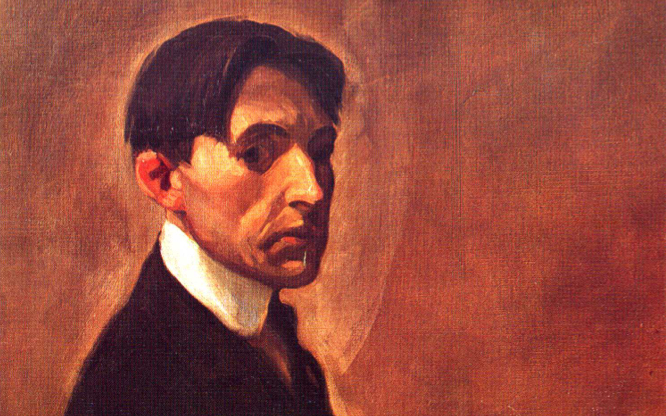
Sloan’s Portrait of George Sotter (1902)
Baudelaire's linking of Painting with cosmetics in the nineteenth century was not a novel idea, as long believed, but one with a very long history indeed
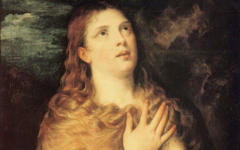
Titian’s Mary Magdalene(s) (c.1530-60)
Train your visual memory to recall similar poses in quite different situations; they usually have some meaning in common
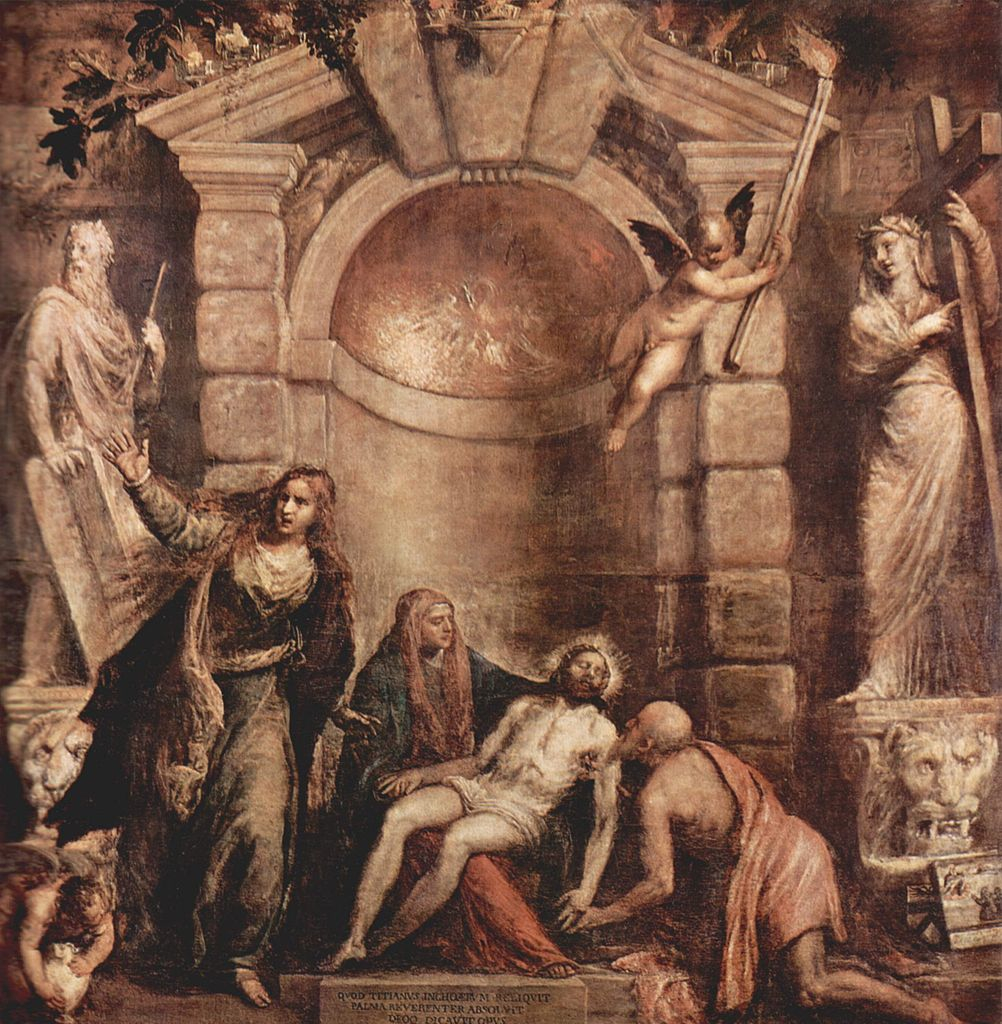
Titian’s Pieta (c.1575)
See how Titian tricks us into thinking there is one reality in art when there are, at least, two
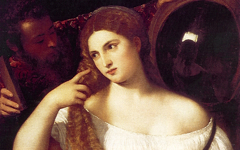
Titian’s Woman with a Mirror (1512-15)
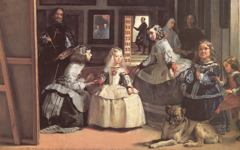
Artists often identify with other artists, using them as an alter ego. Here is an exceptionally clever one.
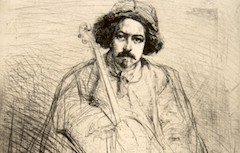
Whistler’s J. Becquet, Sculptor (1859)
© Simon Abrahams. Articles on this site are the copyright of Simon Abrahams. To use copyrighted material in print or other media for purposes beyond 'fair use', you must obtain permission from the copyright owner. Websites may link to this page without permission (please do) but may not reproduce the material on their own site without crediting Simon Abrahams and EPPH.