Pointing and Touch
Of all the self-referential symbols an artist can use, the hand is paramount. It is often said that in the early Renaissance when artists were trying to gain recognition for themselves as intellectuals they played down the hand’s importance to their craft because it signalled manual labor. Paradoxically, though, the finger of God was also associated with creation, as in Michelangelo's Creation of Adam. An earlier, medieval illustration depicts the story of a miraculous image, worshipped in Gethsemane, of Mary and Christ impressed on stone and it shows God actually forming the sculpture with his own finger.1 Both ideas persisted but once the artist's finger was recognized by contemporaries as the equal of poets, the hand became an even more potent symbol for the craft of painting while the eye or forehead continued to symbolize the art's conception or intellectual content. Today we even say as evidence of art’s authenticity: “it was done by his or her hand.”
All Articles (Alphabetical by Artist, then Title)
See why Jonah is the most important figure in the chapel
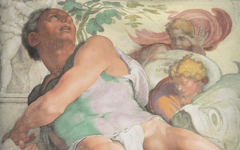
Michelangelo’s Sistine Ceiling: Jonah (1512)
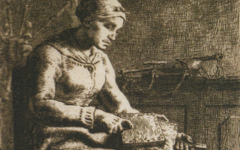
Discover how you can unlock layers of meaning from a relatively simple composition
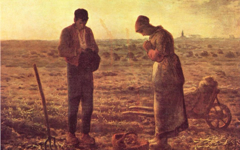
Millet’s The Angelus (1857-9) and other works
Keeping alert to differences in style within a painting can help unlock its meaning
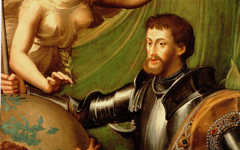
Parmigianino’s Allegorical Portrait of Emperor Charles V (1529-30)
Here is a very obvious example of one artist's identification with another
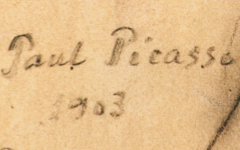
Picasso’s Female Nude in Profile 〈1902〉
When you discover what is underneath Picasso's early Blue Period paintings, the meaning changes...drastically.
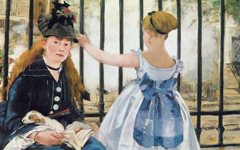
Picasso’s Harlequin (1901) and Blue Period
How a seated harlequin is so much more than a seated harlequin
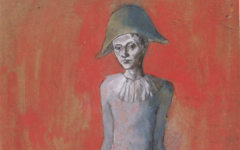
Picasso’s Seated Harlequin with Red Background (1905)
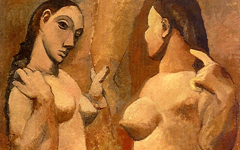
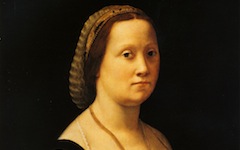
Sometimes the most difficult features to see in art are the most obvious
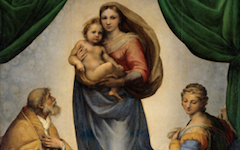
Raphael’s Sistine Madonna, Part 1 (1512)
Learn how to look and what to look for, and how touching is painting

Rembrandt’s Self-Portrait with Saskia (c.1635)
All art depicts the artist's mind. Here's one way you can see it.
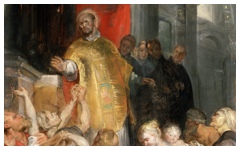
Rubens’ Miracles of St. Ignatius of Loyola (c.1619)
Don't take portraits at face value. If they're art, there's always more to them.
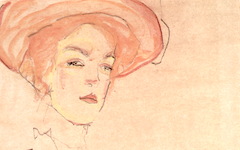
Schiele’s Portrait of a Lady in an Orange Hat (1910)
Look at art from every which way you can. You never know what you might see.
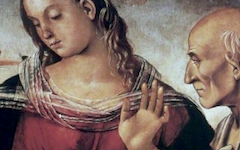
Signorelli’s Virgin & Child with John the Baptist and Donor (c.1491-4)
Evidence for art's self-referential allegory pre-dates the High Renaissance
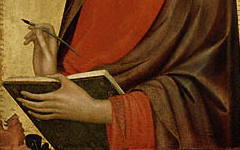
Simone Martini’s St. Luke (c.1330’s) and other saints
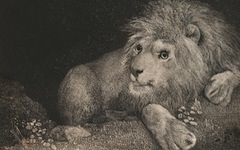
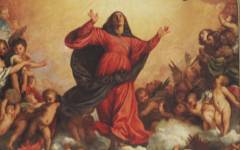
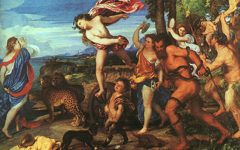
It is impossible to exaggerate the importance of how Renaissance artists identified with God. Both pervasive and unknown, the idea needs emphasizing to demonstrate its near-ubiquity. Here is yet one more example by Titian.
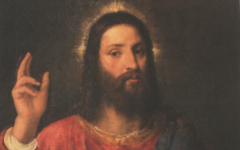
Titian’s Christ Blessing (c.1560)
Baudelaire's linking of Painting with cosmetics in the nineteenth century was not a novel idea, as long believed, but one with a very long history indeed
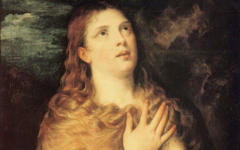
Titian’s Mary Magdalene(s) (c.1530-60)
Train your visual memory to recall similar poses in quite different situations; they usually have some meaning in common
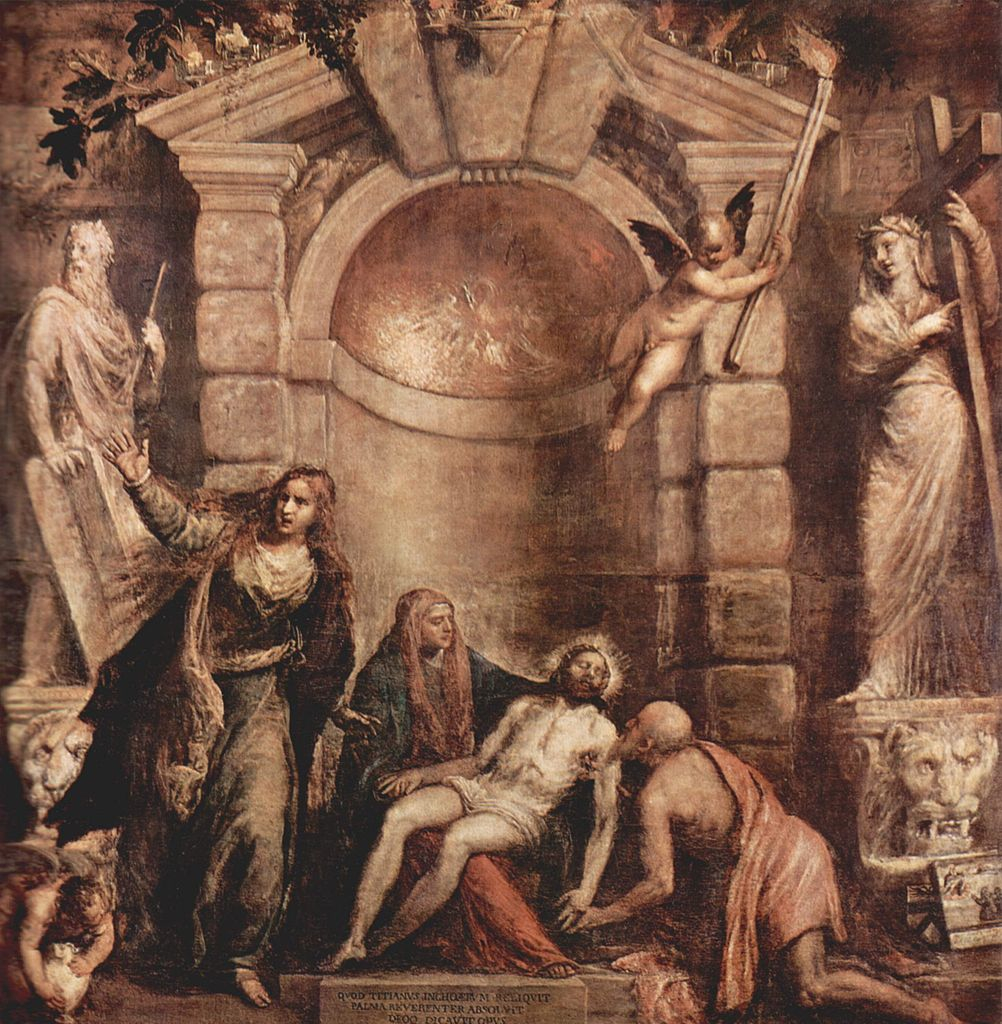
Titian’s Pieta (c.1575)
Relax. Look past the superficial forms to see what's really there.
Titian’s Pope Paul III and His Grandsons (1545-6)
Get to know what painters and sculptors look like at work - and their various processes - and your brain will penetrate the surface of a painting in no time. A painting like this one...
Titian’s Shepherd and Nymph (c.1575-6)
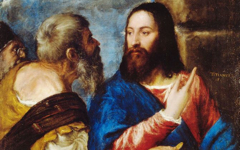
Find out what touching, hands and pointing fingers mean for Titian
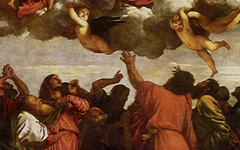
Titian’s Touch: Noli Me Tangere (1511-12), Assunta (1520) and Self-portrait (c1560-62)
See how Titian tricks us into thinking there is one reality in art when there are, at least, two
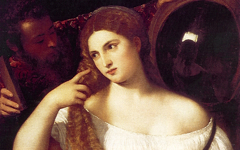
Titian’s Woman with a Mirror (1512-15)
The more you try to see what others can't, the more you'll see
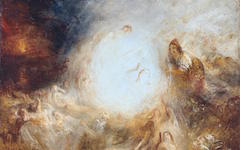
Turner’s Undine Giving the Ring to Masaniello, Fisherman of Naples (c.1845-6)
Familiarize yourself with the gestures of "painting" and why figures are sometimes out-of-scale
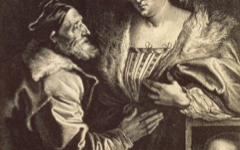
Van Dyck’s Titian and His Mistress (1630’s)
A spiritual journey is one of the basic plots of literature and a common metaphor in both philosophy and religion. Why not art?
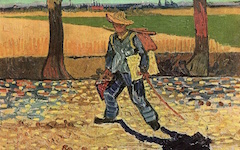
Van Gogh’s On the Road to Tarascon (1888)
Find out how saint, Virgin and ox are all the artist
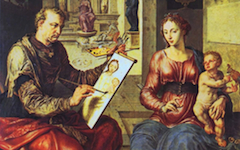
Van Heemskerck’s St. Luke Painting the Virgin and Child (1538-40)
The Velazquez that the Louvre doesn't show anymore is not what curators think. Ask Millet, Manet, Degas, Matisse or Picasso....
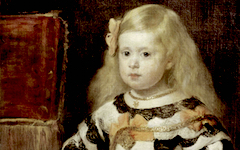
Velazquez’s Infanta Margarita (1653)
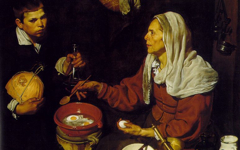
Discover how the figure of an actor by Velazquez contains far more than just the figure of an actor
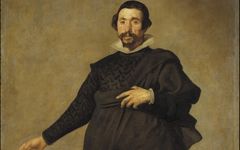
Velazquez’s Pablo de Vallodolid (1636-7)
Keep an eye on the "errors" in art and you will find the solutions
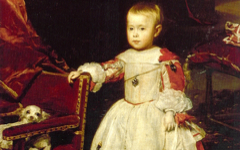
Velazquez’s Portrait of Infante Felipe Prospero (1659)
There is more to Vermeer than a pretty scene and dull symbolism
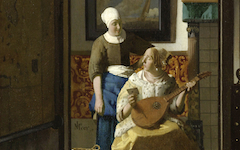
Vermeer’s The Love Letter (c.1669-70)
Everyone agrees that this work by Verrocchio breaks new ground but why? And what does it mean?
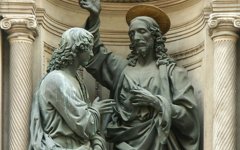
Verrocchio’s Christ and St. Thomas (1467-83)
EPPH's proposal, that artists identify with their sitters, is perhaps more persuasive when the sitter is another artist
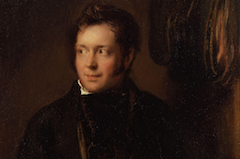
Wilkie’s Portrait of Abraham Raimbach (1818)
© Simon Abrahams. Articles on this site are the copyright of Simon Abrahams. To use copyrighted material in print or other media for purposes beyond 'fair use', you must obtain permission from the copyright owner. Websites may link to this page without permission (please do) but may not reproduce the material on their own site without crediting Simon Abrahams and EPPH.