Hand and Eye
God in medieval and Renaissance art is often represented only by his hand, as in the hand of an artist extending from the heavens. Indeed Genesis describes God as a model craftsman carefully checking the quality of his daily production with the phrase : "and God saw that it was good." God is an artist and his hand symbolizes Creation. For this and other more mundane reasons the hand became a symbol of the artist’s craft while the eye came to represent the mind or imagination. These meanings are often missed because the current art historical paradigm takes images literally and fails to recognize that all figures, including their body parts, are representations of the artist.
As we demonstrate in a number of entries below, the hand and eye are often juxtaposed in art as well, one placed next to the other. There is meaning to this because without the hand, the conception in the artist’s eye is just a conception; without the conception, the hand has nothing to craft. Both are needed. With this simple idea many now-mysterious works of art can be explained. Nevertheless, not all representations of eye and hand are quite so obvious because, as poetic elements, artists often disguise them in visual metaphors: the eye as a window, a lighted doorway, the sun or moon etc. The hand may likewise be represented by an animal’s paw or an empty glove. Keep an eye out for these clues to art's meaning. They are important.
All Articles (Alphabetical by Artist, then Title)
Peale's American portraits have more in common with great European art than is generally accepted.
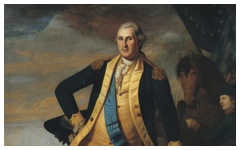
Peale’s Portrait of George Washington (c.1780)
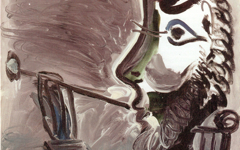
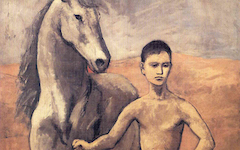
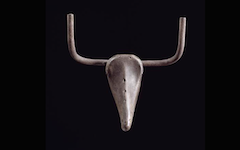
When you discover what is underneath Picasso's early Blue Period paintings, the meaning changes...drastically.
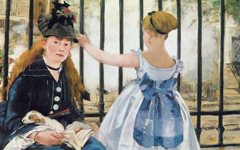
Picasso’s Harlequin (1901) and Blue Period
Learn how to use double-vision, a critical tool for interpretation
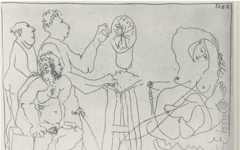
Picasso’s In the Sculptor’s Studio (1963)
See how Picasso in "copying" a portrait changes it into an image of his own thought process
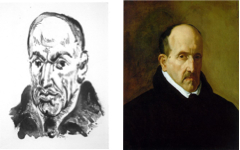
Picasso’s Portrait of Gongora (1947)
Not a particularly successful picture but an excellent learning tool
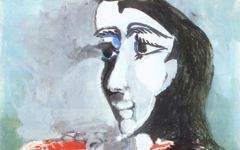
Picasso’s Portrait of Jacqueline (1965)
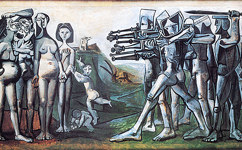
Never forget the importance of an artist's hand. It can pop up anywhere.
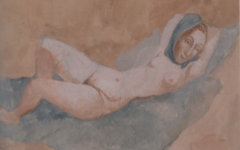
Picasso’s Reclining Nude, Fernande (1906)
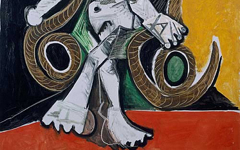
How a seated harlequin is so much more than a seated harlequin
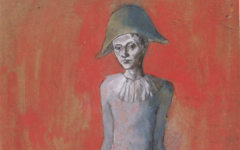
Picasso’s Seated Harlequin with Red Background (1905)
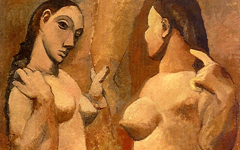
Just like Michelangelo's, Picasso's women are masculine too....here's how and why.
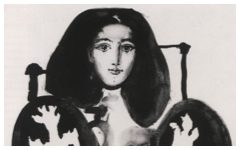
Picasso’s Woman in an Armchair (1948)
Don't accept your first understanding of a line. Think again; because artists do before drawing it.
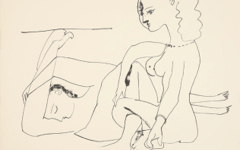
Picasso’s Women on the Beach (1947)
A resurrection by its very name suggests two realities: the old and the new, the illusory and the real.
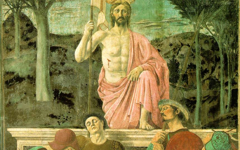
Piero della Francesca’s Resurrection (c.1458)
See how an Impressionist painting is really constructed
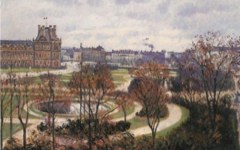
Pissarro’s View of the Tuileries. Morning (1900)
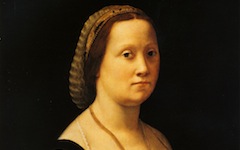
How even the young Raphael depicted the divinity of the artist's mind
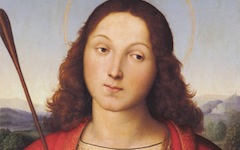
Raphael’s Saint Sebastian (c.1502-3)
Even simple sketches can be pregnant with meaning
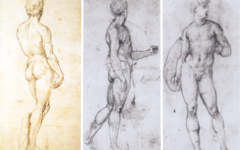
Raphael’s Studies after Michelangelo’s David (1507-8)
Still-lifes by great artists may seem simple or devoid of meaning, especially when compared to figure paintings, but they rarely are either simple or meaningless.
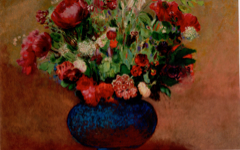
Redon’s Pavots et Oeillets de Poète… (c.1906)
How the setting is so rarely what you think....you must think differently
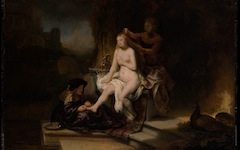
Rembrandt’s Bathsheba at Her Bath (1643)
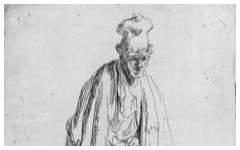
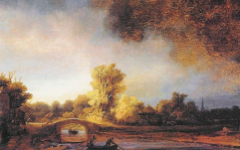
Several clues, easy to spot, reveal the true underlying meaning of two similar masterpieces
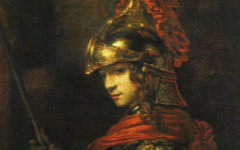
Rembrandt’s Man in Armour (1655) and Minerva (c.1655)
Learn how to look and what to look for, and how touching is painting

Rembrandt’s Self-Portrait with Saskia (c.1635)
If you didn't know that EPPH, you would never understand this image….nor would anyone else.
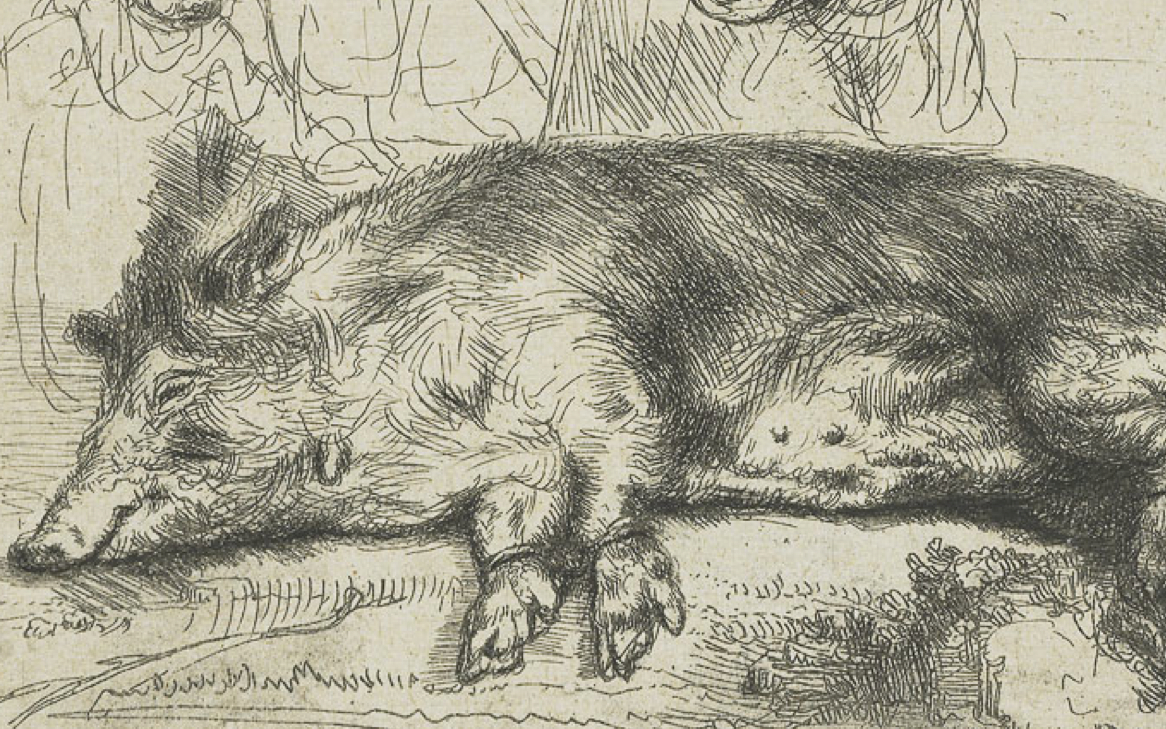
Rembrandt’s The Hog (1643)
An essential question about any picture: does the figure resemble an artist at work?
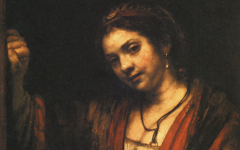
Rembrandt’s Young Woman Leaning Against a Door (1657)
A quick insight into how artists' own sight combines insight with out-sight
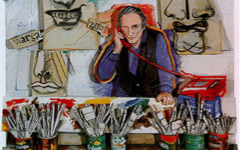
Rivers’ On the Phone (1955)
The concise expression of meaning is as aesthetically satisfying in art as it is in poetry
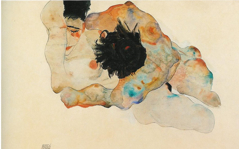
Schiele’s Embrace (1912)
Don't take portraits at face value. If they're art, there's always more to them.
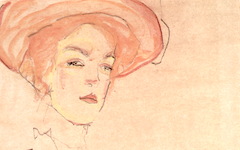
Schiele’s Portrait of a Lady in an Orange Hat (1910)
Look at art from every which way you can. You never know what you might see.
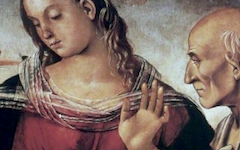
Signorelli’s Virgin & Child with John the Baptist and Donor (c.1491-4)
Evidence for art's self-referential allegory pre-dates the High Renaissance
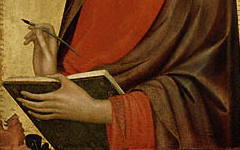
Simone Martini’s St. Luke (c.1330’s) and other saints
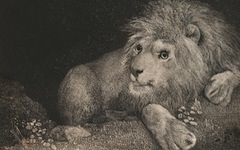
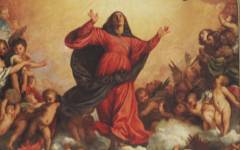
One of Titian's masterpieces, it was destroyed by fire in 1577 but recorded in this engraving. Its secret, though, lives on.
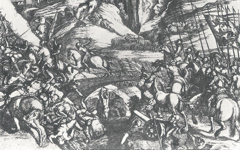
Titian’s Battle of Cadore (1538-9)
It is impossible to exaggerate the importance of how Renaissance artists identified with God. Both pervasive and unknown, the idea needs emphasizing to demonstrate its near-ubiquity. Here is yet one more example by Titian.
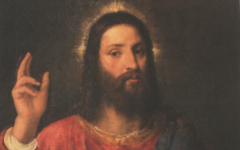
Titian’s Christ Blessing (c.1560)
Baudelaire's linking of Painting with cosmetics in the nineteenth century was not a novel idea, as long believed, but one with a very long history indeed
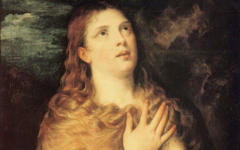
Titian’s Mary Magdalene(s) (c.1530-60)
Even in the remaining fragment of a much larger canvas there is still much to see
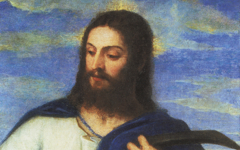
Titian’s Noli Me Tangere fragment (1553-4)
Relax. Look past the superficial forms to see what's really there.
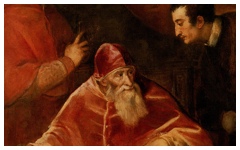
Titian’s Pope Paul III and His Grandsons (1545-6)
See how one artist identifies with another even if they are rivals
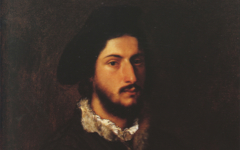
Titian’s Portrait of a Gentleman (c.1520)
Look for the artist's initials where you might expect them
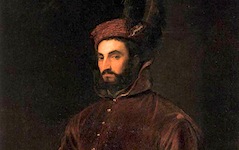
Titian’s Portrait of Ippolito de’ Medici (1533)
Get to know what painters and sculptors look like at work - and their various processes - and your brain will penetrate the surface of a painting in no time. A painting like this one...
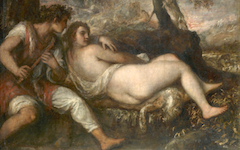
Titian’s Shepherd and Nymph (c.1575-6)
Find out what touching, hands and pointing fingers mean for Titian
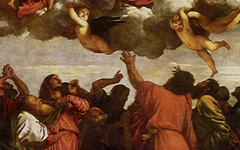
Titian’s Touch: Noli Me Tangere (1511-12), Assunta (1520) and Self-portrait (c1560-62)
See how Titian tricks us into thinking there is one reality in art when there are, at least, two
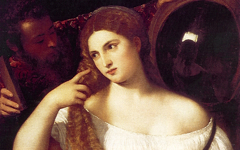
Titian’s Woman with a Mirror (1512-15)
If a poet uses a storm as a metaphor, who mistakes it for a real storm? Why do so in art?
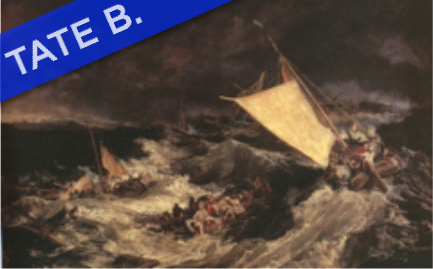
Turner’s The Shipwreck (1805)
The more you try to see what others can't, the more you'll see
Turner’s Undine Giving the Ring to Masaniello, Fisherman of Naples (c.1845-6)
Familiarize yourself with the gestures of "painting" and why figures are sometimes out-of-scale
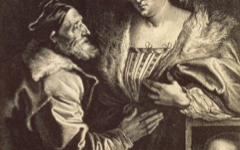
Van Dyck’s Titian and His Mistress (1630’s)
See how a portrait viewed one way resembles a portrait; viewed another way turns the world inside out
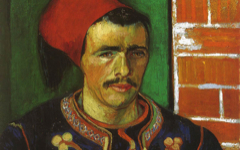
Van Gogh’s The Zouave (1888)
Find out how saint, Virgin and ox are all the artist
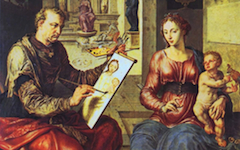
Van Heemskerck’s St. Luke Painting the Virgin and Child (1538-40)
Keep an eye on the "errors" in art and you will find the solutions
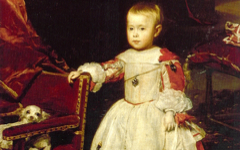
Velazquez’s Portrait of Infante Felipe Prospero (1659)
There is more to Vermeer than a pretty scene and dull symbolism
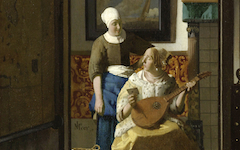
Vermeer’s The Love Letter (c.1669-70)
© Simon Abrahams. Articles on this site are the copyright of Simon Abrahams. To use copyrighted material in print or other media for purposes beyond 'fair use', you must obtain permission from the copyright owner. Websites may link to this page without permission (please do) but may not reproduce the material on their own site without crediting Simon Abrahams and EPPH.