RembrandtLeiden 1606 - Amsterdam 1669
Articles
This painting which depicts Rembrandt crucifying Christ is an excellent example of the alternative way to read art, not viewing it as an illustration but as poetry.
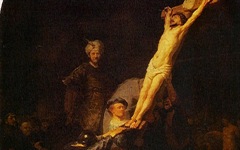
Rembrandt’s Raising of the Cross (c.1633)
How Rembrandt used gold chains as a symbol of the high honor due to him as a great master
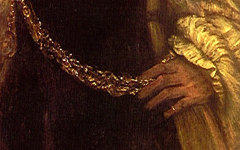
Rembrandt and the Artist’s Gold Chain
How realism and the use of models fools the eyes. Art, one must remember, is never 'real' and never 'photographic'.

Rembrandt’s A Bearded Man in a Cap (1657)
See how Rembrandt turned an anatomy lesson into a scene in his studio (in his mind).
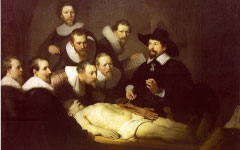
Rembrandt’s Anatomy Lesson of Dr. Tulp (1632)
How the setting is so rarely what you think....you must think differently
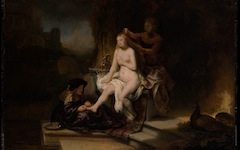
Rembrandt’s Bathsheba at Her Bath (1643)
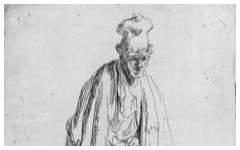
See the sight which changes the meaning of all Rembrandt's art: Rembrandt is Christ
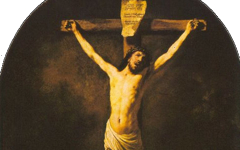
Rembrandt’s Crucifixion (1631)
See how Joseph is an artist staring at his work of art inside the artist's head
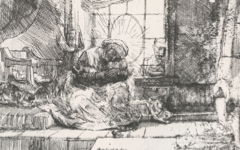
Rembrandt’s Holy Family with a Cat (1654)
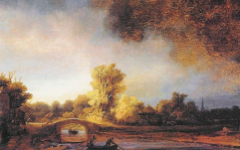
See how Rembrandt concisely expresses the underlying idea of art in a Roman myth
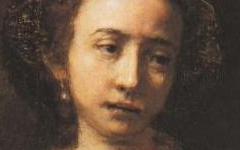
Rembrandt’s Lucretia (1666)
Several clues, easy to spot, reveal the true underlying meaning of two similar masterpieces
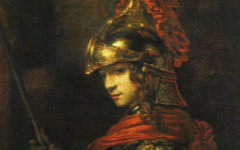
Rembrandt’s Man in Armour (1655) and Minerva (c.1655)
Find out why people pee on etchings
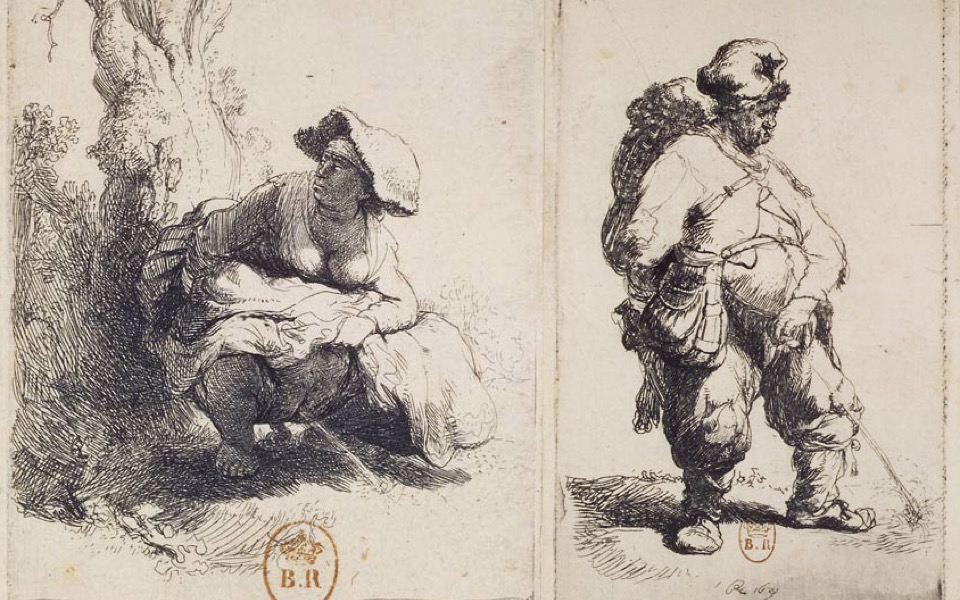
Rembrandt’s Man Making Water (1631) and Woman Making Water and Defecating (1631)
Learn about other methods Rembrandt used to convey his message
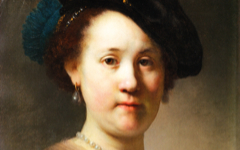
Rembrandt’s Portrait of a Young Woman (1632)
It can be difficult to explain why Rembrandt portrayed himself as a beggar. Here's what I think...
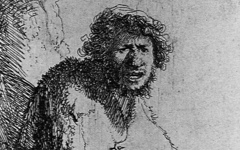
Rembrandt’s Self-portrait as A Beggar Seated on a Bank (1630)
See how one great master resides in another, or sometimes two.
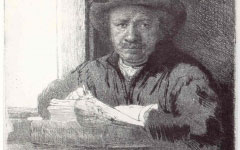
Rembrandt’s Self-portrait at a Window and Matisse’s Self-portrait as an Etcher
Scholars have long wondered why Rembrandt would represent himself in expensive and extravagant clothing from a century earlier even though they know that the etched self-portrait is based on an engraving of the fifteenth-century painter Jan Gossaert, known as Mabuse.
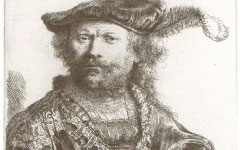
Rembrandt’s Self-portrait in Sixteenth-Century Costume (1638)
This painting of a young Rembrandt holding up a dead bird as though he were the hunter has troubled art scholars for years.
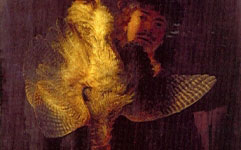
Rembrandt’s Self-portrait with a Dead Bittern (1639)
Scholars have sometimes wondered why the young Rembrandt painted himself wearing a gorget, the metal collar worn by soldiers of the period, when he himself was never in the military.

Rembrandt’s Self-portrait with Gorget (c.1629)
Learn how to look and what to look for, and how touching is painting

Rembrandt’s Self-Portrait with Saskia (c.1635)
If you didn't know that EPPH, you would never understand this image….nor would anyone else.
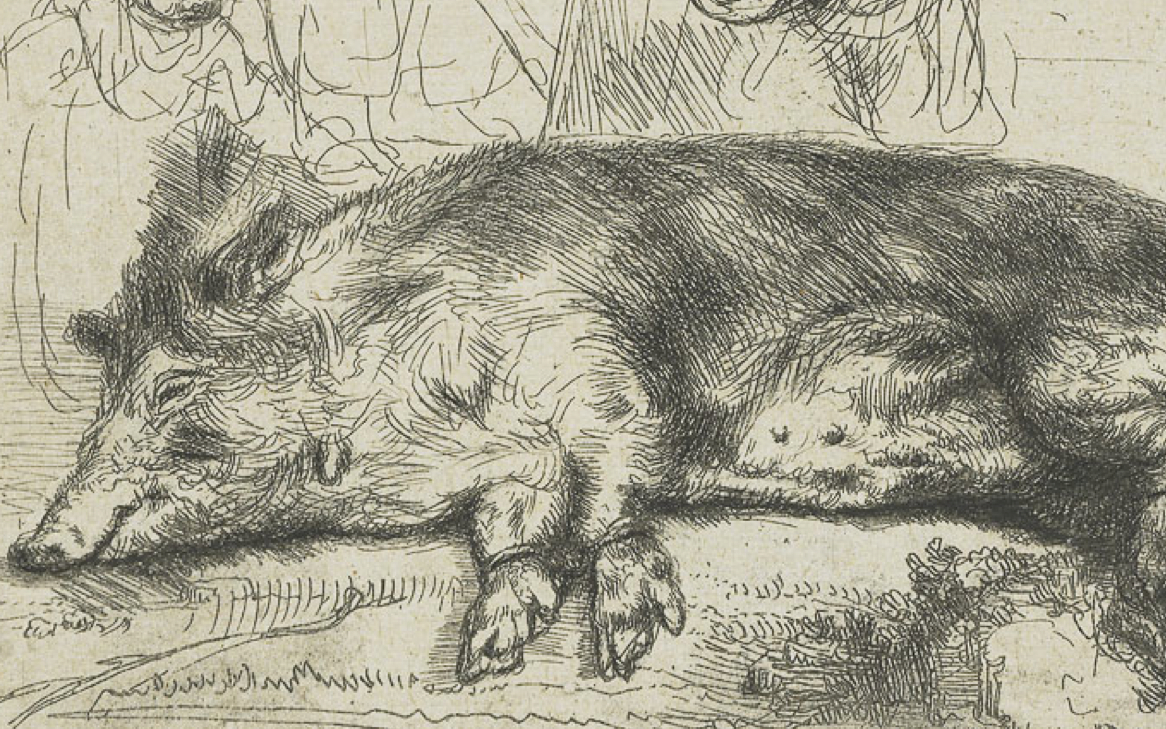
Rembrandt’s The Hog (1643)
How Rembrandt's method, and that of great artists in general, is present in his earliest extant painting
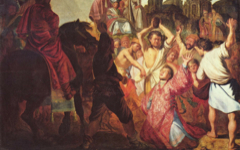
Rembrandt’s The Stoning of St. Stephen (1625)
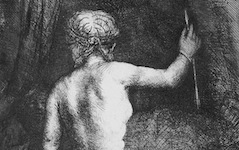
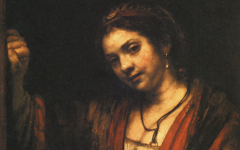
EPPH Blog Posts on Rembrandt


Essay PDFs
Galleries
© Simon Abrahams. Articles on this site are the copyright of Simon Abrahams. To use copyrighted material in print or other media for purposes beyond 'fair use', you must obtain permission from the copyright owner. Websites may link to this page without permission (please do) but may not reproduce the material on their own site without crediting Simon Abrahams and EPPH.