20 Dec 2012
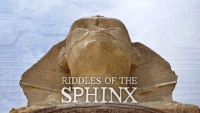
Whose face is the Sphinx?
I've been trying to read while a Nova documentary, The Riddle of the Sphinx, played in the background. The narrator described how an Egyptian stone carver called Fahi had been commissioned to sculpt a small-scale version using local stone. "
01 Dec 2012
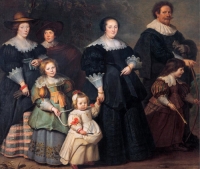
Pointing at the Edge
If you cruise the various interpretations on this site, you might have noticed a tendency to explain a figure with an arm or hand pointing to or touching the edge of the image as the artist himself painting a self-portrait. Michael Fried first n
17 Nov 2012
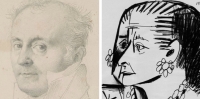
Mental images from Holbein, Ingres and Picasso
It is well-known that Picasso admired Ingres' portrait drawings like the one above on the left. Separately I have shown how Ingres, like other great masters, changed the facial features of his sitters to fuse them with his own. Not all portraits
16 Oct 2012
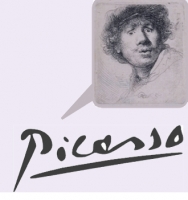
Picasso was Rembrandt
Under the theme 'Artist as Other Artist' I show how many painters and sculptors over the centuries have, in one way or another, adopted the persona of an earlier artist. The mask they then inhabit helps disguise their own role within the
06 Oct 2012 | 1 Comments
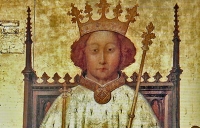
How Shakespeare Became a King
I demonstrated several years ago that many of the most iconic portraits of Europe's rulers, including those of many British kings and at least four of her queens, so closely resemble the artist's self-portrait that they are not portraits as we t
19 Jul 2012
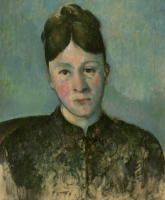
Susan Sidlauskas and the Many Faces of Hortense Cézanne
In a relatively recent book on Paul Cézanne's portraits of his wife, Hortense, Susan Sidlauskas examines the nearly 30 images he made of her over a fourteen-year period in greater detail than has ever been done before. It is an import
11 Jul 2012
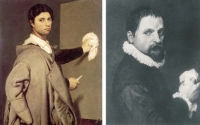
Bless you! It’s Art
Keep your eye open for a handkerchief or white cloth. They can be highly significant. My own experience suggests that those who are not painters themselves are relatively unaware that a cloth is almost as important to the craft of painting as a
23 Jun 2012
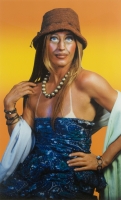
Cindy Sherman: Inside and Out
Cindy Sherman stands in an odd position in my pantheon of art. Her portraits, critics repeatedly tell us, are self-portraits but at the same time are not about her. That is my dilemma. The very characteristic that would make Sherman’s work
31 May 2012
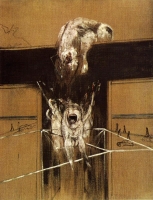
Francis Bacon on Portraits and Crosses
I’ve just been reading a series of essays on Francis Bacon and have come across two quotes that I must pass on. A young doctoral student had some long conversations with Bacon in 1975 in which Bacon was saying that when he looks at a great pai
18 May 2012
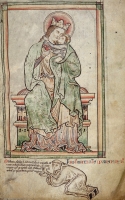
Joseph Leo Koerner and the Artist as Christ
Occasionally I see an image that turns on a light and helps illuminate an artist's way of seeing quite concisely. Fittingly, an illumination is one of them. The best book ever written on self-portraiture is probably Joseph Leo Koerner’s The Mo
11 May 2012
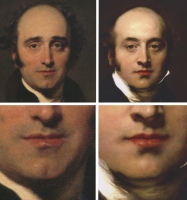
Face-off. Keep an eye on the details.
I try not to write too much about portraiture because pointing out “face fusion” time and again can become a bit repetitive. Occasionally, though, it is worth reminding readers, especially new ones, that even portraits that do not re
08 May 2012
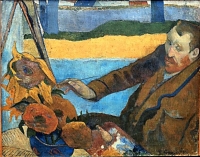
Is Painting Art?
This website, EPPH, is founded on a few principles that bear repeating, especially for new users. One of the most important concerns art’s definition. What is art? We believe that drawing and painting are crafts, not arts. Almost any motiv

25 Mar 2012
Quotation of the Week #7
Edward R. Murrow, the famous American radio and TV journalist, did not have great portraits in mind when he said:
“The obscure we see eventually.The completely obvious, it seems, takes longer.”
22 Mar 2012
Johan Zoffany
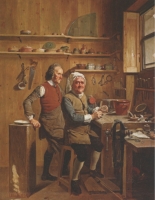
I just missed, by all accounts, a landmark exhibition at the Yale Center for British Art in New Haven, the first major exhibition devoted to Johan Zoffany (1733-1810). It just moved to the Royal Academy in London where it will stay until June 10
13 Mar 2012
Titian as Raphael
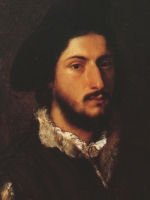
I've just added an entry on a little-known but very intriguing portrait by Titian, known simply as Titian's Portrait of a Gentleman. Painted around 1520, it is, I believe, Titian's tribute to the recently-deceased Raphael. Hanging in the Palazzo
29 Jan 2012
Leonardo on Creating Art as the Subject of Art
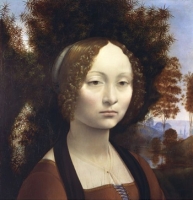
I often argue that the subject of a painting is its own making and have already demonstrated this online in several hundred entries, including examples by Leonardo.1 Evidence in written commentary by artists, though, is much rarer. Nevertheless
21 Dec 2011
The Renaissance Portrait from Donatello to Bellini #5
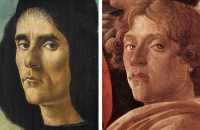
Continuing our series in honor of the Metropolitan Museum's current exhibition of Renaissance portraits we have Botticelli's portrait of Michele Marullo Tarcaniota on the left compared to Botticelli's earlier self-portrait on the rig
10 Dec 2011
Portraits: Icons of America
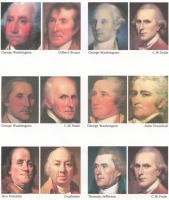
Portraits make popular art exhibitions because we all think we can “read” a face. It’s part of being human. Everyone is his or her own expert on other people’s faces. Besides, portraits help satisfy our natural inquisitiv

03 Dec 2011
The Renaissance Portrait from Donatello to Bellini #4
This one is a complete head-scratcher. It's a little after the Renaissance, obviously, but not long after. Why no specialist has ever noticed that Rubens' portrayal of the Duke of Buckingham in this oil sketch (left) is identical to his
02 Dec 2011
The Renaissance Portrait from Donatello to Bellini #3
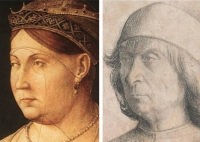
Both portraits above will be in the exhibition at the Metropolitan Museum (Cat. #163 and #159) and may even be hung near to each other where the similarity will surely be noticed. The portrait of Caterina Cornaro, Queen of Cyprus (left), i

01 Dec 2011
The Renaissance Portrait from Donatello to Bellini #2
For a late portrait Raphael was asked to paint a Neapolitan princess he had never seen, a problem he solved by sending Giulio Romano to Naples do a drawing from life. The painted portrait (left) was mostly done by studio assistants after a desig
30 Nov 2011
The Renaissance Portrait from Donatello to Bellini
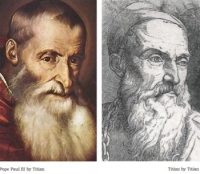
On December 21st the Metropolitan Museum, New York, will be opening an exhibition titled The Renaissance Portrait from Donatello to Bellini. As long-time users know, the whole idea behind this site and its blog is that art, especially Renaissanc

10 Nov 2011
The Importance of an Artist’s Turban
I've been looking forward to discussing turbans for some time because, for an art lover, a little knowledge can go a long way. Almost everyone thinks of them as oriental in some manner but, up until the end of the eighteenth century, you could f
04 Nov 2011
Maurizio Cattelan at the Guggenheim
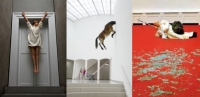
The Maurizio Cattelan exhibition opening today at the Guggenheim New York (on till Jan 22nd, 2012) is entitled All because it is meant to be a complete retrospective of the Italian artist’s career. In fact, aged 51, he has formally announc
27 Sep 2011
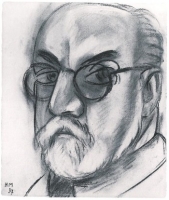
Matisse on Making a Portrait
In 1937 Henri Matisse made some charcoal portraits of Henry de Montherlant, a French playwright whom Matisse had met the year before. The artist’s account of the process is quite revealing. The issues which art historians traditionally assume
02 Sep 2011
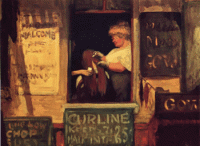
Art Bulletin’s Bumper Issue
This month’s Art Bulletin, the magazine of the U.S. College Art Association, is a bumper issue as far as we are all concerned. One article by Michael Lobel reveals how John Sloan, a member of the Ashcan School in early twentieth-century Americ
29 Aug 2011
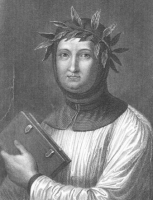
Petrarch on Imitation
I have always doubted whether the poets and writers in an artist's social circle have any greater understanding of visual art than we have. They are, of course, deeply familiar with poetic techniques in writing but seem blind to them in art.
02 Aug 2011
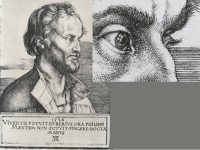
Dürer’s Portrait of Philip Melanchthon (1526)
Durer’s 1526 Portrait of Philip Melanchthon is notable for the manner in which the artist treats the eyes. One eye is large, bright and clear; the other mostly unseen, the tip of its eyelash just visible above the clouds. This contras
30 Jul 2011 | 1 Comments
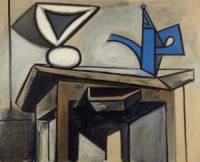
Titian is a dog
Some viewers remain convinced that artists subconsciously fused their features into their portraits of other people - as Leonardo misleadingly suggested - even though the evidence is now strong that face fusion was practiced consciously and with
04 Jul 2011
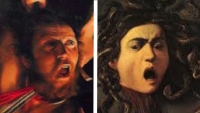
Left Right, Open Closed: Eyes and Perception
I have explained under the theme Insight-Outsight how poetic painters often distinguish between two different modes of perception: outwards to see the exterior world of matter, inwards for insight into the soul and imagination. It is such a comm
The EPPH Blog features issues and commentary.