Brush and Palette
One of the longest-running, little-known traditions in Western art is the use of visual metaphors for the tools of the artist’s trade, most commonly brush and palette. Daggers and swords, which are long and thin like a paintbrush, are often used to symbolize brushes while the accompanying battle or fight depicts, unseen by the unsuspecting viewer, the artist’s own creative struggle. Palettes are suggested in circular objects such as shields, plates, or flat surfaces such as tables. A bunch of flowers, often circular, can also suggest the many different colors on a palette. And, although Michael Fried has noted similar symbolism in Courbet’s paintings and recently in Caravaggio's too, visual metaphors for the tools of an artist's craft have been used in paintings since at least the early Renaissance.1 Here, for the first time, we show how common they are in art of the past six centuries and how crucial to the meaning of the work too.
1. Michael Fried, Courbet’s Realism (University of Chicago Press) 1990; Fried, The Moment of Caravaggio, A.W. Mellon Lectures in the Fine Arts (Princeton University Press) 2010
All Articles (Alphabetical by Artist, then Title)
See how the meaning behind this image changes our entire understanding of Degas' oeuvre
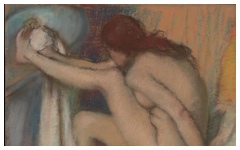
Degas’ Woman Drying Her Foot (1885-6)
Find out how to enter an artist's imagination with a bit of your own
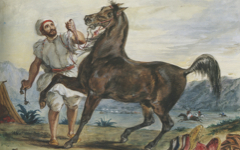
Delacroix’s Arab with His Steed or Turk Leading His Horse (c. 1832-3)
Learn how to recognize the pointing pose of an artist and to confirm it through a play on words
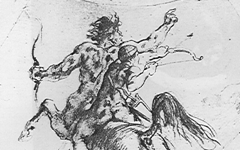
Delacroix’s Education of Achilles (c.1845)
When Delacroix was at last given large public rooms to decorate, he turned to Michelangelo and the Sistine Chapel
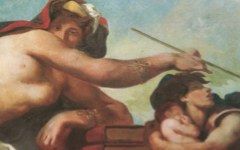
Delacroix’s Justice in Palais Bourbon (1833-7)
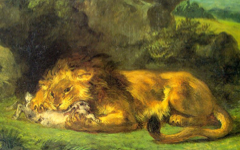
Another example of St. Irene "painting" St. Sebastian
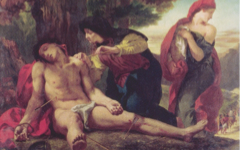
Delacroix’s St. Sebastian Helped by the Holy Women (1836)
Learn how an artist's sketches and unfinished drawings help explicate a painting
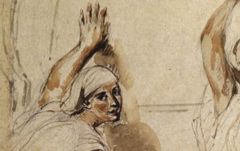
Delacroix’s Two Women at the Well (1832)
Discover the secret under Goliath's helmet then know what to look for
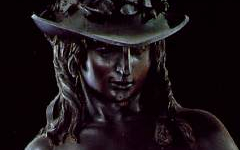
Donatello’s Davids and Goliaths (1410-1440’s)
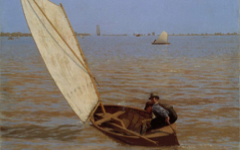
Here, in a novel turn, the American artist turns a paintbrush into the oars of a scull

Eakins’ The Champion Single Sculls (1871)
Sometimes the features which have not been seen are the most obvious

El Greco’s Knight Taking an Oath (1578-80)
Watch El Greco's thought process over a series of paintings
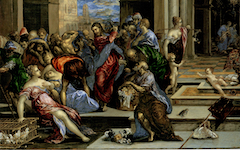
El Greco’s Purification of the Temple (c.1570-1610)
Find out how a little knowledge of studio life goes a long way
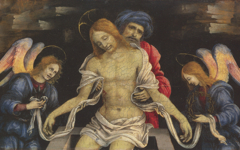
Filippino Lippi’s Dead Christ (c.1500) and the Artist’s Turban
Saint Helena in Fra Filippo Lippi’s portrayal of four saints seems separate and apart from her peers. Here's why.
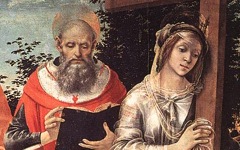
Fra Filippo Lippi’s Four Saints (1482)
See how one of England's most famous paintings is not what everyone thinks
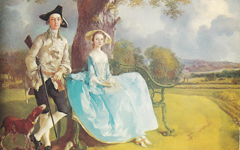
Gainsborough’s Mr and Mrs Robert Andrews (c. 1748-9)
See animal. Think artist. Especially with a knowing look and a furry paw.

Gauguin’s Loss of Virginity (1890-1)
Learn how an artist can link himself through music to great painters before him
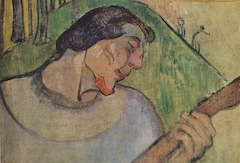
Gauguin’s Self-portrait with a Mandolin (1889) and The Player Schneklud (1894)
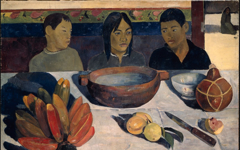
If you keep our website's name in mind when you look at pictures, the scene can change
Giordano’s St. Sebastian Cured by St. Irene (c.1655)
If you think like the artist and think inwards, all changes...
Goltzius’ Man Wearing a Tasseled Cap (1587)
With Mercury outfitted as a painter, the viewer can interpret this image confident that the subject is art
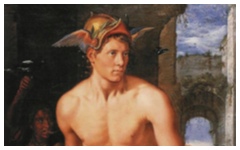
Goltzius’ Mercury (1611-13)
Think about who you are if, for instance, you are not yourself
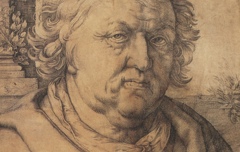
Goltzius’ Portrait of Jan Govertsz van der Aar as St. Luke (1614)
See how Goya turned a battle in the streets into a battle in his studio.....and his mind
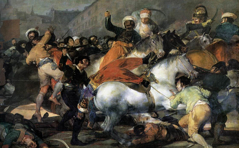
Goya’s 2nd May, 1808 (1814)
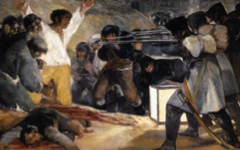
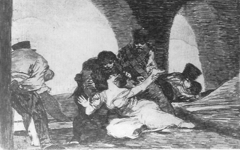
Think about self-referential meaning and one scene can quickly turn into another
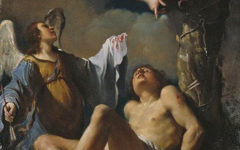
Guercino’s St. Sebastian Succoured by Two Angels (1617)
The central panel of an altarpiece by Hans Baldung Grien (c. 1480 - 1545) depicts St. Sebastian being shot by two archers while Grien himself stands oddly behind the victim.
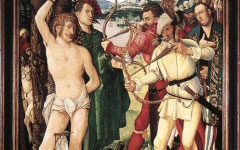
Hans Baldung Grien’s St. Sebastian Altarpiece (1507)
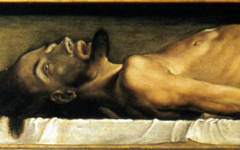
If this were an illustration of the American Civil War as many believe, it would not be by Winslow Homer. It would be by a mere painter, not an artist.

Homer’s Briarwood Pipe (1864)
How an artist, the artist's lover, is Ingres' own androgynous reflection
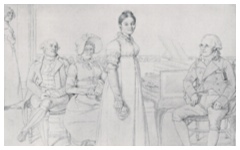
Ingres’ The Forestier Family (1806)
What contemporary artists like Jasper Johns does is what great artists have always done. Those that do not will not last. A century from now they will be forgotten by all but historians.
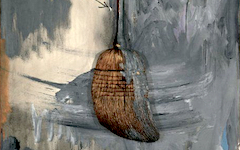
Jasper Johns’ Fool’s House (1964)
Michael Lobel explains how several of Sloan's paintings of New York street scenes are really allegories on painting
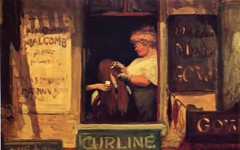
John Sloan’s Hairdresser’s Window (1907)
Even as a 19-year old Frida Kahlo was in tune with the Inner Tradition
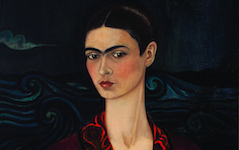
Kahlo’s Self-portrait in a Velvet Dress (1926)
If a hand is missing, can it still represent the artist's craft?
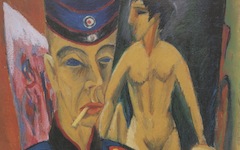
Kirchner’s Self-Portrait as Soldier (1915)
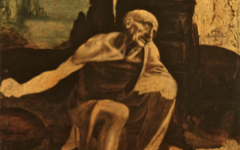
How painters can imagine themselves as violinists and other musical performers
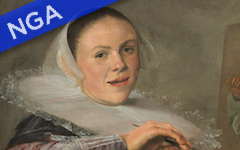
Leyster’s Self-portrait at the Easel (c.1630)
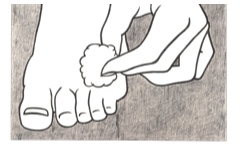
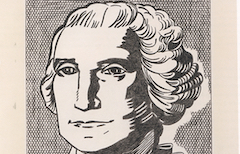
The many examples of weapons being used as paintbrushes in action on this site may attract skeptics. Lichtenstein, though, would not have been one of them.
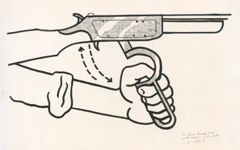
Lichtenstein’s Hand Loading Gun (1961)
More evidence that even at a very early date Lichtenstein was on the path of the Old Masters
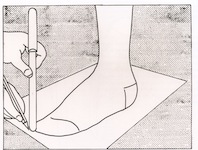
Lichtenstein’s Mail-Order Foot (1961)
A pipe may be a pipe for René Magritte but a piano is not a piano for Roy Lichtenstein
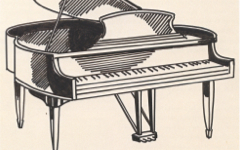
Lichtenstein’s Piano (c.1961)
Ordinary subjects produce extraordinary content
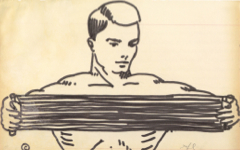
Lichtenstein’s Untitled or Man with Chest Expander (c.1961)
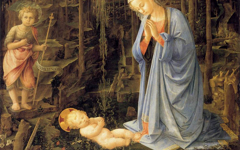
Once again, see how the hilt of a sword signs the artist's name
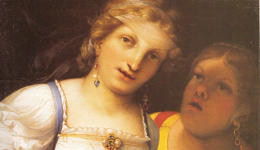
Lotto’s Judith with the Head of Holfernes (1512)
Find out how a realistic portrait is something else entirely
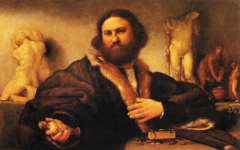
Lotto’s Portrait of Andrea Odoni (1527)
This angel is not just a charming detail but central to the whole conception of the altarpiece
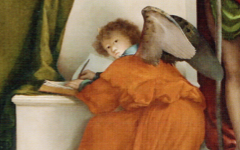
Lotto’s San Bernardino Altarpiece (1521)
Learn how "every painter paints" himself makes logical sense of even the most confused compositions
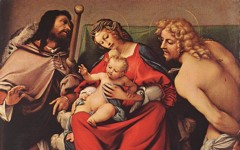
Lotto’s Virgin and Child with Saints Roch and Sebastian (c.1522)
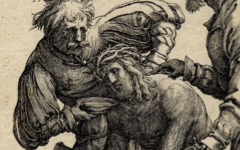
If an artist's first and last initials are the same, or his initial matches that of his hometown, like Lucas van Leyden's, it is more than likely to appear in his work as well.
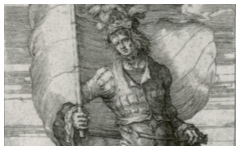
Lucas van Leyden’s Standard-Bearer (c.1510)
This early painting by Manet has always troubled interpreters because it seems to make no apparent sense. Its explanation here, though, will help you understand paintings by Manet, Velazquez and other artists too.
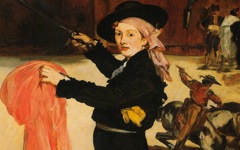
Manet’s Mlle. V in the Costume of an Espada (1862)
© Simon Abrahams. Articles on this site are the copyright of Simon Abrahams. To use copyrighted material in print or other media for purposes beyond 'fair use', you must obtain permission from the copyright owner. Websites may link to this page without permission (please do) but may not reproduce the material on their own site without crediting Simon Abrahams and EPPH.