05 Mar 2015
Picasso runs his fingers through her hair
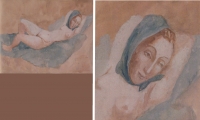
No doubt in life Picasso did run his fingers through his girlfriend's hair. In the drawing (left) from 1906 he did so too, turning an image of Fernande into a representation of himself. He might have learnt the method from any number of artists

26 Feb 2015
Art in Search of Self-Knowledge
One of the great shibboleths of art history is that High Renaissance masters depicted the exterior world. Few, of course, doubt that landscapes and portraits represent exterior nature. EPPH, on the other hand, argues that all scenes in art are i

26 Feb 2015 | 2 Comments
Picasso on EPPH
At the small but excellent Museu Picasso in Barcelona, a repository for much of Picasso's early work and the complete series of paintings on Las Meninas, they sell a pencil (above). Draw your own conclusions. No comment.
05 Feb 2015 | 2 Comments
Do you draw your own features unintentionally?
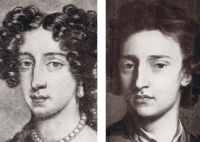
Readers, especially artists, I could do with some help. Do you reproduce your own features without meaning to? Do you have examples? Many initial viewers, usually those who can draw, ask me whether artists fused faces (see above) intentionally o
26 Jan 2015 | 2 Comments
Male Artist on Female Figures
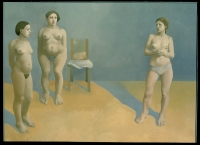
Facebook comments can be revealing. Alan Feltus is a contemporary artist whose work I have written about before. He just posted photos on his FB page of 3 paintings done while he was a resident Fellow at the American Academy in Rome in the early
16 Jan 2015 | 2 Comments
The Centrality of Tools
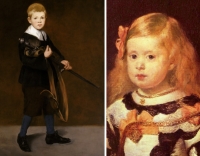
Art sometimes seems like a meditation on the brush. Certainly visual metaphors for art's tools abound from, say, Edouard Manet’s early Boy with a Sword (in effect he holds a giant paintbrush, see explanation) to Diego Velazquez’s Portrait
11 Jan 2015
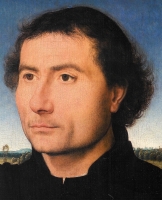
Hans Memling and Cubism
Every time I look at this Portrait of a Man by Hans Memling I feel a little sick. I’m serious. It makes me slightly nauseous. Perhaps Walter Pater, the 19th-century art historian, felt similarly about the Mona Lisa. He described her as a weirdo
29 Dec 2014
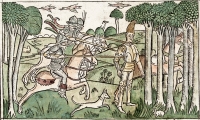
For how long have we read the Bible literally?
I learnt an astonishing fact today.1 The habit of reading the Bible as though it is historically true (especially the New Testament) started during the Protestant Reformation which began in 1517 and lasted more than a century. For the first 1,50

10 Dec 2014 | 1 Comments
Van Eyck’s Alpha and Omega
The world seems to work in our favor. Things happen which I used to call coincidence but which, in hindsight, are often far too fortuitous to be chance. Carl Jung described such events, at least the unusually important ones, as sy

05 Dec 2014 | 2 Comments
As in Painting, so is Poetry
The image above, a detail of a painting by Balthus called The Painter and His Model, goes particularly well with the poem below by James Merrill. Balthus, his head wrapped in a cloth to keep paint off his hair, seemingly pulls the curtain aside
03 Dec 2014
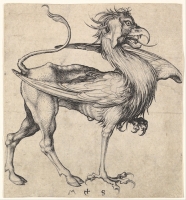
Claws, Paws and Prints
Many animals, like cats, dogs or the mythical griffin, have sharp claws. Let loose in a house, some of these charmers will engrave table legs, floor boards or virtually anything wooden. Artists who naturally have acute visual perception often re
02 Dec 2014
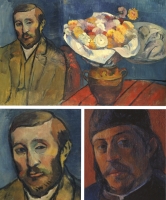
How Portraiture Causes Blindness
Specialisation has crippled art history, blinding its practitioners to what is common. For over six years EPPH has been arguing that many portraits by major artists are fusions of the artist's facial features with the sitter's. They were never i
02 Dec 2014 | 11 Comments
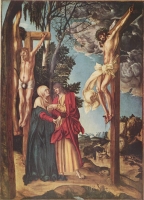
Your Go: Explain this picture!
OK, readers, this a chance to practice your own powers of perception and interpretation before I comment:
Explain below what this Crucifixion scene might mean and the oddity of Christ’s loincloth. I am drawing attention to that
20 Nov 2014
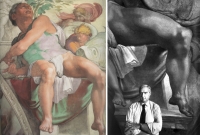
Actual size of Michelangelo’s figures
How large are Michelangelo's figures on the Sistine ceiling? Visitors find it difficult to tell from the chapel floor because they are so far away. It was not until I saw the photograph at right that I realized their true size. Jonah's thigh is
08 Nov 2014
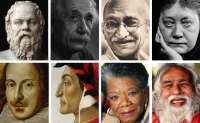
3 Practical Ways to Understand Art
How can museum visitors and art lovers interpret art for themselves without having the specialized knowledge of experts? It is easier than you think and within the grasp of many. The key is not in books but experience. And that would have been tru
30 Oct 2014
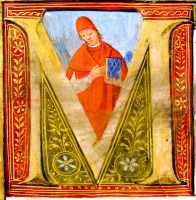
An Artist’s Path to Certainty
How does a great artist know he is on the right track before being recognized as canonical? Van Gogh, for example, knew his own importance despite commercial and critical failure; Picasso was convinced at a very young age. The answer, I believe,
24 Oct 2014
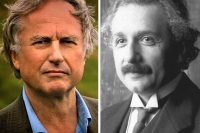
Science, Religion and Art: Einstein on the Inner Tradition
Perhaps the most difficult part of understanding art is the Inner Tradition, the path that links not only all the world’s major religions but science, literature and music too. Religious believers strongly attached to a particular creed are un

23 Oct 2014
The Male Artist and His Female Muse
Mona Lisa was Leonardo’s muse and he kept the portrait with him until his death. The beautiful, semi-nude La Fornarina was Raphael’s. Titian’s muse and Palma Vecchio’s are both called Beautiful or La Bella in Italian. Parmigianino’s is
17 Oct 2014
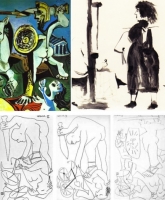
Brushing up on the Painter’s Sword
The mind of an artist is poetic so, if you want to understand painting and sculpture, read poets. Their literary metaphors are the artist’s visual ones. However, beware: poets understand visual art no better than most people. Emile Zola, Charl
06 Oct 2014 | 1 Comments
Dürer, Titian, Art and Blasphemy
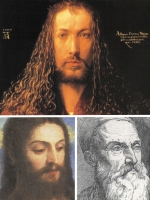
For those who have trouble - I certainly did - understanding how artists like Dürer (top) and Titian (below) could have portrayed themselves as Christ, here is a poem attributed to an 11th-century spiritual master of the Greek Orthodox Church
24 Sep 2014 | 2 Comments
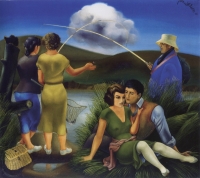
Reading Art: Manet, Picasso and Alfonso Ponce de Leon
My vision, like most people’s, is often cloudy which is why when the sun breaks and I gain some understanding, I get excited. You must excuse me. It may sometimes seem as if no-one before me has made similar observations. After all, all my ent
03 Sep 2014 | 1 Comments
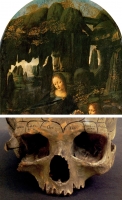
Leonardo’s Skull Rocks
Art is visual which means, contrary to a lot of theoretical discourse, so are its secrets. And if you train your eyes to search for similarity rather than difference, you'll be amazed at what you can discover.
Few paintings have b
27 Aug 2014
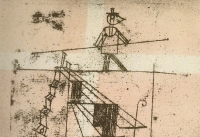
God help me!
Failure can scare anyone, let alone artists like Paul Klee who sometimes imagine that they are performing at such a high level that the consequences of a bad showing will be free fall. Yet, like tightrope walkers, they have practiced their craft
20 Aug 2014
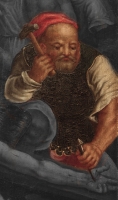
The Craftsman’s Christ
This is a scene by an unknown 16th-century artist, probably Flemish, at a time when artisanal effort was admired not just for the perfection of the end-product but for the artisan’s closely-guarded knowledge of materials. Wood, stone, minerals,

28 Jul 2014 | 4 Comments
Ego’s Poetic Powers
EPPH has long argued that artists mute their ego to gain access to poetic depths. Yet in the passage below Colin Wilson, the English philosopher and novelist who died last year, describes a more balanced understanding in which poets identify wit
23 Jul 2014
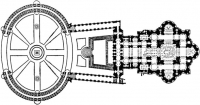
Key to Meaning in Architecture
Symbols, as explained here about painting and sculpture, can be concealed at many levels, some so deeply that only initiates would notice them. Who other than an architect could possibly have seen what Bernini did to St. Peter’s in Rome w
19 Jul 2014 | 1 Comments
How many features does a face need?
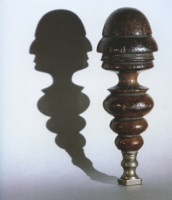
How much information do we need to recognize a face? Astonishingly little. Here George Washington’s can be recognized in the handle of a wooden seal (c.1810). This explains, perhaps, how artists can continuously convey their features in other

17 Jul 2014 | 1 Comments
Bacon’s Frank about Portraiture
Occasionally an artist's recorded thoughts give hints that their views on portraiture are not conventional. I have quite a collection of them. However someone just sent me this 1971 statement by Francis Bacon in which he completely rejects
13 Jul 2014 | 4 Comments
What users are saying about EPPH
EPPH gets all sorts of readers yet of those who return, there is a definite type. How do we know? The vast majority of comments are complimentary (96%); many of you seem to respond in the same way and you are quite likely to be an artist too. Th
05 Jul 2014 | 1 Comments
Why art’s meaning repeats
There is never any new content in art [see definition below].1 Art’s meaning is true. Truth is constant. Thus, it must always be true. And it must always have been true, at least since the development of mankind. So, if art expresses fundament
The EPPH Blog features issues and commentary.