04 Jul 2011
Left Right, Open Closed: Eyes and Perception
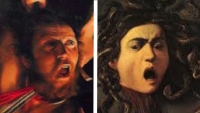
I have explained under the theme Insight-Outsight how poetic painters often distinguish between two different modes of perception: outwards to see the exterior world of matter, inwards for insight into the soul and imagination. It is such a comm
28 Jun 2011
God is Welles
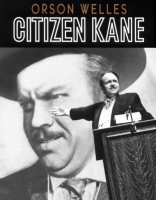
The theme on the site named 'Divine Artist' has recently revealed how frequently great masters depict themselves as God, Christ or the Holy Spirit. A paper on the Sistine Chapel explains how Michelangelo depicted himself as God and shorter entri
20 Jun 2011
EPPH’s Principal Principle 1: What is Art?
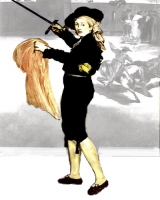
I’ve received criticism from a frequent viewer that this site is too devoted to portraiture. Certainly the discovery about portraits is the simplest new idea to grasp and, for that reason, is featured on the video. It is only, though, one smal

16 Jun 2011
Google Goggles in a Snapshot
What's that artist's name? Use your I-Phone to take a picture of the painting or of a reproduction and Google Goggles will give you the artist's name and the artwork's title in a second, including its date, I believe. It's no
13 Jun 2011 | 1 Comments
Breaking out of the World
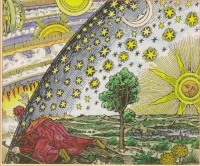
For aeons men and women have thought that the stars in the night sky were pin-prick size holes in the fabric of the cosmos and that the bright light pouring in through these holes was visual evidence of a truer reality beyond. Above, in what is
05 Jun 2011
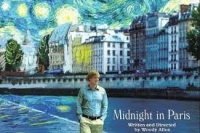
Woody Allen’s a Great Master
I've just seen Woody Allen's latest film, Midnight in Paris. Spot on. Exactly as we explain great masterpieces. It's about an American writer, clearly Woody's alter ego, who gets lost in his own imagination. A car from the 1910&#

01 Jun 2011
What Art is Not
Wassily Kandinsky, said to be the first artist to paint complete abstraction, is an interesting milestone on our way to understanding art. After all, from the development of truly figurative and illusionistic art in the Renaissance up to the arr
30 May 2011
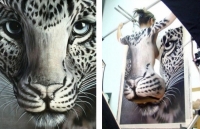
Metamorphic Form
Craig Tracy, a painter and former illustrator, creates arresting images (left) and then shows us how he did it (right). Few art historians realize that great masters, far more creative obviously than Tracy (no offense intended), often use the sa

29 May 2011
Gormley on Art
Contemporary art is not my specialty. I do, however, keep my eyes open and I can't help getting the sense that many prominent artists today practice every painter paints himself in one way or another. The British sculptor, Anthony
15 May 2011
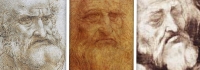
Wisdom and Leonardo’s Self-Portrait
One of the mysteries surrounding Leonardo’s so-called self-portrait (above center) is that it only emerged in the early nineteenth century. It was then decreed to be a self-portrait based on its likeness to the frontispiece portrait of Leonard
07 May 2011
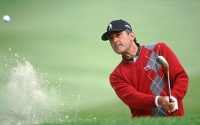
Ballasteros and Art’s Bubble
Artists when they conceive their images, even before they begin to paint, are in their studio. The word studio comes from the little room in which Renaissance princes went to study and think. At a time when most people’s lives were played
06 May 2011
Picasso’s Ps
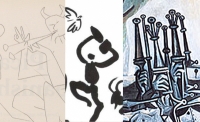
Remember to look for signatures on paintings because their careful placement can add meaning. It is rarely seen by those who are not artists themselves. Sometimes the artist's initial or initials are disguised as objects in nature so the vie
04 May 2011
Picasso on Art vs Painting
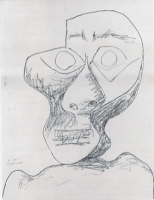
I hoped to show in the last entry [“Picasso’s Pain on Being an Artist”] that Picasso’s distinction between a painter and an artist matches our own – that on the underlying level art depicts the creation of the work
01 May 2011
Picasso’s Pain on Being an Artist
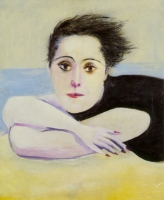
If Picasso saw an attractive subject, like a girl lying on a beach, he would cryptically say :
“What a pity one isn’t a painter! If one was a painter one could do her portrait!”
What did he mean? Picasso&
27 Apr 2011
Ratatouille and the Great Masters (of all genders)
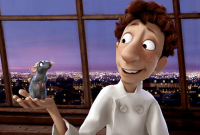
What do Raphael’s La Fornarina and Ratatouille have in common? Much more than you might think, their superficial differences disguising their fundamental similarity. The idea that significant art depicts a moment of its own making within t
25 Apr 2011
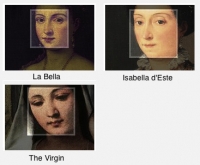
Face Recognition
Organizing family photos is not my thing; can never get around it; and rarely look at them either. That is by way of explaining why my first brush with face recognition software was the above request from IPhoto to explain my relationship
22 Apr 2011
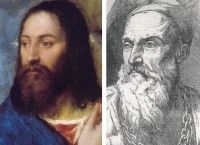
Titian as God
There's a whole new theme at Every Painter Paints Himself and one I've been looking forward to because more than any other theme on the site it demonstrates how artists followed the various traditions of mystical Christianity and not the
20 Apr 2011
Celebrating Good Friday
Isn’t it rather morbid and paradoxical for Christians to celebrate the death of Christ on Good Friday? What’s so good about killing your God? Ah, you’ll be told, that was the day He died for our sins for all humanity? But doesn
19 Apr 2011
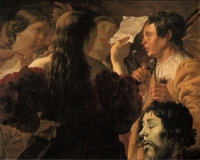
Why Artists Execute Themselves
Time and again we have shown how an execution in art depicts an artist executing his picture, even when the genders are switched. Judith executes Holofernes' head, David Goliath's head. That is, in part, why so many artists have portrayed themse
16 Apr 2011
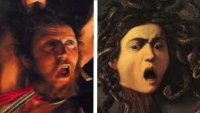
News of Caravaggio’s Execution
I don’t think anyone has ever noticed that Holofernes’ head in Caravaggio’s Judith and Holofernes is the mirror-image, modeled by someone else, of his own Self-portrait as Medusa from two years earlier. The idea, then, that Hol
15 Apr 2011
Bizarre but True!
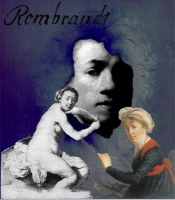
I’ve just placed a short essay on the site titled “How Forms in Art Work.” It describes as far as we can tell how images appear in an artist’s mind and in their art. I wrote it a few years ago to correct a mistaken view a
14 Apr 2011
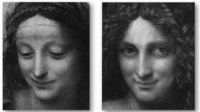
Is the Mona Lisa Leonardo’s male lover?
“Groundless” grumped Pietro Marani, a Leonardo authority, about a new theory offered from outside his field. He was responding as academics do to the report of an Italian researcher, Silvano Vinceti, on how several of Leonardo’s works, inc
14 Apr 2011
Beyond Face Fusion
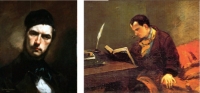
“Face fusion” is not the only way an artist can insert his or her identity into the portrait of someone else. Courbet’s 1846 Portrait of H.J. van Wisselingh (above left) demonstrates another. An art historian, Rae Becker, has s
11 Apr 2011
Free Museums
If you're in Italy this week or on your way, take advantage of the free museums. All state-owned museums in Italy are offering free entrance (except for special exhibitions). That means all the best permanent collections are yours for the vi
09 Apr 2011
Picasso on Himself
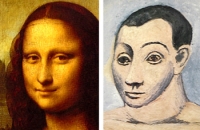
The best art historians are the artists themselves. What I provide is a pale imitation of what a great master could explain to you but, almost without exception, they keep quiet. Both Lucian Freud and Philip Pearlstein are still alive, both well
08 Apr 2011
Art vs. Illustration
Art is not illustration. We all know that. Illustration simply depicts a verbal story and that alone cannot be art. We call those image-makers “illustrators” because they copy reality or a written story. We should not give them the grander t
07 Apr 2011
Vinceti’s Bogus Claims
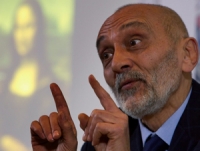
In my last entry here I criticized an Italian art historian’s recent conclusion that Salai, Leonardo da Vinci’s’s young assistant, was the model for several of Leonardo’s paintings, including two of St. John the Baptist.

28 Mar 2011
The “Open Drawer” Question
I’m traveling and don’t have much time to go into explanation. For more than ten years I have been bugged by the “open drawer” question: why do so many still-lifes by artists as different as Picasso (above) and Chardin ha
23 Mar 2011
Poetry from Libya’s Descent into Hell
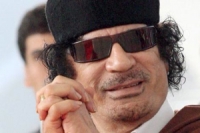
We spend so much time studying art here that hours reading literature are rare. So I was intrigued by the story of the New York Times reporters (one, a woman) captured by government troops in Libya and recently released. Their account in to
18 Mar 2011
Face Fusion is Everywhere
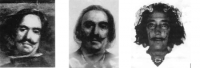
For years I’ve been rattling on about face fusion to demonstrate that portraits by true artists are not what they seem. Many are not accurate depictions but a fusion of features from different faces, often the artist’s own. Salvador Dali, fo
The EPPH Blog features issues and commentary.